Grand Foyer Collapse: A Catalyst for a Contentious Renovation Debate
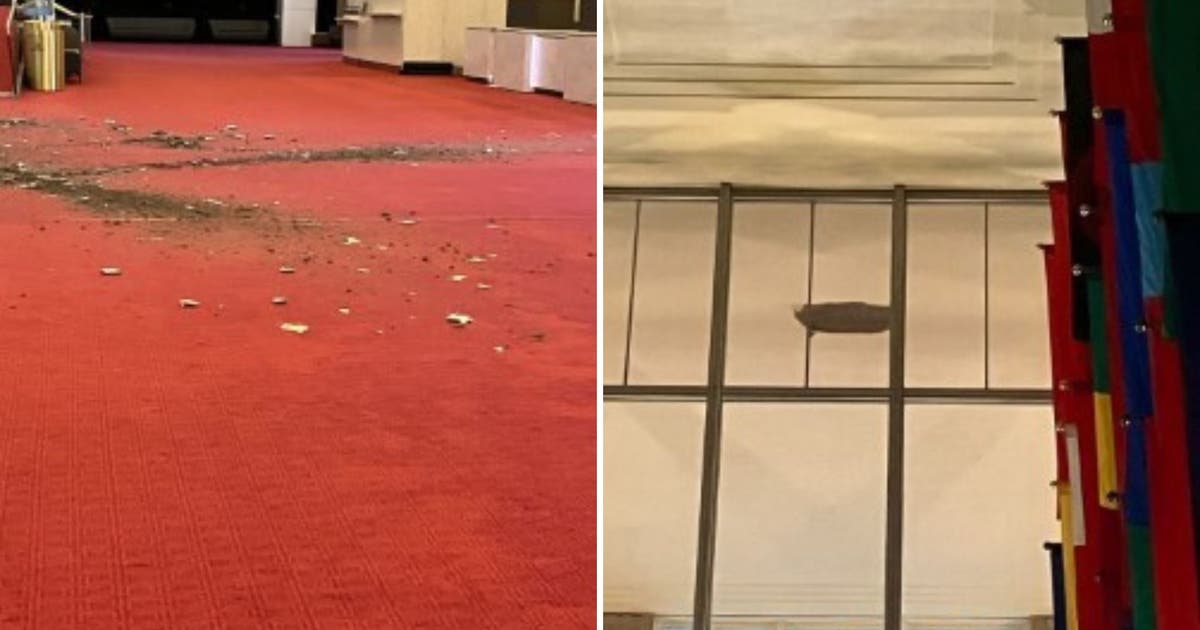
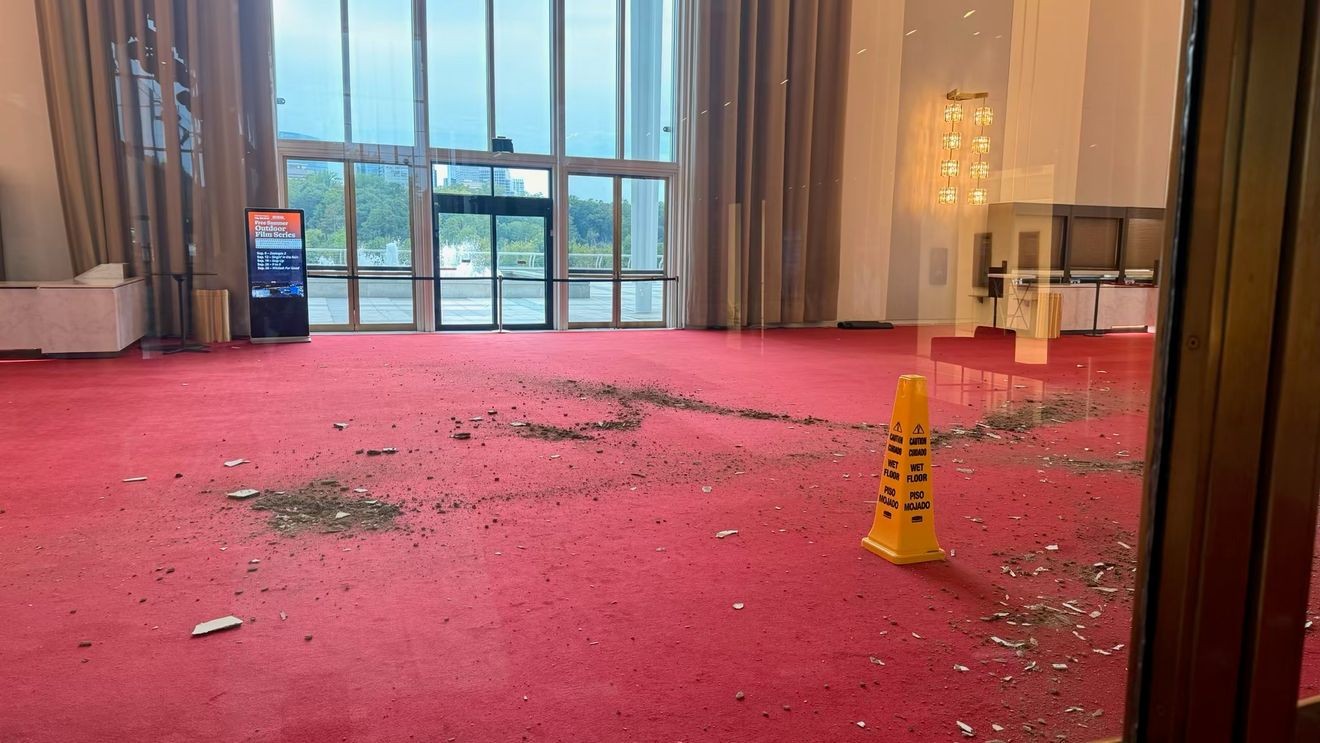
A significant section of ceiling material collapsed inside the Grand Foyer of the John F. Kennedy Center for the Performing Arts on Friday, sending debris across the venue floor. This incident, occurring around 5:00 p.m. in the immediate aftermath of severe regional storms and heavy precipitation across Washington, D.C., directly exposed the structural vulnerabilities of the iconic cultural landmark. Facility leadership responded by ordering an immediate closure of the main building for Friday evening, prioritizing the safety of on-site personnel and operational staff.
Visual documentation confirmed the detachment of material from the high overhead expanse, shattering upon impact with the carpeted interior. While the structural failure necessitated immediate operational disruptions, the precise physical cause remains unverified, pending comprehensive technical evaluations. Administrative leadership confirmed that non-essential access to the Grand Foyer would remain restricted throughout the weekend, a tactical decision to mitigate further risk, while the broader facility was slated to resume standard operating hours on Saturday.
The timing of this structural failure is critically intertwined with a vigorous, ongoing institutional and legal conflict surrounding capital repairs and facility management. This incident amplifies existing concerns regarding the resilience of landmark public assembly venues against modern environmental stressors and underscores the urgent need for robust internal inspection regimes and proactive maintenance strategies. It immediately shifts the focus towards the complex interplay between immediate life-safety assessments and long-term public continuity mandates.
Executive Mandate Meets Judicial Challenge: The Renovation Standoff
The Grand Foyer collapse provides significant leverage in the active legal dispute concerning the scope and execution of the Kennedy Center’s overhaul plans. President Donald Trump, serving as Chairman of the Kennedy Center following his return to executive office in January 2025, has consistently championed comprehensive renovations across the complex. The structural incident provides immediate, tangible evidence supporting leadership figures who advocate for a complete facility overhaul, framing it as a necessary remedy for prolonged physical deterioration.
Roma Daravi, Vice President of Public Relations at the Kennedy Center, strategically aligned the collapse with the administration’s renovation agenda, publicly citing historical deficits in structural care. This institutional communications strategy, by attributing overhead instability to chronic infrastructural neglect, seeks to consolidate executive authority over capital priorities and build consensus among oversight bodies that physical interventions must take precedence over operational continuity.
This aggressive modernization push unfolds against the backdrop of an active legal battle. The Kennedy Center governing board had previously approved a multi-year closure framework designed for exhaustive physical restorations. However, this initiative remains vigorously contested within judicial venues, creating a high-stakes standoff between executive leadership, board proponents, and legal adversaries. The visible physical deterioration within a prominent public space now exerts distinct pressure on these judicial and administrative deliberations, raising profound governance dilemmas where strategic capital deployment is hampered by unresolved legal challenges.
Risk Management and Future Imperatives for Cultural Infrastructure
The administrative decision to isolate the Grand Foyer while permitting general operations across remaining sectors exemplifies a tactical risk containment protocol, balancing immediate safety with continued programming. Engineering and remediation personnel deployed through the weekend face the critical mandate of identifying specific moisture intrusion pathways and any latent structural weaknesses. Torrential rainfall frequently exposes hidden envelope vulnerabilities, which can degrade interior materials and structural anchors over extended periods. The conclusive determination of whether this was an isolated moisture-related reaction or a symptom of broader structural compromise will dictate subsequent safety protocols across the complex.
For staff, contractors, and public patrons, the event introduces heightened operational precautions and scrutiny. Administrative teams are tasked with rigorously documenting physical findings to satisfy regulatory requirements, insurance frameworks, and municipal safety thresholds, making the immediate 48-hour response critical for ongoing building safety compliance. This incident further serves as a diagnostic case study for institutional risk managers across analogous national venues, inevitably accelerating calls for comprehensive structural audits across municipal and federally affiliated real estate portfolios.
Operating under intense public visibility, the Kennedy Center must demonstrate exemplary institutional competence in managing acute structural contingencies. The pathway forward demands rigorous engineering validation to ensure public safety prior to rescinding access restrictions. How administrative leadership executes both temporary remediation and a long-term capital strategy will establish crucial operational precedents for national cultural venues grappling with the challenges of aging assets and the imperative for sustainable infrastructure.