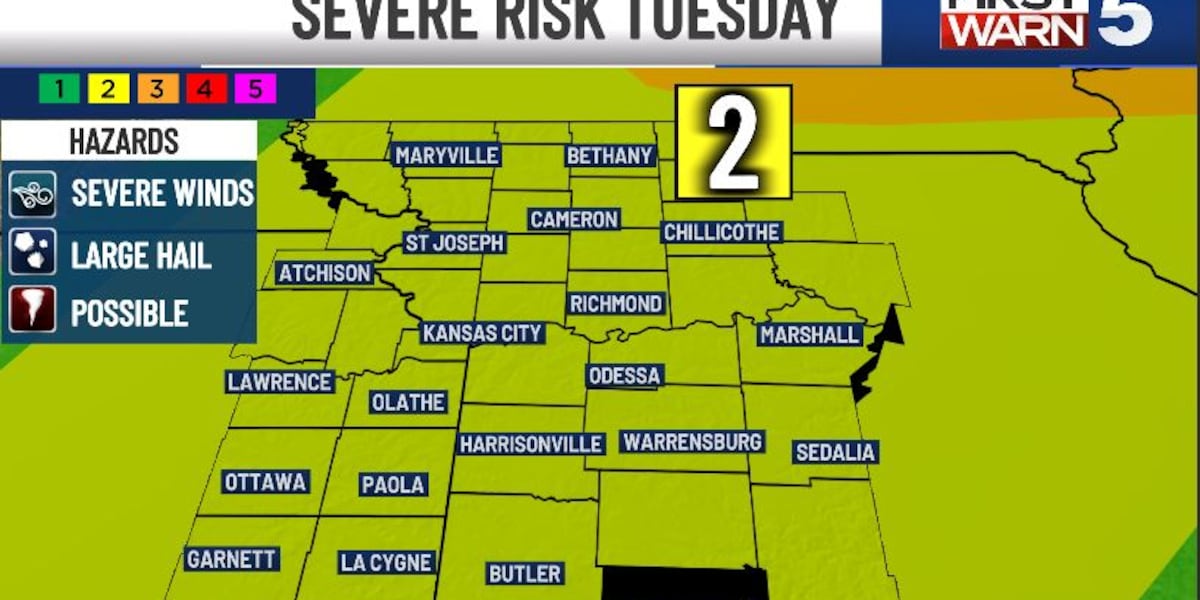
The severe convective sequence impacting the Kansas City metropolitan region has transitioned from tactical emergency response to a critical assessment of structural and economic resilience. The tornadic touchdowns in Ottawa, Kansas, act as a primary case study for the systemic vulnerability of peripheral infrastructure. These high-intensity, rapid-onset events expose the delta between urban building codes and the load-bearing limitations of legacy agricultural and residential assets.
Structural Fragility in Rural Infrastructure Corridors
Damage assessments in Ottawa reveal a significant disparity in structural integrity between metropolitan centers and rural districts. The built environment in these areas—comprising older residential units and specialized agricultural facilities—often lacks the kinetic resistance required for direct tornadic impacts. This physical vulnerability results in disproportionate capital loss relative to population density, necessitating complex insurance adjustments and the reallocation of regional recovery funds.
The utilization of the Hope House food bank as a de facto emergency refuge underscores a critical node in social infrastructure. When non-profits are forced into dual-use roles during disasters, it highlights the necessity for these organizations to be integrated into formal state-level resilience frameworks. The narrow warning window—minutes between detection and touchdown—further emphasizes the latency issues in rural alert dissemination networks.
Cascading Hydrological Risks and Drainage Saturation
Following the expiration of the wind-driven threat, the regional risk profile shifted toward hydrological instability. Flood Warnings for Douglas, Franklin, Cass, Johnson, and Miami counties indicate a total saturation of local drainage basins. This transition requires a strategic pivot for emergency management, moving from search-and-rescue to the mitigation of infrastructure failures caused by rising water levels and soil liquefaction.
Extended hydrological risks through Tuesday morning threaten regional transportation networks. Saturated soil conditions in agricultural corridors increase the probability of road washouts and culvert failures, essential for supply chain continuity. For the agricultural sector, this secondary hazard can delay seasonal operations and degrade the value of stored capital assets, compounding the financial impact of the preceding wind events.
Meteorological Anomalies: The 2006 Thermal Benchmark
A projected low of 68 degrees Fahrenheit ties a record set in 2006, serving as a critical indicator of latent heat flux in the lower atmosphere. This thermal anomaly provides the convective fuel necessary for the 2/5 severe risk rating issued by the Storm Prediction Center. The unseasonable warmth maintains high atmospheric instability, facilitating the development of secondary storm cells as they move into the Missouri side of the metro area.
Institutional stakeholders utilize these thermal benchmarks for resource staging and personnel readiness. While widespread destruction may not be the baseline expectation for subsequent rounds, the probability of localized severe cells remains high. Historical comparison to 2006 allows meteorologists to refine predictive models, accounting for the rapid intensification seen during previous high-temperature weather cycles.
Economic Displacement and Agricultural Continuity
Impacts in Miami and Cass counties illustrate the intersection of rural productivity and the broader Kansas City economic ecosystem. Damage to agricultural capital—silos, livestock facilities, and machinery—represents a direct hit to the regional labor market. The recovery process in these zones is frequently delayed by the specialized nature of repairs required for agricultural infrastructure and the complexities of crop insurance claims.
The disruption of community hubs also affects the social capital of the region. The ability of a community to reorganize post-crisis depends on the operational status of shared spaces. When these spaces are compromised, the institutional memory and collective resilience of the community are strained, requiring external intervention to bridge the gap during the reconstruction phase.
Communication Latency and Warning Efficacy
Short-lead warnings in Ottawa raise questions regarding the efficacy of alert systems in low-density districts. While digital dissemination via KSHB 41 and KCTV is critical, the physical gaps in siren coverage and mobile signal reliability in rural areas create high-risk blind spots. This reality necessitates a reevaluation of meteorological communication to prevent ‘warning fatigue’ while maintaining public urgency during prolonged periods of atmospheric volatility.
Long-term recovery will require a multi-agency effort to document damage and secure federal disaster assistance. The ongoing atmospheric threat through Tuesday night demands a sustained posture of readiness. Ultimately, the lessons from the Ottawa touchdown will inform future disaster preparedness, emphasizing the need for high-resolution forecasting and the hardening of rural infrastructure against recurring natural threats.