
Judicial Precedent: Ruling Redefines Executive Power Over White House Construction
A federal judge’s ruling has delivered a significant legal blow to executive discretion over federal property by halting a proposed $400 million White House construction project. The decision, issued by Judge Richard Leon, centers on the principle that the executive branch must secure explicit statutory authorization from Congress for major capital initiatives on federal land. This ruling establishes a crucial legal precedent regarding the scope of presidential authority over government assets, redefining the balance of power in matters of public finance and property stewardship.
The Stewardship Doctrine and Limits on Executive Authority
At the core of the judicial decision is the interpretation of federal law governing appropriations and public property management. Judge Leon’s ruling emphasizes the distinction between ownership and stewardship, asserting that the President acts as a steward of the White House for future generations, rather than holding personal ownership. This legal framework prevents a sitting administration from making permanent, unilateral changes to national landmarks without legislative consensus. By mandating legislative approval for large-scale modifications, the judiciary reinforces institutional continuity and protects historical integrity against potentially unchecked executive action.
Financial Implications and Risk Exposure for Non-Compliant Construction
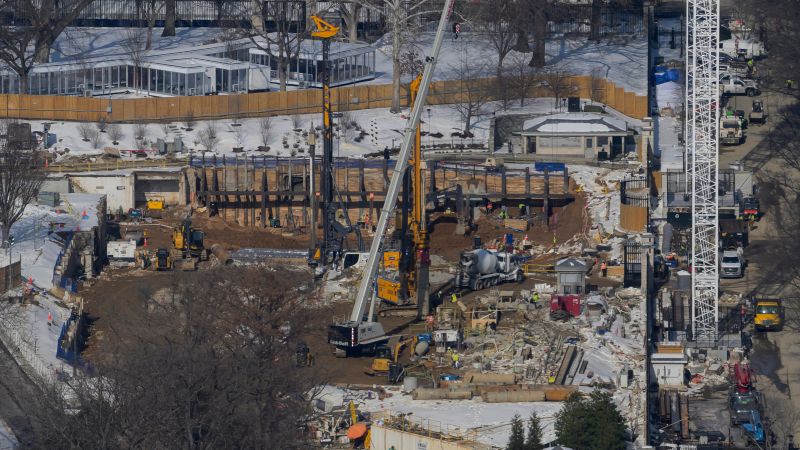
The ruling introduces substantial financial and operational risks, particularly given the project’s estimated cost of $400 million. The judge warned that any non-compliant construction undertaken during the appeal process could be subject to removal, thereby exposing public funds already invested to becoming sunk costs if the appeal fails. This high-stakes operational dilemma creates significant uncertainty for contractors, potentially leading to stop-work orders, claims for damages, and increased costs associated with project delays and remediation. The decision places a direct financial burden on the government to ensure procedural compliance, highlighting the importance of proper authorization in public procurement and project management.
Shifting Political Dynamics: Congressional Authority and Checks and Balances
The ruling effectively shifts leverage from the executive branch to the legislative branch, transforming the issue from a procedural dispute into a political one. By requiring congressional authorization, the judiciary forces the administration to engage in political negotiation over appropriations. This process ensures that large-scale expenditures are subjected to public scrutiny and debate, preventing unilateral executive decisions on significant capital investments. The intervention serves as a powerful example of institutional checks and balances in action, reinforcing the judiciary’s role in interpreting statutory limitations on executive power and ensuring procedural compliance in government operations.
Conclusion: Long-Term Precedent for Future Administrations
The judicial ruling on the White House project sets a clear precedent for future executive actions regarding federal property and capital projects. It affirms that the judiciary will intervene to enforce statutory requirements for congressional authorization, even for projects deemed necessary by the executive branch. The ruling’s focus on stewardship over ownership redefines the scope of presidential authority in managing federal assets, mandating that future administrations prioritize legislative engagement and appropriations processes for major infrastructure changes. This ensures that large-scale projects are transparent, accountable, and subject to the necessary checks and balances required for responsible governance and fiscal responsibility.

Photo by ptrabattoni on Pixabay.