
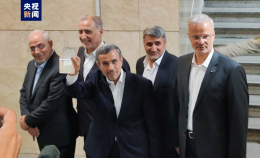
Information Asymmetry and Strategic Signaling in Tehran Incident
The immediate dissemination of contradictory information regarding former Iranian President Mahmoud Ahmadinejad’s status following a reported explosion in Tehran’s Narmak district on February 28th critically exposes vulnerabilities within the Iranian information ecosystem.
The juxtaposition of initial reports suggesting his demise against subsequent official confirmations of his safety creates a volatile information environment. This environment is leveraged by various actors to achieve strategic objectives, irrespective of the incident’s factual basis.
The rapid circulation of the death report, even if retracted, functions to induce high-stakes reactions from regional security apparatuses, stress-testing allied and adversarial response protocols.
Cascading Effects of Contradictory Casualty Reports
The initial, unverified claim of Ahmadinejad’s death, disseminated by external sources, serves as strategic reconnaissance. It measures the speed and veracity of the Iranian government’s internal and external communication response mechanisms.
This information operation aims to provoke premature escalation signals from adversaries or to probe domestic political stability by testing reactions to the perceived removal of a high-profile, though currently marginalized, political actor.
Conversely, the swift official confirmation of his safety re-establishes narrative dominance, mitigating potential domestic instability or external exploitation of a perceived leadership vacuum, even as the inciting explosion remains unexplained.
Contextualizing the Incident Amidst Documented Kinetic Escalation
Ahmadinejad’s incident occurs within a highly charged geopolitical context, directly linked to documented escalations, including the alleged attack on Supreme Leader Khamenei and subsequent Iranian kinetic retaliation.
Reports of US naval infrastructure destruction in Kuwait and the closure of the Strait of Hormuz confirm a significant, documented escalation in state-on-state confrontation. This framework ensures any domestic security event in Tehran is interpreted through the lens of this broader strategic conflict, magnifying its perceived significance.
Stakeholder Implications: Domestic Factional Calculus
For internal Iranian political factions, the ambiguity surrounding Ahmadinejad’s fate dictates a complex calculus of risk and opportunity, given his historical role outside the immediate ruling structure.
Had the initial death report been substantiated, it would have instantaneously altered internal power dynamics, potentially shifting influence among competing conservative and reformist elements regarding his political alignment.
Confirmation of his survival mandates a strategic recalibration for these factions, forcing reassessment of readiness for sudden political shifts and the security posture required in an environment targeting prominent figures.
International Leverage and Diplomatic Calibration
Warnings regarding retaliation from US officials, coupled with China’s condemnation of alleged US/Israeli strikes on Iranian soil, frame the information space as a proxy battleground for international confrontation.
Conflicting reports on Ahmadinejad thus become secondary indicators influencing how international actors calibrate diplomatic engagement and sanctions posture, specifically against a backdrop of documented military actions.
The immediate focus on kinetic and economic leverage—evidenced by the Kuwaiti base report and Strait closure—demonstrates that these supersede political maneuvers concerning singular figures, though the latter remains vital for psychological operations.
Media Ecosystem Performance and Sourcing Credibility
The sequence of reporting—external media reporting fatality, state sources confirming life—exposes structural dependencies and inherent latency in verifying information flow from a closed system during high conflict.
The initial failure to accurately report a former head of state’s status erodes the credibility of the external media apparatus, demanding a strategic re-evaluation of regional sourcing dependencies.
Conversely, the state’s capacity to deploy a rapid counter-narrative emphasizes the operational priority placed on controlling the perception of domestic stability, even under intense external military pressure.
Economic Transmission: Geopolitical Risk to Commodity Markets
Iran’s documented closure of the Strait of Hormuz, forcing oil tanker diversions and congestion, provides a direct, measurable financial consequence irrespective of the Ahmadinejad incident’s outcome.
This closure mechanism illustrates the immediate transmission of geopolitical risk into global commodity markets, translating supply threat directly into price premiums and inventory adjustments for energy-dependent economies.
The concurrence of the Strait closure with the high-profile domestic security event suggests a coordinated strategy to maximize economic disruption while projecting internal cohesion against external threats.
Institutional Response Hierarchy: Mourning vs. Stability
The declaration of a 40-day national mourning period following the reported death of Supreme Leader Khamenei establishes a high institutional baseline for state-sanctioned political mobilization.
This mechanism for collective grief unifies the populace under a narrative of loss and defiance, serving as an administrative tool to manage public sentiment during extreme external pressure.
The contrast between the mourning period for the Supreme Leader and the immediate safety confirmation for Ahmadinejad underscores the hierarchical valuation of political figures within the state structure, delineating who warrants national emotional investment versus localized security management.
Succession Dynamics Under Stress
The focus on potential succession for Khamenei following the reported attack highlights the critical institutional concern for leadership continuity amidst existential threats.
Strategic focus shifts immediately to vetting and positioning successors—a highly sensitive and opaque process that determines long-term regime stability.
Perceived weakness or internal division exposed during these high-stress events, such as conflicting reports on major figures, directly influences succession planning and the consolidation of power among the ruling elite.
Multi-Front Vulnerability: Corporate Governance Intersecting Security
The tangential reference to the stock price decline of ‘Bawang Chaji’ due to ‘quasi-drug’ allegations reveals economic landscape vulnerabilities extending beyond immediate security crises.
This incident demonstrates how regulatory scrutiny or reputational damage concerning consumer products triggers significant capital movement and valuation adjustments, even when the primary focus is international security.
The juxtaposition of this domestic corporate governance issue with major military developments illustrates the multi-front operational environment, where maintaining economic confidence is a parallel strategic imperative to military deterrence.
Geopolitical Attribution and Deterrence Boundaries
The attribution of the attack on Khamenei to US and Israeli officials introduces a direct claim of state responsibility, fundamentally recalibrating risk assessments for all involved parties.
This attribution justifies subsequent Iranian retaliation (Strait closure, strikes on US assets), establishing a closed loop of action-reaction that escalates the conflict trajectory.
The explicit US warning against further Iranian retaliation frames the immediate future around calibrated deterrence, setting defined operational boundaries for the conflict by signaling a predefined, overwhelming response threshold.
Operational Security Breach vs. Distraction Tactics
Focusing the alleged attack on Khamenei’s meeting with senior aides suggests high-level intelligence penetration targeting the core decision-making apparatus.
If the source data is accurate, the attack’s operational success implies a significant compromise in Iranian internal security protocols surrounding the highest leadership, irrespective of the attack’s final outcome.
The secondary explosion targeting Ahmadinejad in a different locale suggests either a coordinated multi-target operation or a deliberate tactic to mask the primary objective by manufacturing distracting security incidents.
Leverage: Narrative Control in Crisis Management
The sequence—explosion, conflicting reports, official confirmation, all set against major military escalation—underscores the leverage derived from controlling the initial crisis narrative.
The ability to rapidly pivot from catastrophic loss (Khamenei) to stability (Ahmadinejad) allows the state to absorb shocks and project operational continuity to both domestic and international audiences.
This tactical control over information flow is crucial for preventing internal panic, discouraging opportunistic challenges, and framing the external narrative to justify subsequent military or diplomatic actions.

Photo by rudolf_langer on Pixabay.