
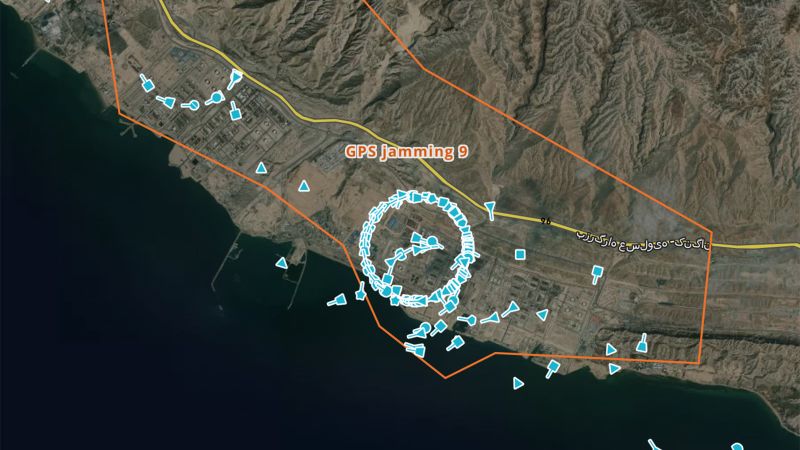
The recent escalation of electronic warfare in the Middle East has transitioned from localized tactical interference to a systemic vulnerability within global maritime logistics. Following targeted kinetic operations in the region, commercial vessels in the Strait of Hormuz have encountered a near-total degradation of Positioning, Navigation, and Timing (PNT) integrity. This shift toward digital deception marks a critical inflection point where non-kinetic measures achieve strategic effects comparable to physical blockades.
The Anatomy of Signal Deception: Jamming vs. Spoofing
The disruption is characterized by two distinct methodologies: wide-spectrum jamming and sophisticated spoofing. Jamming acts as an electronic denial-of-service attack, saturating navigation frequencies to prevent receivers from locking onto satellite signals. This forces crews into legacy dead-reckoning protocols, which are increasingly hazardous given the navigational density of the Persian Gulf corridors.
Spoofing represents a more advanced threat, injecting falsified but syntactically correct coordinates into a vessel’s Bridge Integrated Navigation System. By mimicking legitimate GNSS (Global Navigation Satellite System) signals, actors have successfully manipulated ship telemetry, causing onboard systems to erroneously report positions inside Iranian territory or sensitive terrestrial infrastructure like nuclear facilities. This creates high-stakes risks for unintended territorial incursions and automated collision-avoidance failures.
Quantifying Operational Friction: The 1,100-Vessel Disruption
Analysis from maritime intelligence firm Windward confirms the scale of this electromagnetic offensive. On February 28 alone, over 1,100 commercial vessels across the EEZs of the UAE, Qatar, Oman, and Iran experienced significant PNT anomalies. This mass interference suggests the deployment of high-altitude or land-based electronic countermeasures that, while potentially aimed at military assets, have effectively collateralized the global commercial fleet.
The resulting operational friction threatens the 20% of global oil and gas exports that transit the Strait. Even minor decelerations in transit velocity, necessitated by the loss of automated situational awareness, compound into significant ton-mile cost increases and supply chain backlogs. The vulnerability highlights a dangerous reliance on single-point-of-failure satellite technologies in contested maritime zones.
Strategic Asymmetry and the Future of Maritime Resilience
The weaponization of the electromagnetic spectrum provides regional actors with a tool for asymmetric leverage. Low-cost electronic warfare assets can now neutralize the technological advantage of modern, high-value fleets without direct kinetic engagement. This environment forces a tiered risk assessment where operators must choose between pausing transits or investing in costly independent intelligence and private data verification to distinguish between technical failure and malicious interference.
Institutional and regulatory frameworks currently lack the agility to address mass spoofing events. As the Strait of Hormuz becomes a laboratory for non-kinetic conflict, the industry is accelerating the adoption of alternative navigation standards, such as eLoran and enhanced inertial navigation units. Transitioning away from GPS-dependence is no longer a technological preference but a prerequisite for maintaining the continuity of global energy markets in an era of persistent electronic instability.

Photo by 547877 on Pixabay.