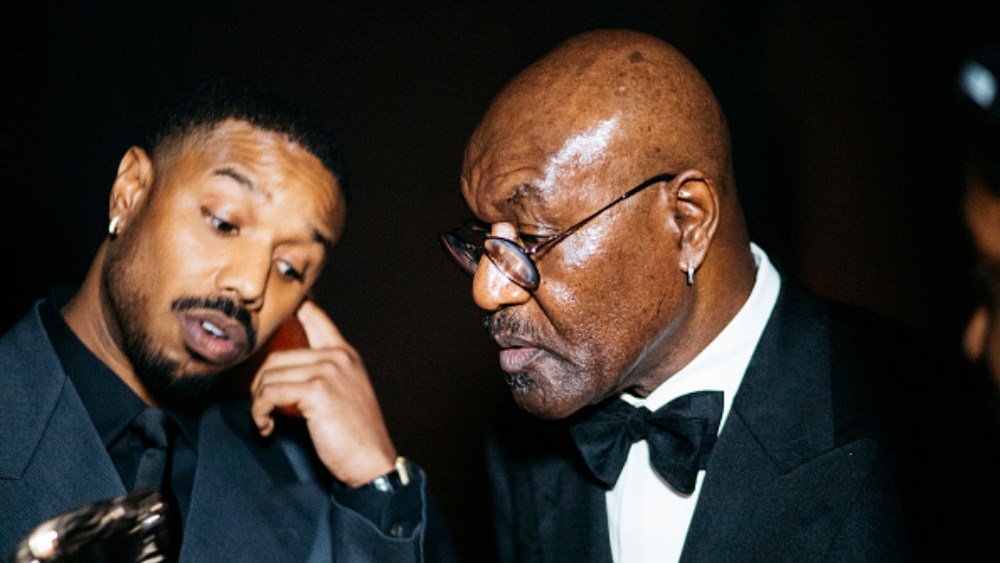
The immediate aftermath of the 79th BAFTA Film Awards centers on a profound operational and ethical failure by organizing bodies, specifically BAFTA and the BBC. This failure occurred when an involuntary vocal tic, involving coprolalia, manifested as a racial slur during a live presentation featuring actors Michael B. Jordan and Delroy Lindo.
Critique of Institutional Liability in Live Broadcast Management
BAFTA and the BBC established a high-risk operational environment by committing to a live global broadcast format while knowingly featuring a prominent advocate for Tourette syndrome whose condition includes involuntary, potentially offensive vocalizations (coprolalia). The failure rests squarely on the institutional infrastructure responsible for production oversight.
Host Alan Cumming’s on-stage explanation, framing the incident as a brief exploration of Tourette syndrome relevant to a nominated film, served as a pre-emptive acknowledgment but proved functionally insufficient for real-time crisis mitigation. The core failure is not the individual’s medical condition but the lack of robust institutional safeguards.
Cascading Impact on Stakeholder Trust and Intersectionality
This event starkly exposed how major cultural institutions manage—or fail to manage—intersectional sensitivities involving race and disability in high-stakes public performance settings. For the Black attendees and the wider Black community, the impact was involuntary exposure to a racial slur during a moment celebrating cinematic achievement, directly violating the perceived safety of the venue.
Concurrently, the disability community confronts the tangible harm caused by involuntary medical expressions, complicating the demand for accountability by requiring a nuanced differentiation between intent and impact.
Strategic Narrative Control: Mitigating Harm via Community Affirmation
Delroy Lindo’s subsequent strategic appearance at the NAACP Impact Awards functioned as a powerful counter-narrative pivot, leveraging a moment of public distress into a platform for community solidarity and positive reframing.
Lindo’s public acknowledgement of support, emphasizing the potential to leverage adversity into strength, signaled a conscious directorial move to shift the narrative focus away from institutional critique toward communal resilience. The standing ovation, supported visually by Michael B. Jordan, underscored the critical importance of in-group affirmation in mitigating the reputational and emotional damage inflicted by institutional lapses.
Bypassing Institutional Critique for Peer Validation
The transition from the BAFTA stage to the NAACP ceremony demonstrates a sophisticated media strategy: prioritizing validation within the affected community over immediate confrontation with the organizing bodies. This allowed Lindo and Jordan to redirect media focus toward mutual support, a vital step in managing the long-term perception of the controversy.
The collective affirmation at the NAACP event suggests that, following public racial offense, visible solidarity from peers may supersede the perceived urgency of securing formal institutional apologies or structural change.
The Tourette Advocacy Conundrum and Operational Gaps
The involvement of John Davidson, whose Tourette syndrome advocacy informed the nominated work, uniquely complicated the discourse, forcing a public boundary examination of involuntary vocalizations in formal broadcasts. Advocates like Chloe Winston noted the internal conflict: supporting neurological visibility while acknowledging the harm inflicted by coprolalia tics.
This dynamic necessitates rigorous protocols developed by broadcasters to respect neurological conditions without inadvertently disseminating harmful language—a balance the BAFTA production demonstrably failed to achieve in real-time. The timing (presentation of the first award) suggests a failure in pre-production risk assessment regarding known participants.
Technical Contingency and Crisis Protocol Deficiencies
The production environment lacked adequate technical mitigation. Audio capture and broadcast delay mechanisms should have preemptively managed the risk of offensive vocalizations reaching the global audience, indicating a clear lapse in technical contingency planning. Furthermore, Cumming’s immediate response lacked the decisiveness of established, high-stakes crisis communication protocols tailored for unpredictable, sensitive disruptions.
Long-Term Implications for Broadcast Standards and Prestige Erosion
This incident sets a stringent new precedent for live international awards shows concerning content filtering, real-time moderation, and disability representation when race is a factor. Future broadcast contracts involving BAFTA and the BBC will face amplified demands for robust pre-show vetting and enhanced on-site moderation capabilities, inherently increasing production complexity and cost.
The event forces a structural review within broadcasting standards regarding ethical obligations to performers and audiences when managing unpredictable human elements in sensitive cultural contexts. The subsequent polarization fueled by rapid digital mobilization illustrates how quickly institutional negligence translates into sustained reputational conflict.
The Unresolved Formal Apology Deficit
While community support was acknowledged, the source facts point to an unresolved tension regarding formal redress from the primary responsible entities, BAFTA and the BBC. The absence of comprehensive, explicit apologies from the executive tiers of both organizations leaves a vacuum that sustains criticism regarding institutional liability over performer responsibility.
This lack of formal institutional closure prolongs accusations that broadcast continuity was prioritized over the immediate dignity and safety of the Black actors present. For BAFTA, striving for prestige competitive with the Academy Awards, such high-profile operational failure erodes confidence among international talent agencies, forcing them to factor broadcast integrity risks into future participation decisions.
Conclusion: Mandate for Structural Change
The documented evidence indicates a systemic breakdown where the institutional drive for a seamless broadcast clashed critically with the unpredictable reality of human biology intersecting with the profound sensitivity surrounding racial language. While community affirmation provided essential support, the core institutional accountability remains the central, unresolved consequence of the ceremony. The industry standard moving forward will be judged by the concrete operational and policy shifts BAFTA and the BBC enact to prevent the recurrence of such a high-profile intersectional failure.