
Strategic Resilience and the Rhythm Deficit
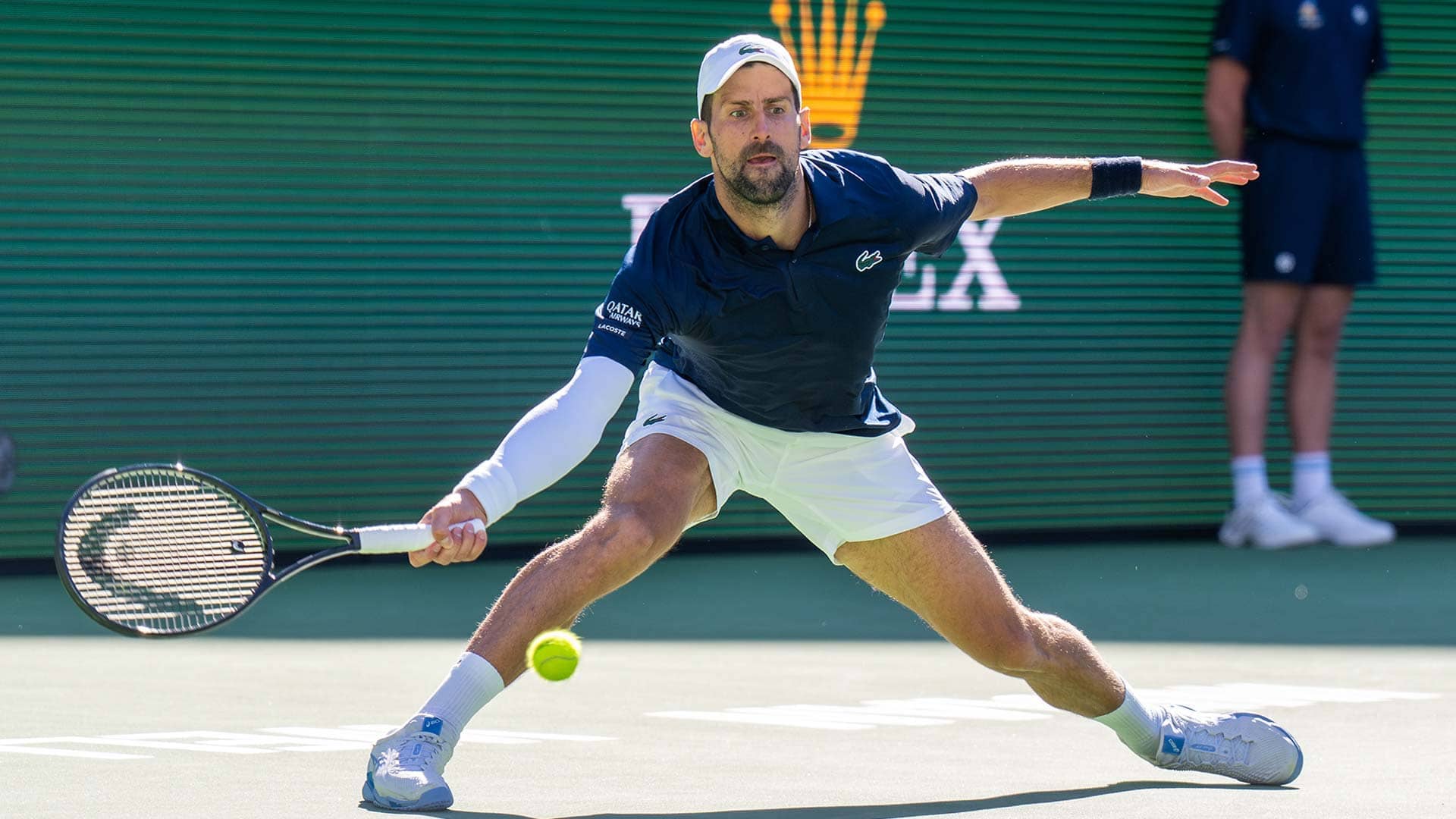
The 2026 BNP Paribas Open opener highlighted the technical volatility inherent in Novak Djokovic’s late-career scheduling. His 4-6, 6-1, 6-2 victory over Kamil Majchrzak was less a routine progression than a calculated exercise in crisis management. At 38, Djokovic’s prioritization of a reduced calendar introduces a recurring operational risk: a match-tempo deficit that manifests as early-round vulnerability. This ‘rustiness’—his first competitive appearance since the Australian Open—underscores the widening gap between peak physical conditioning and match-specific timing.
For a champion with 101 titles, the strategy of longevity necessitates a higher tolerance for set variance. The opening set loss serves as a case study in how elite baseline consistency can be disrupted by a month-long hiatus and the specific atmospheric variables of the California desert. Djokovic’s institutional value remains tied to his ability to recalibrate mid-match, neutralizing Majchrzak’s early-ball-striking through psychological endurance and technical pivot rather than raw physical dominance.
Tactical Volatility and Atmospheric Variables
The Indian Wells Tennis Garden’s gusty conditions acted as a technical equalizer, exposing Djokovic’s timing issues in the first set. Majchrzak utilized a high-precision model, prioritizing early contact and variety to exploit Djokovic’s defensive positioning. However, the eventual turnaround indicates that while tactical variety can secure a set, it often lacks the sustainable potency required to overcome the structural depth of a 24-time Grand Slam winner.
Djokovic’s second-set ‘reset’ involved increasing groundstroke depth and spin, effectively marginalizing Majchrzak’s net-play. This adjustment is essential in the thin desert air, where ball interaction differs significantly from sea-level courts. By forcing the Pole into defensive shells, Djokovic demonstrated that his competitive leverage now rests on technical adaptability—a necessity for maintaining rank against high-velocity younger competitors.
Commercial Anchors and the Dual-GOAT Narrative
The tournament’s scheduling on opening Saturday is a deliberate commercial maneuver, leveraging Djokovic and Carlos Alcaraz to maximize global media engagement. Branding Djokovic as the ‘current GOAT’ and Alcaraz as the ‘future GOAT’ creates a multi-generational appeal that stabilizes the tournament’s market position. This synergy ensures the event remains the most attended day of the ATP/WTA calendar, satisfying high-value corporate sponsors and broadcast partners.
The integration of cultural icons like Timothée Chalamet and Zendaya further elevates the BNP Paribas Open into a lifestyle asset, attracting non-endemic capital and luxury partnerships. Operationally, the ‘seeded player in every match’ mandate provides a structural guarantee of quality, mitigating the financial risks associated with early-round upsets and ensuring the event remains the focal point of the global sports conversation.
Evolving Hierarchy and Operational Logistics
The 2026 field signals a fragmented hierarchy. Defending champions Jack Draper and Mirra Andreeva represent the successful integration of a new generation that no longer views veterans with the same intimidation. Meanwhile, the divergent fortunes of the Russian contingent—Medvedev’s victory over travel fatigue versus Khachanov’s exit—illustrate the thin margins of error on the modern global tour. For the ATP, the continued relevance of a 38-year-old at the top is a marketing triumph, yet it highlights the long-term institutional risk of star succession.
Ultimately, Djokovic’s struggle to find his ‘A-game’ in the desert is a historical pattern, reflecting the difficulty of transitioning from Australian hard courts to the Coachella Valley’s microclimate. As he chases his 102nd title, each match becomes a high-stakes intersection of legacy and commercial health. The coming rounds will determine if the ‘current GOAT’ can maintain his hold on the desert crown or if the younger field is ready to finalize the transition.
Photo by matt4395 on Pixabay.