The April 20 contest between the St. Louis Cardinals (13-8) and the Miami Marlins (10-12) at loanDepot park functions as a high-leverage case study in environmental and mechanical variables. While St. Louis seeks to solidify its NL Central standing, Miami attempts to capitalize on a localized home-field advantage (8-5) that transcends simple win-loss records. This analysis deconstructs the intersection of elite individual exit velocity, pitching command volatility, and the micro-climatic shifts of indoor baseball.
The Jordan Walker Inflection Point
Jordan Walker’s current 14-game hitting streak is the byproduct of a structural transformation in his offensive profile. According to THE BAT X projections, Walker’s talent now resides in the 94th percentile for home run production, catalyzed by a barrel rate surge from 11.2% to 24%. This trajectory suggests a fundamental optimization of his swing path, transitioning from raw power to elite-level contact quality.
Strategically, Walker’s directional hitting is perfectly suited for loanDepot park. He ranks in the 100th percentile for fly balls directed toward center field (40.9%), directly challenging the venue’s sixth-shallowest center-field fences. Positioned in the cleanup spot, Walker creates a high-leverage dilemma for Marlins management, forcing either high-risk pitching sequences or intentional base occupation that disrupts bullpen efficiency.
Pitching Variance and Environmental Multipliers
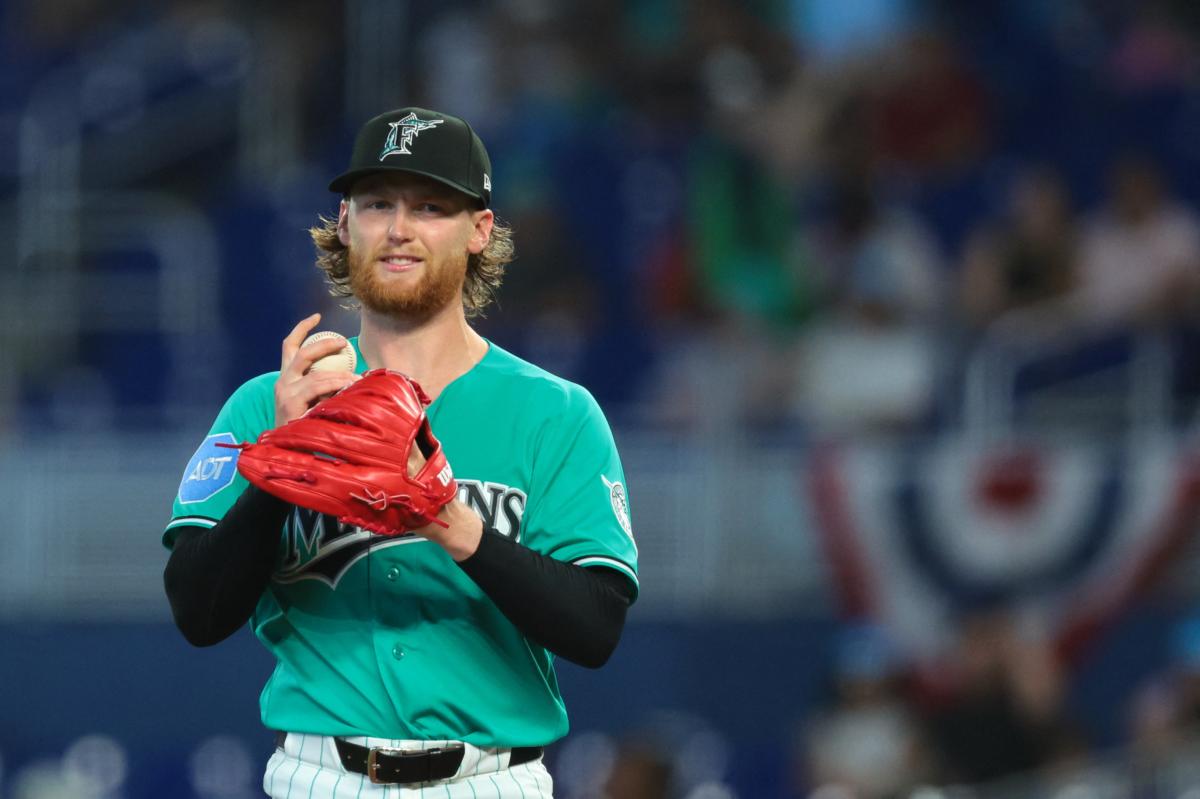
The pitching matchup features a stark contrast in stability. Miami’s Max Meyer (1-0, 4.12 ERA) possesses high-ceiling stuff but remains susceptible to command lapses—a dangerous profile against a Cardinals lineup characterized by disciplined plate coverage. Conversely, Michael McGreevy (1-1, 2.49 ERA) has utilized run suppression to mask lower strikeout rates, though his sustainability remains a subject of regression analysis.
Atmospheric conditions will play a decisive role. With the roof closed, internal temperatures are projected to be 13 degrees higher than the outdoor baseline. This artificial thermal increase reduces air density, acting as a performance multiplier for exit velocity and likely increasing total bases for high-barrel-rate hitters. These conditions also accelerate pitcher fatigue, placing a premium on bullpen depth—a critical factor given the Marlins’ current roster attrition with multiple arms on the 60-day IL.
Market Sentiment and Economic Context
The betting market reflects these tight margins, with Miami positioned as a -135 favorite. This pricing prioritizes venue familiarity and the dome’s environmental control over the Cardinals’ superior win percentage. Analysts identify Walker’s +540 home run prop as a high-expected-value (+EV) play, given his barrel metrics and the park’s specific geometry.
Beyond the diamond, the game exists within an evolving sports economy. Rising ancillary costs, such as the widely criticized $300 parking fees at major venues, underscore a shift toward high-premium monetization. For franchises like the Marlins, maintaining on-field competitiveness is essential to justify these escalating ticket-holder costs. Ultimately, this matchup will be decided by whether the Cardinals’ individual statistical ceilings can overcome Miami’s environmental and structural advantages.