The Strategic Evolution of Lunar Observation
The Artemis II mission, concluding on April 10, 2026, marks a pivotal advancement in space-based planetary observation. By navigating the Orion spacecraft across the lunar far side, the crew—Reid Wiseman, Christina Koch, Victor Glover, and Jeremy Hansen—successfully expanded the human visual record of the Earth-Moon system.
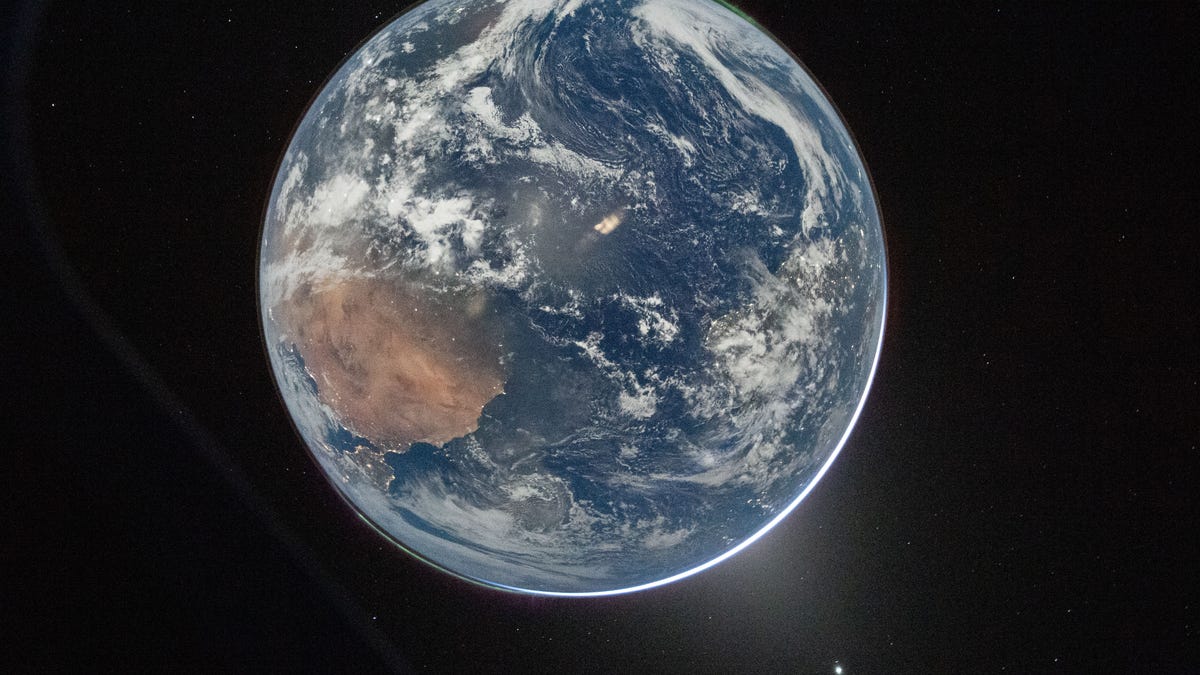
Documenting an ‘Earthset’ from the far side represents a significant technical milestone. By integrating modern imaging technology with human intuition, the mission surpassed the static, low-fidelity constraints of the Apollo era, capturing high-resolution data from a region previously inaccessible to the general public.
Institutional Continuity and Technological Maturity
The progression from Apollo 8’s 1968 ‘Earthrise’ to the 2026 ‘Earthset’ underscores a shift from initial discovery to operational sustainment. While Apollo 8 was defined by early topographic surveys, Artemis II validates the logistical framework required for long-duration deep-space presence. The mission demonstrates that modern, compact hardware can provide immediate, high-value visual assets, effectively bridging the gap between complex aerospace engineering and accessible scientific communication.
Operational Dynamics and Data Acquisition
Spanning April 1 to April 10, 2026, the mission demonstrated the Orion spacecraft’s operational efficiency. By executing a successful far-side trajectory and a precise Pacific Ocean splashdown, NASA verified the architecture essential for future lunar surface infrastructure. This mission confirms that current logistical protocols can support sustained, multi-crew operations, providing a robust foundation for subsequent Artemis phases.
Comparative Analysis and Scientific Utility
The visual data acquired during Artemis II functions as a longitudinal study of Earth’s dynamics. Unlike historical imagery, these new perspectives offer unparalleled clarity of the terminator line, providing researchers with essential data regarding planetary illumination and atmospheric observation. Beyond aesthetic value, the documentation of the far side—characterized by volcanic residue and diverse impact craters—serves as critical input for lunar mapping and geologic analysis.
Strategic Implications for Long-Term Presence
The ability to maintain consistent communication and navigation while shielded by the Moon’s bulk is a requisite for permanent lunar habitation. Aerospace stakeholders view these achievements as indicators of institutional maturity. By benchmarking current performance against Apollo-era milestones, NASA sustains a narrative of continuity, which remains essential for securing the inter-agency cooperation and long-term funding required for sustained extraterrestrial presence.
The Human Element in Deep Space
While robotic missions provide extensive quantitative data, the Artemis II crew’s ability to selectively frame and document unique orbital phenomena reinforces the necessity of human oversight. This human-centric approach acts as a force multiplier for public engagement, ensuring that scientific findings are integrated into broader cultural and policy discourse. As NASA moves toward subsequent mission phases, this blend of technical precision and human-led documentation will inform the protocols for all future lunar and deep-space endeavors.