
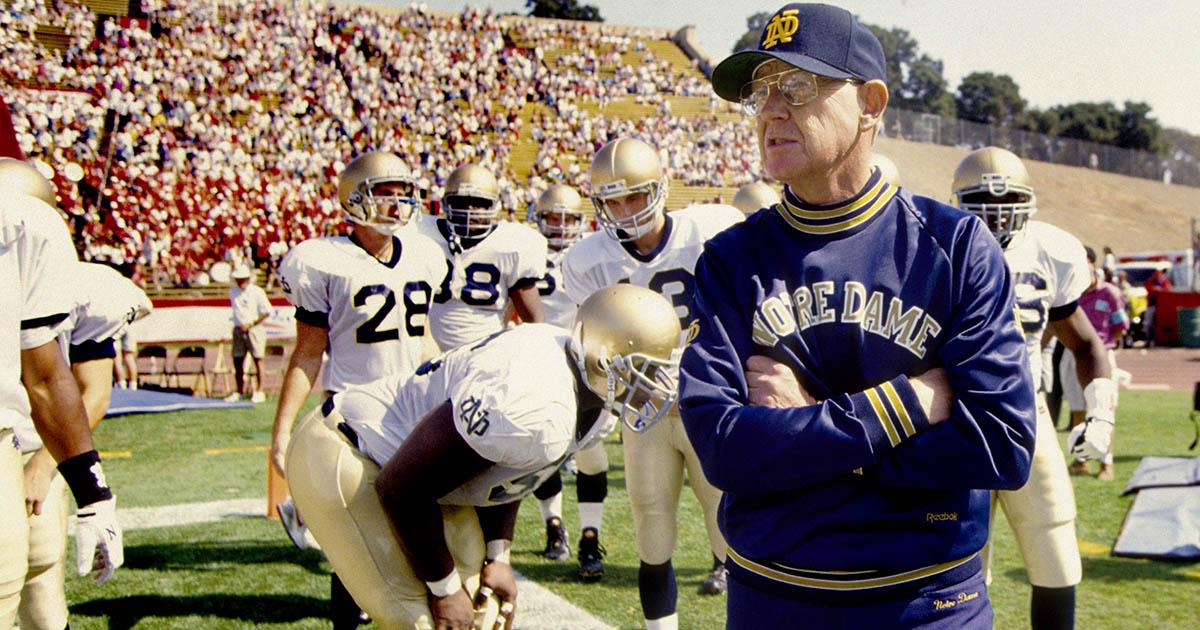
The passing of 89-year-old Hall of Fame coach Lou Holtz concludes a seminal era in collegiate football leadership. His 40-year coaching span, including 32 as a head coach across institutions ranging from William & Mary to Notre Dame, provides a rich case study in strategic program transplantation and performance acceleration.
Metric Analysis: Efficacy Across Institutional Tiers
Holtz’s overall 249-132-7 record is distinguished by its heterogeneity. Securing conference championships at William & Mary (CAA), NC State (ACC), and Arkansas (SWC) demonstrates a consistent ability to optimize performance relative to resource allocation ceilings—a critical indicator of coaching efficacy beyond powerhouse saturation.
The 1977 Arkansas campaign, defined by an 11-1 record and an Orange Bowl upset of favored Oklahoma, serves as a high-leverage data point. This outcome facilitated rapid appreciation in institutional capital, accelerating recruiting pipelines and validating administrative investment priorities in Fayetteville.
Championship Apex: Strategic Calibration at Notre Dame
The 1988 National Championship at Notre Dame represents the peak of his strategic validation. Achieving this title in the most visible college football market solidified Notre Dame’s brand equity, providing enduring leverage in donor relations and institutional prestige maintenance. The singular title underscores the necessity of a unique strategic calibration required to meet Notre Dame’s high operational expectations, contrasting with the ‘upset’ narrative achievable at other tenures.
Industry Benchmarking and Peer Validation
The dual recognition via the Bear Bryant and Eddie Robinson National Coach of the Year awards positions Holtz within the elite cohort whose methodologies achieved peer-validated superiority during their active cycles. These accolades serve as external benchmarks, signaling potential for rapid performance curve adjustments to athletic directors.
His transition into an influential motivational author indicates a successful monetization of his coaching expertise, leveraging performance metrics into broader cultural and thought leadership capital, often resulting in premium compensation structures and extended industry relevance.
Human Capital Development as Operational Resilience
Statements emphasizing Holtz’s role in cultivating ‘Great Teammates, Bosses, Leaders’ speak directly to his focus on durable organizational architecture. In environments facing constant talent turnover, embedding robust leadership frameworks reduces systemic risk associated with staff attrition and reliance on singular player talent, promoting organizational resilience.
Longitudinal Data: Transferability of Coaching Strategy
The career arc offers a longitudinal dataset on coaching transferability. The successful porting of core methodologies across differing resource pools implies a fundamental strategic framework capable of scaling, provided administrative alignment remains robust.
His recent passing removes a key figure from institutional memory, necessitating a shift in reference points for current administrators. For Notre Dame, Holtz anchors the modern championship narrative; for Arkansas, the 1977 team remains the quantitative high-water mark against which contemporary performance is gauged, influencing resource debates.
Legacy Management in a Transformed Landscape
The vacuum created by influential figures requires athletic departments to reassess succession planning benchmarks. While Holtz’s era precedes the current financial flux (NIL, transfer portal fluidity), his success in team cohesion remains a persistent pursuit. Athletic departments must strategically integrate his legacy to maintain donor confidence, framing his championship achievements as foundational justification for ongoing resource demands.

Photo by JACLOU-DL on Pixabay.