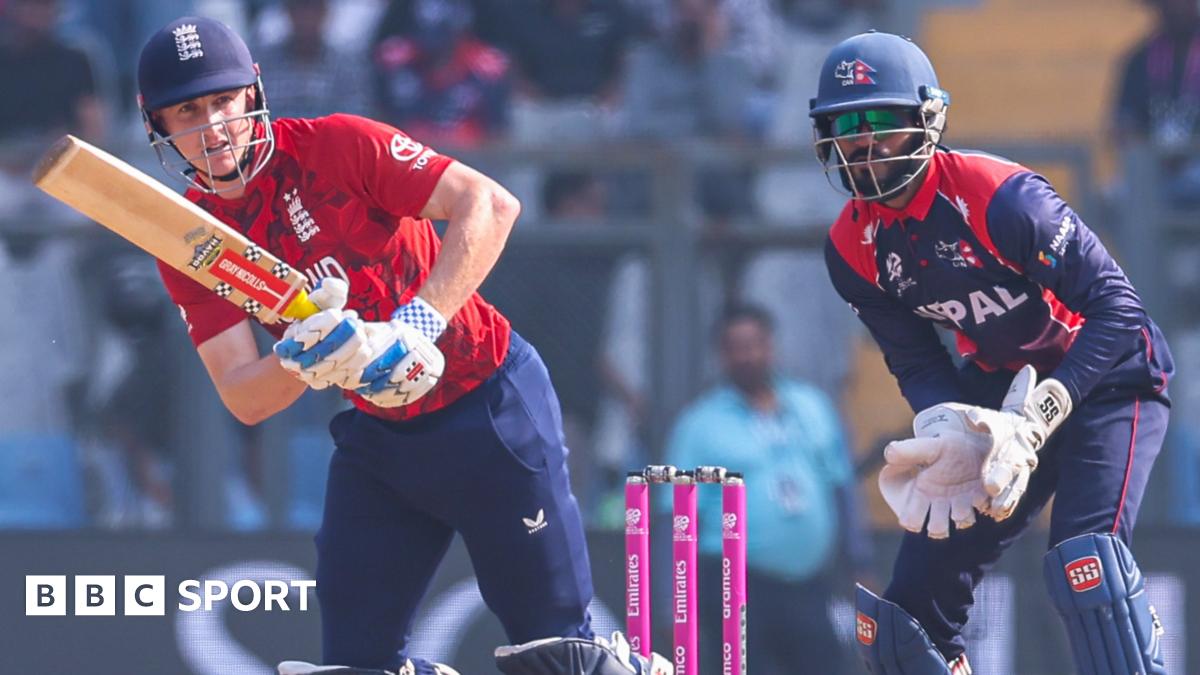
The upcoming fixture between England and Nepal in the ICC T20 World Cup 2026 tournament marks a scheduled engagement between established full member nations and emerging associate participants within the global cricket administrative structure.
Official procedural information released prior to the contest indicated that the England team won the toss and elected to commence the match by batting first, signaling their strategic orientation for the initial innings of the encounter in Mumbai.
Tournament Structure and Contextual Positioning
The ICC T20 World Cup operates as the premier international competition for the Twenty20 format, serving as a central mechanism for assessing national team performance within the established competitive hierarchy. Participation in such global tournaments is governed by qualification pathways dictated by the International Cricket Council (ICC), which stratifies member nations based on performance metrics and administrative status.
England, as a recognized Full Member nation, participates automatically in the top tier of such events, reflecting historical precedence and ongoing administrative obligations within the sport’s governance framework. Nepal, often categorized under the Associate Member status prior to recent competitive advancements, utilizes these scheduled fixtures against Full Members as crucial benchmarks for assessing development against the sport’s highest competitive standards.
The Significance of Maiden Encounters
The designation of this specific contest as a ‘maiden encounter’ between the two national teams underscores a structural reality within international cricket organization: despite extensive global competition, scheduled bilateral or tournament matchups are frequently limited between Full Members and newer competitive entities. This lack of previous formalized contest data means that strategic preparation often relies heavily on aggregated performance indicators rather than direct head-to-head tactical history.
For the team entering the unknown, as described in preliminary documentation, the absence of prior engagement necessitates a heavier reliance on internal performance models and generalized assessments of the opposition’s known compositional strengths. This is contrasted with established rivalries where centuries of recorded data inform specific risk assessments related to player matchups.
Pre-Match Analytical Framing and Data Inputs
Pre-game analysis, often informed by statistical modeling units such as those employed by CricViz analysts, attempts to quantify expected performance based on historical data subsets. This quantification is vital for informing team selection, setting performance expectations, and guiding in-game tactical adjustments.
A specific focus area noted in preliminary statistical summaries involves the matchup dynamic between Nepal’s bowling contingent, characterized generally as ‘spin heavy,’ and specific key English batters. This observation highlights the strategic imperative for teams utilizing specialized bowling techniques—such as heavy reliance on spin manipulation—to target perceived statistical vulnerabilities within the opposition’s batting lineup.
Applying Statistical Constraints to Team Strategy
The mention of a specific English player, identified as the team’s designated captain for this fixture, averaging 22 against spin in preceding recorded matches, serves as a concrete data point for analytical modeling. Within high-level cricket administration, such metrics are not mere trivia; they trigger specific strategic considerations.
If a primary batter demonstrates a quantifiable susceptibility to a certain bowling type, the opposing team’s selection panel is structurally incentivized to prioritize personnel capable of delivering that specific threat, thereby maximizing the probability of early dismissals or constrained run rates. Conversely, the batting team’s management must implement procedural countermeasures, such as revising opening partnerships or modifying internal batting order sequences, to shield that specific vulnerability until a later phase of the innings.
The operational constraint imposed by this statistical observation is the requirement for immediate tactical deployment based on limited information, as the match itself provides the only real-time validation or refutation of the pre-game analytical projection. The environment of a World Cup group stage, characterized by limited opportunities to recover from poor results, heightens the immediate importance of accurate pre-match strategic framing.
Administrative and Media Infrastructure Context
The broader context surrounding the fixture includes the extensive administrative and media apparatus necessary to execute a global sporting event of this scale. The source material references various support structures integral to the tournament’s operational framework, including dedicated sections for Home, Warm-Ups, Matches, Standings, News, Videos, and Stats Tracker.
These enumerated components reflect the layered requirements of modern international sports administration. The ‘Stats Tracker’ function, for instance, is not merely a display mechanism; it is the repository where in-match data streams are ingested, processed, and disseminated in near real-time, validating the very analytical inputs that informed the pre-game projections mentioned earlier. The existence of ‘Official Broadcasters’ confirms the commercial and informational obligations underpinning the event’s visibility.
Furthermore, the inclusion of administrative sections like ‘Venues,’ ‘Tickets,’ and specified Terms and Conditions (T&Cs) for different geographical regions (India, Sri Lanka) illustrates the cross-jurisdictional compliance and logistical complexity managed by the organizing bodies. The ability to host an event involving multiple international entities requires adherence to diverse regulatory environments for everything from player movement to media rights distribution.
The Role of Supplemental Tournament Features
The supplementary features listed, such as ‘Game Hub,’ ‘Play of the Day Predictor,’ and ‘Player of the Match Polls,’ serve administrative and engagement functions designed to maximize audience interaction beyond the core competitive action. These tools act as feedback loops, translating raw competitive data into consumable narrative elements for the global viewership.
The ‘Predictor’ mechanisms, while speculative in nature, rely on the same underlying data models used by professional analysts, demonstrating a democratization of—or at least a public interface with—the quantitative assessment process. The ‘Polls’ generate secondary metrics related to perceived player impact, often influencing post-match administrative awards, which carry reputational weight for the recognized athletes.
Navigating Uncharted Competitive Territory
The essence of the ‘maiden encounter’ dynamic lies in the asymmetry of structural experience. England’s organizational maturity within the top tier implies established pipelines for talent identification, long-term strategic planning frameworks, and established protocols for managing high-pressure tournament environments.
For Nepal, participation in this fixture represents a critical phase in their institutional development path, often characterized by rigorous domestic restructuring aimed at achieving greater compliance with the rigorous physical, technical, and administrative standards demanded by Full Member competition. Every match functions as an essential data collection exercise for future policy adjustments concerning coaching methodologies, player contract structures, and infrastructure investment.
The competitive environment of a World Cup, specifically when facing a team from the historically dominant tier, forces immediate calibration of internal performance baselines. Success in such a context is often measured not solely by immediate match outcomes, but by the sustained competitive resilience demonstrated under maximal external pressure.
Editorial Synthesis on Factual Presentation
The provided facts are limited to procedural declarations (toss result) and specific statistical observations concerning player vulnerabilities against particular bowling styles. This situation necessitates an emphasis on the structural systems that generate and utilize such information. The integrity of reporting in this domain relies on rigorously separating stated tactical preferences—such as electing to bat—from proven competitive outcomes, which have not yet been established for this specific contest.
The institutional importance of citing precise statistical context, such as the specific average against spin, is that it underscores the shift in modern sports analysis from purely observational reporting to quantified, data-driven strategic planning. When source data identifies a statistical anomaly or strength, the editorial mandate requires explaining the systemic function of that anomaly within the broader organizational strategy of the competing entities, ensuring the narrative remains centered on established operational realities rather than speculation regarding the match’s final disposition.