
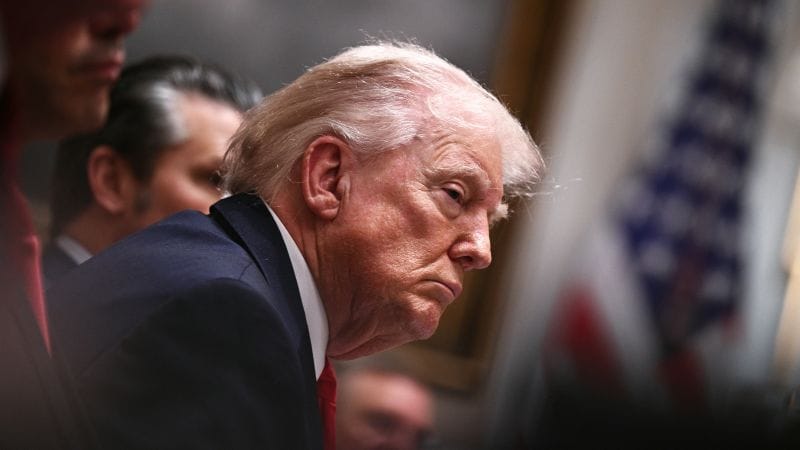
Former President Donald Trump has publicly urged Republicans to advocate for placing election processes under national authority, a proposition described as a call to ‘nationalize’ elections. This stance represents a significant signal regarding his focus on electoral matters and suggests a desire to shift the locus of control over voting and election administration.
The concept of ‘nationalizing’ elections implies a move away from the current decentralized system, where states and local jurisdictions largely administer electoral processes. In the United States, election administration is primarily a state responsibility, with varying legal frameworks, operational procedures, and oversight mechanisms across different jurisdictions. Federal involvement has historically been focused on setting broad standards, protecting voting rights, and providing funding, rather than direct administration of polling places, voter registration, or ballot counting.
Implications for Electoral Governance
A nationalized election system would necessitate a fundamental restructuring of how elections are conducted in the United States. This could involve the creation of federal agencies or the expansion of existing ones to oversee registration, polling operations, and vote tabulation nationwide. Such a shift would raise substantial questions about the balance of power between federal and state governments, potentially encroaching on traditional state autonomy in managing elections.
The proposal also touches upon the administrative complexities inherent in managing elections at a national scale. Establishing uniform standards and procedures across diverse geographical, demographic, and technological landscapes presents significant logistical and operational challenges. Furthermore, any move towards federal control would likely face extensive legal and political scrutiny regarding constitutional interpretations of federal versus state authority over electoral processes.
Institutional and Political Context
The statements emerge within a broader context of ongoing political discourse surrounding election integrity and administration in the United States. Calls for centralized control over elections can be interpreted as a strategic response to concerns about the perceived fragmentation and variability of election outcomes and administration across different states. Such proposals may aim to create a more uniform and potentially more controllable electoral environment from a national political perspective.
From an institutional standpoint, the U.S. electoral system is characterized by its federal structure, where states retain significant authority. This arrangement reflects a historical compromise and a deliberate distribution of powers designed to ensure local administration while upholding national democratic principles. Proposals to ‘nationalize’ elections challenge this established structure, suggesting a re-evaluation of the optimal level of governance for electoral functions.
Analysis of the ‘Nationalization’ Concept
The term ‘nationalize’ in this context suggests bringing election processes under a unified, federal jurisdiction. This could involve direct federal administration, the imposition of uniform federal mandates on state and local election officials, or the establishment of national oversight bodies with substantial authority. The precise mechanisms for such ‘nationalization’ remain unspecified, but the underlying intent appears to be an assertion of federal control over a domain traditionally managed at the state and local levels.
This proposition invites consideration of the administrative capacity and potential vulnerabilities of a centralized election system. While proponents might argue for greater uniformity and potentially enhanced security or efficiency, critics could raise concerns about the concentration of power, the potential for partisan influence at the federal level, and the loss of local responsiveness and innovation in election administration.
Broader Governance Implications
The discourse surrounding the nationalization of elections is indicative of deeper debates about democratic infrastructure and the future of electoral management in the United States. It necessitates an examination of the principles of federalism and the appropriate division of responsibilities in a representative democracy. The call highlights a tension between the desire for national consistency and the value placed on state and local control over democratic processes.
Understanding such proposals requires analyzing the institutional architecture of U.S. elections. The existing framework relies on a decentralized network of state and county election officials, each operating under state law but often adhering to federal guidelines on issues such as voter registration and accessibility. Any significant shift towards nationalization would require navigating complex legal challenges, potential legislative action, and substantial public debate about the fundamental nature of electoral governance in the nation.
Strategic Considerations and Future Outlook
The strategic implications of advocating for nationalized elections are significant. Such a stance could galvanize certain segments of the electorate while potentially alienating others who value state-level control and local election administration. It positions the idea of electoral reform within a broader political strategy, focusing on the structural elements of how elections are managed.
The public discussion of nationalizing elections, particularly when initiated by a prominent political figure, signals an evolving political landscape concerning electoral governance. It prompts stakeholders, policymakers, and the public to consider the long-term consequences of centralizing electoral authority and to weigh the potential benefits against the risks to federalism and democratic diversity in election administration.

Photo by geralt on Pixabay.