
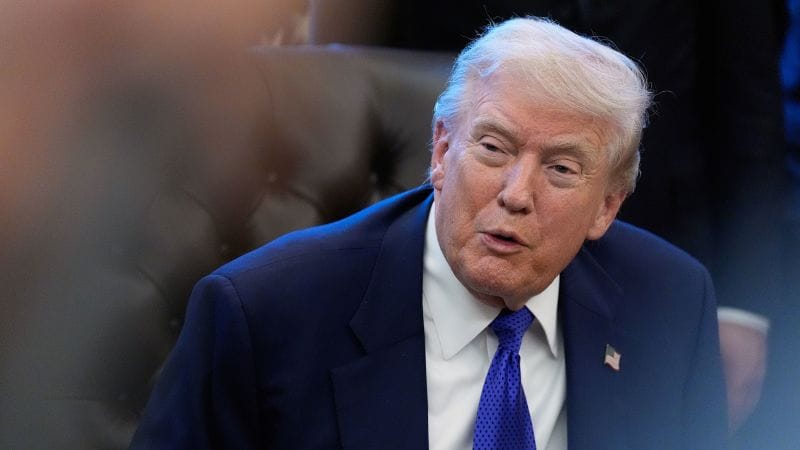
Congress is nearing a resolution to end the partial government shutdown, with key conservative members in the House of Representatives indicating a shift in their stance. This development follows extensive lobbying efforts by former President Donald Trump and leaders within the Republican party, suggesting a potential agreement on government funding within the next 24 hours.
Congressional Dynamics in Funding Negotiations
The legislative process for passing government funding bills involves intricate negotiations and coalition-building within both chambers of Congress. The House of Representatives, in particular, often faces internal divisions, especially when a significant bloc of members holds strong ideological positions on fiscal matters and government spending. The requirement for a majority vote means that leadership must secure broad support, often necessitating concessions or strategic persuasion to overcome objections.
The dynamic described involves a critical juncture where executive influence, through direct engagement by a former president, and internal party leadership pressure are being applied to sway a group of holdout members. This highlights a common feature of legislative bodies: the tension between the desire for fiscal conservatism or specific policy riders, and the overarching need to maintain government operations through appropriations. The procedural hurdles are significant, as any appropriations bill must pass both the House and the Senate and be signed into law by the President to avoid or end a shutdown.
The Role of Party Leadership and External Influence
In situations involving government shutdowns, party leaders are tasked with managing internal dissent and forging consensus. This often involves direct communication, strategy sessions, and sometimes, the application of party discipline or appeals to broader party goals. The involvement of former President Trump in this instance underscores the significant influence that senior party figures can wield, even outside of formal governmental roles.
This type of intervention can serve to realign factions within a party towards a common objective, such as averting negative political consequences associated with a prolonged shutdown or achieving a perceived legislative victory. The ability of leadership, augmented by influential party figures, to secure commitments from wavering members is a critical element in navigating the legislative labyrinth of federal budgeting and appropriations.
Opposition Perspectives on Spending Deals
The narrative also includes the perspective of House Democrats, who are reportedly expressing dissatisfaction with the emerging Senate spending deal. This indicates a partisan divide in the approach to government funding, where different parties prioritize distinct fiscal policies and legislative objectives. When a spending bill progresses primarily through one party’s efforts, the minority party may feel sidelined or that their concerns have not been adequately addressed.
This recurring complaint from House Democrats highlights the challenges of bipartisan cooperation in an era of heightened political polarization. The appropriations process, ideally a bipartisan exercise to ensure the uninterrupted functioning of government, can become a site of political contention. The perception of being excluded from the formation of spending agreements often fuels opposition and can lead to procedural delays or increased difficulty in achieving final passage, even when a shutdown appears imminent.
Navigating the Legislative Path to Resolution
The scenario depicts a legislative body on the verge of resolving a funding impasse after a period of intense negotiation and persuasion. The involvement of a former president in providing ’11th-hour help’ suggests a critical intervention aimed at bridging internal party divides and securing the necessary votes for passage. This intervention is presented as crucial in enabling Speaker Johnson to achieve the required majority to end the shutdown.
The underlying mechanics involve the strategic deployment of political capital and influence to overcome legislative obstacles. The need for such direct appeals often arises when standard leadership efforts are insufficient to unite disparate factions within a party or across the aisle. The resolution of a government funding crisis, therefore, frequently hinges not only on policy compromises but also on the skillful management of internal party dynamics and external political pressures.

Photo by WikiImages on Pixabay.