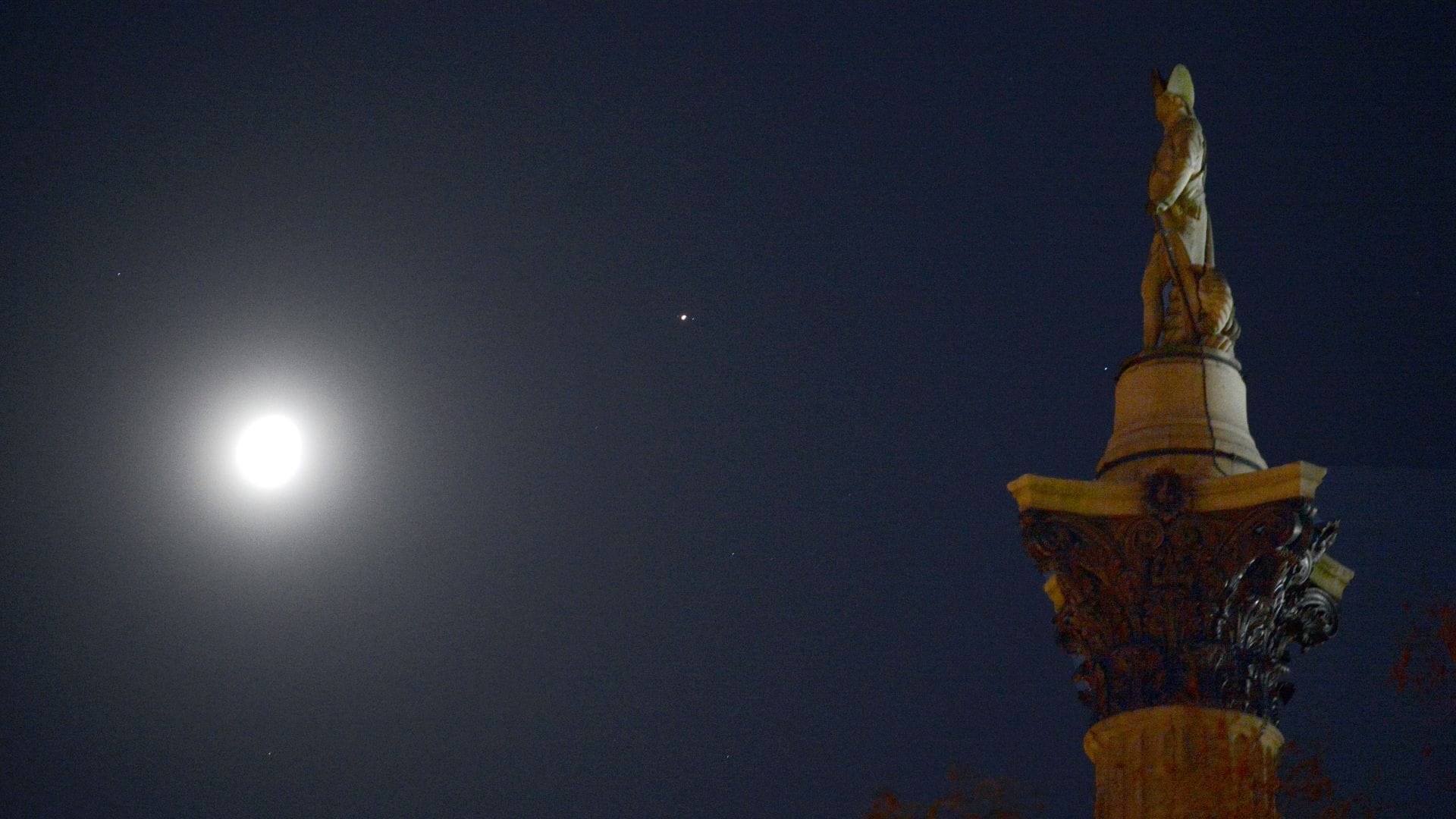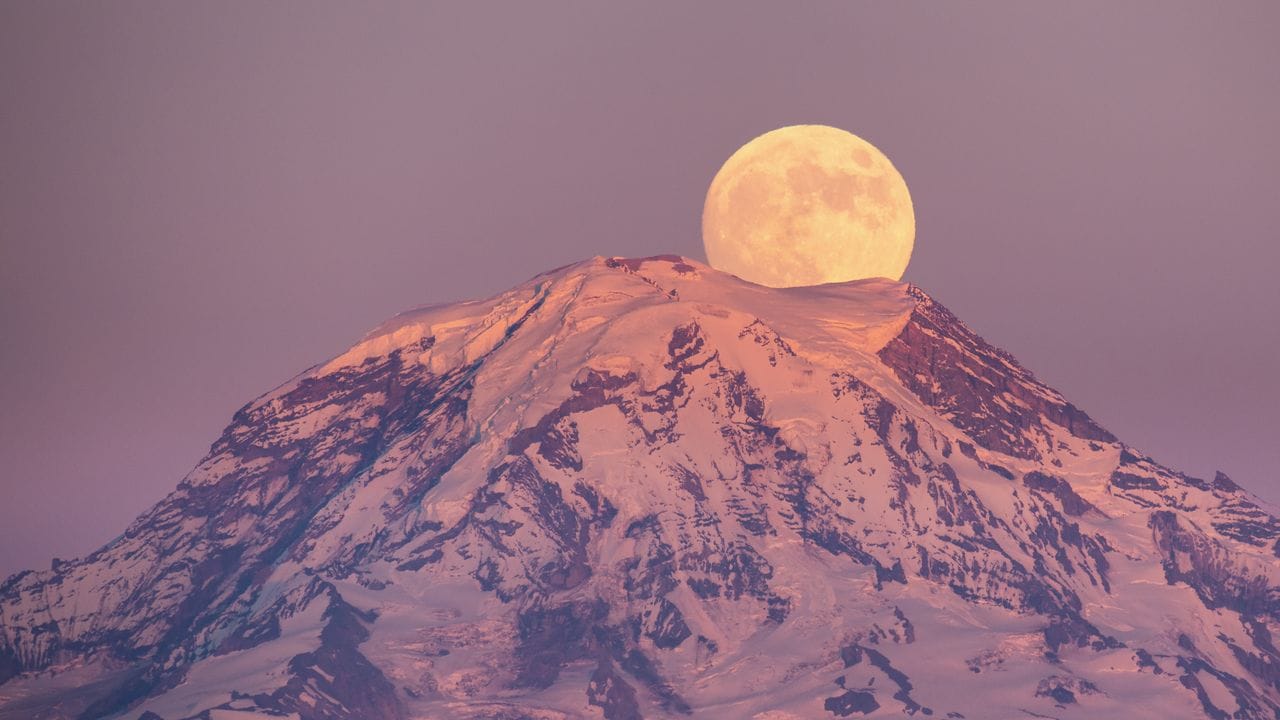
As the chill of winter deepens and the nights stretch long, the celestial tapestry above offers a consistent source of wonder. On January 30, 2026, sky-gazers will be treated to a captivating prelude, witnessing the moon, nearly full, engaging in a cosmic ballet with the gas giant Jupiter. This striking conjunction sets the stage for the highly anticipated arrival of February’s Full Snow Moon, an event steeped in both scientific observation and rich historical tradition.
Look to the eastern horizon at sunset on January 30 to spot this magnificent pairing. The moon, in its waxing gibbous phase, will be an impressive 92% illuminated, appearing almost entirely full. Its brilliant glow, nestled beside the luminous presence of Jupiter, offers a prime opportunity for early observation before the full splendor of the Snow Moon takes center stage.
The Full Snow Moon: A Winter Spectacle
Following January’s “Wolf Moon,” the second full moon of the year, aptly named the “Full Snow Moon” or “Storm Moon,” is set to grace our skies on February 1, 2026. These evocative names are deeply rooted in the harsh weather conditions characteristic of mid-winter in many parts of the Northern Hemisphere, where heavy snowfall and blizzards were common, making hunting difficult and life challenging.
The arrival of a full moon is a moment of astronomical significance, marking the point in the lunar cycle where the Earth is positioned directly between the sun and the moon. From our vantage point, this alignment allows the sun’s rays to fully illuminate the moon’s face, presenting its iconic, radiant disc to us. This consistent cycle has captivated humanity for millennia, guiding calendars, inspiring myths, and serving as a timeless beacon in the night sky.
Understanding Lunar Phases: From Waxing Gibbous to Full Illumination
The journey to the full moon is a gradual process, a continuous dance of light and shadow that we observe as the moon waxes and wanes. On January 30, 2026, the moon will be in its waxing gibbous phase. The term “waxing” indicates that the illuminated portion of the moon is growing larger, moving towards full illumination, while “gibbous” describes a shape that is more than a semicircle but less than a full circle.
This nearly full state, at 92% illumination, means that while not yet 100% complete, it will appear remarkably bright and expansive to the naked eye. The subtle difference between a 92% illuminated waxing gibbous moon and a full moon might only be discernible to the keenest observer or through careful telescopic examination. For most, it offers almost the same visual impact as the full event, making the Jupiter conjunction particularly special.
As the moon continues its orbit, reaching February 1, 2026, it will achieve full illumination, officially becoming the Full Snow Moon. This precise moment, while occurring at a specific time, blesses the night sky with its full, bright presence for roughly three days surrounding the peak. This extended period ensures ample opportunity for observers across various time zones to appreciate its beauty.
The Historical Roots of Moon Names
The practice of assigning names to each full moon of the year dates back centuries, primarily to Native American tribes in what is now the northeastern United States and early European settlers. These names were often pragmatic, serving as a calendar for tracking seasons and key agricultural or hunting periods. Each name paints a vivid picture of the natural world and the challenges or bounty of a particular month.
The “Full Snow Moon” is a poignant example, reflecting the often brutal weather conditions of February. It was a time when travel was difficult, and food sources scarce due to deep snow cover. The alternative name, “Storm Moon,” further underscores this reality, highlighting the fierce winter storms that characterized this part of the year. These names serve as historical windows into how past cultures navigated and understood their environment.
Other traditional names for February’s full moon include the Hunger Moon, a testament to the scarcity of food, and the Trapper’s Moon. Each name, while localized, shares a common theme: survival and resilience in the face of winter’s grip. This rich tapestry of nomenclature reminds us of humanity’s enduring connection to the natural cycles of the Earth and sky.
The Jovian Embrace: Moon Meets Jupiter
The celestial encounter between our moon and Jupiter on January 30, 2026, offers more than just aesthetic appeal; it’s a tangible demonstration of cosmic mechanics. Jupiter, the largest planet in our solar system, is a brilliant beacon in the night sky, often outshining everything but the moon and Venus. Its presence beside the near-full moon creates a striking visual contrast: the serene, cratered surface of our natural satellite juxtaposed with the distant, swirling gas giant.
Such conjunctions, where two or more celestial bodies appear close together in the sky, are a delightful sight for both amateur and seasoned astronomers. While they are not physically close in space, their alignment from Earth creates a momentary illusion of proximity. This specific event provides an excellent opportunity to appreciate the vastness of our solar system and the dynamic movements within it.
Observing Jupiter even with the naked eye reveals its steady, bright light, distinct from the twinkling of stars. With a pair of binoculars or a small telescope, one can often discern Jupiter’s four largest moons – Io, Europa, Ganymede, and Callisto – appearing as tiny pinpricks of light beside the giant planet. This adds another layer of fascination to the lunar conjunction, inviting deeper exploration of our cosmic neighborhood.
Tips for Optimal Winter Skygazing
To fully appreciate the Snow Moon and its encounter with Jupiter, a few simple tips can enhance the viewing experience. First and foremost, check the local weather forecast for clear skies. Winter nights can be crisp and clear, but also prone to cloud cover. Bundle up warmly, as even short periods outdoors can become uncomfortable in freezing temperatures.
Find a location away from significant light pollution. While the moon and Jupiter are bright enough to be seen from urban areas, a darker environment will amplify their brilliance and allow for a more profound connection with the night sky. Look towards the eastern horizon shortly after sunset on January 30 for the moon and Jupiter, and then on February 1 for the Full Snow Moon itself. The moon will continue its westward arc across the sky throughout the night.
No special equipment is needed to enjoy this spectacle; the naked eye is often sufficient. However, a pair of binoculars can offer a magnified view, revealing more detail on the lunar surface and potentially making Jupiter’s moons visible. Even a modest telescope will transform the experience, bringing the distant worlds into sharper focus.
The Enduring Fascination with Our Celestial Companion
The moon, our closest celestial neighbor, has forever held a special place in the human psyche. It has inspired poets, guided navigators, and influenced cultures across the globe. Each full moon, with its unique traditional name, serves as a regular reminder of the cyclical nature of time and the profound connections between Earth and its cosmic surroundings.
The Full Snow Moon of 2026, enhanced by its luminous dance with Jupiter, offers a moment to pause and reflect on these enduring connections. It’s an invitation to step outside, look up, and be reminded of the vast, intricate beauty of the universe we inhabit. These celestial events provide a unique opportunity for collective wonder, bridging generations and cultures through a shared appreciation for the marvels above.
The night sky, a boundless canvas, forever unfolds its ancient stories, reminding us of our place within its grand, silent ballet. Each moonrise, each planetary alignment, is a whispered invitation to look beyond our immediate world and embrace the universal spectacle.