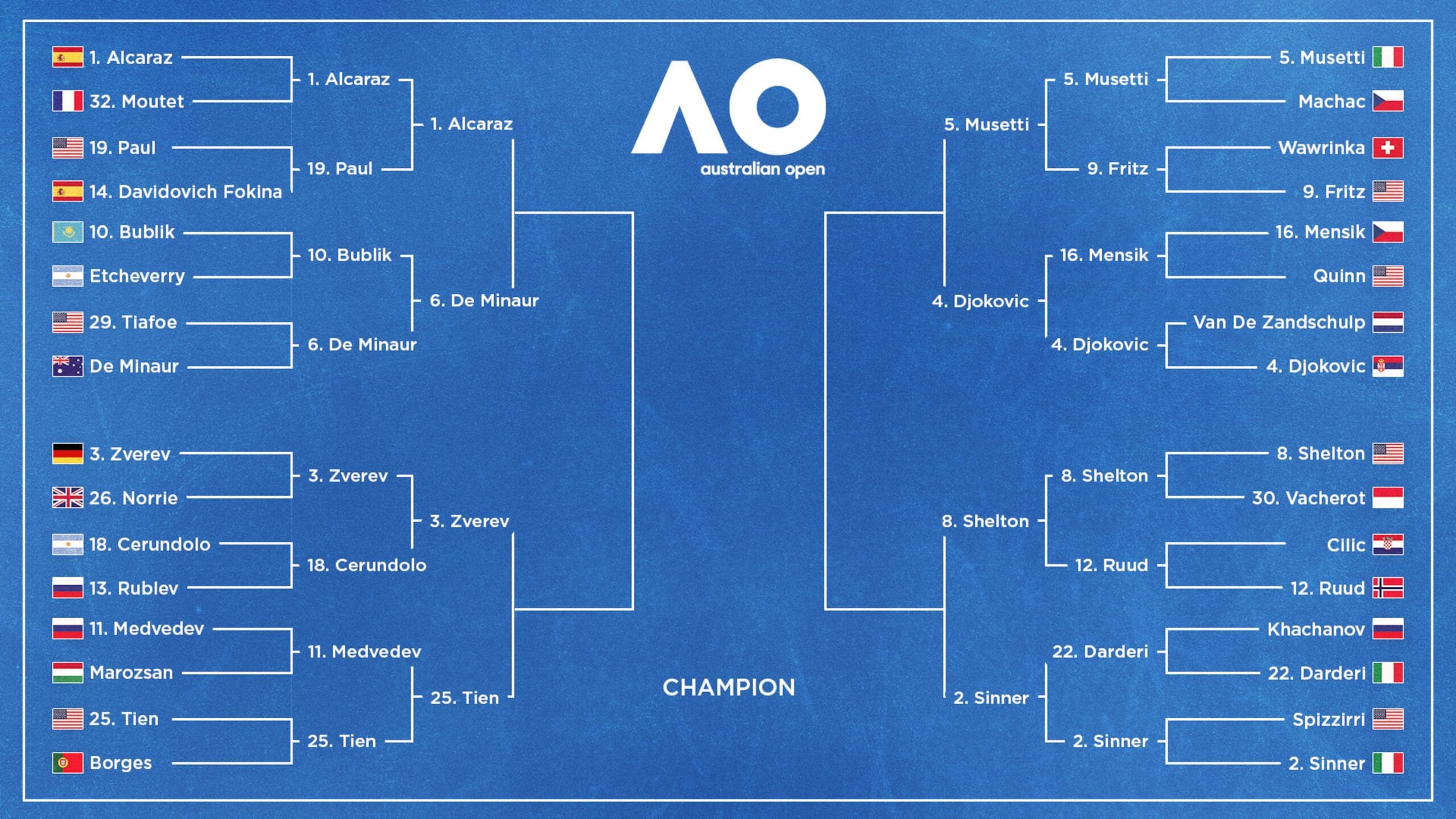
MELBOURNE, Australia — The roar of the crowd, the anticipation of a serve, the electric tension building as two titans prepare to clash on one of tennis’s grandest stages. This is the typical prelude to a fourth-round encounter at the Australian Open, especially when a legend like Novak Djokovic is involved. Yet, on this particular day in Melbourne, the expected spectacle gave way to an unexpected quiet.
Instead of battling under the searing Australian sun, Novak Djokovic advanced to the quarterfinals of the Australian Open without hitting a single ball in his scheduled fourth-round match. His opponent, the highly-rated Czech Jakub Menšík, withdrew from the tournament, sending the Serbian maestro directly into the last eight.
An Unforeseen Passage to the Quarterfinals
The news came as a surprise to fans and pundits alike. Djokovic, chasing an unprecedented 11th Australian Open title and a record-extending 25th Grand Slam singles crown, found his path eased by circumstances beyond his control. While every player prefers to earn their victories on court, a walkover at this stage of a major tournament can be a significant advantage, particularly for a veteran navigating the demanding physical and mental rigors of a two-week event.
For Djokovic, an easy day of work meant a day of crucial rest. At 36 years old, conserving energy is paramount, especially when facing a potential gauntlet of physically grueling matches in the tournament’s latter stages. The Serbian’s meticulous preparation and legendary endurance are well-documented, but any opportunity to recover without expending energy is a welcomed boon in the relentless pursuit of Grand Slam glory.
The Young Challenger’s Disappointment
On the other side of the coin lies the profound disappointment for Jakub Menšík. The young Czech talent, who had impressed many with his performances leading up to this point, was undoubtedly looking forward to the challenge of facing the world number one. Playing Djokovic on a Grand Slam court is a career-defining moment, an opportunity for a rising star to test their mettle against the very best.
While the exact reason for Menšík’s withdrawal was not immediately detailed beyond ‘citing an’ undisclosed factor, such decisions are rarely made lightly. They typically stem from injury, illness, or other significant personal reasons that make competing at the elite level impossible. For a player like Menšík, who is still establishing himself on the ATP tour, missing such a high-profile match is a significant setback, both in terms of potential ranking points and invaluable experience.
The tennis world often champions the resilience of its young stars, and Menšík’s journey, though interrupted, is far from over. His talent is undeniable, and his presence in the fourth round of a major speaks volumes about his potential. This premature exit, while painful, will likely fuel his ambition to return stronger and make an even deeper run in future tournaments.
The Nature of Walkovers in Grand Slams
Walkovers, though uncommon in the later rounds of major tournaments, are an inherent part of the sport. They serve as a stark reminder of the physical toll professional tennis takes on athletes. Players push their bodies to the absolute limit, enduring countless hours of training, travel, and intense competition. Injuries, exhaustion, or illness can strike at any moment, forcing even the most determined competitors to step aside.
For the recipient of a walkover, the emotions can be complex. There’s relief at avoiding a tough opponent and gaining an unexpected break, but often a sense of anti-climax. True champions, like Djokovic, prefer to earn every victory outright, validating their skill and preparation against the best the draw has to offer. Yet, the strategic advantage of fresh legs and a clear mind in the quarterfinals cannot be overstated, especially when the field is packed with world-class talent.
Impact on Tournament Dynamics and Future Rounds
Djokovic’s unscheduled rest reshapes the dynamics of the men’s singles draw. While every player in the quarterfinals will have fought hard through four rounds, Djokovic will enter his next match having effectively had an extra day off from competitive play. This could be a significant factor in longer matches or in the event of challenging weather conditions, which are not uncommon during the Australian summer.
The tennis community often speculates on the psychological effects of such an event. Does the recipient feel less ‘match tough’ due to the lack of a recent competitive challenge? Or does the refreshed body and mind provide an unassailable edge? History offers examples of both outcomes, but for a player of Djokovic’s caliber and experience, it’s more likely to be perceived as a beneficial twist of fate, allowing him to sharpen his focus for the battles ahead.
As the tournament progresses, the stakes will only rise. Djokovic will undoubtedly leverage this unexpected respite to fine-tune his strategy and prepare for whoever stands between him and another semi-final berth. The path to a Grand Slam title is never easy, but sometimes, fate offers a slight detour that can make all the difference.
“In sports, as in life, the journey is full of unexpected twists. Sometimes, the greatest challenges are not those you face on the court, but those you overcome by simply being ready for whatever comes next,” a seasoned tennis analyst remarked, reflecting on the unpredictable nature of top-tier competition.