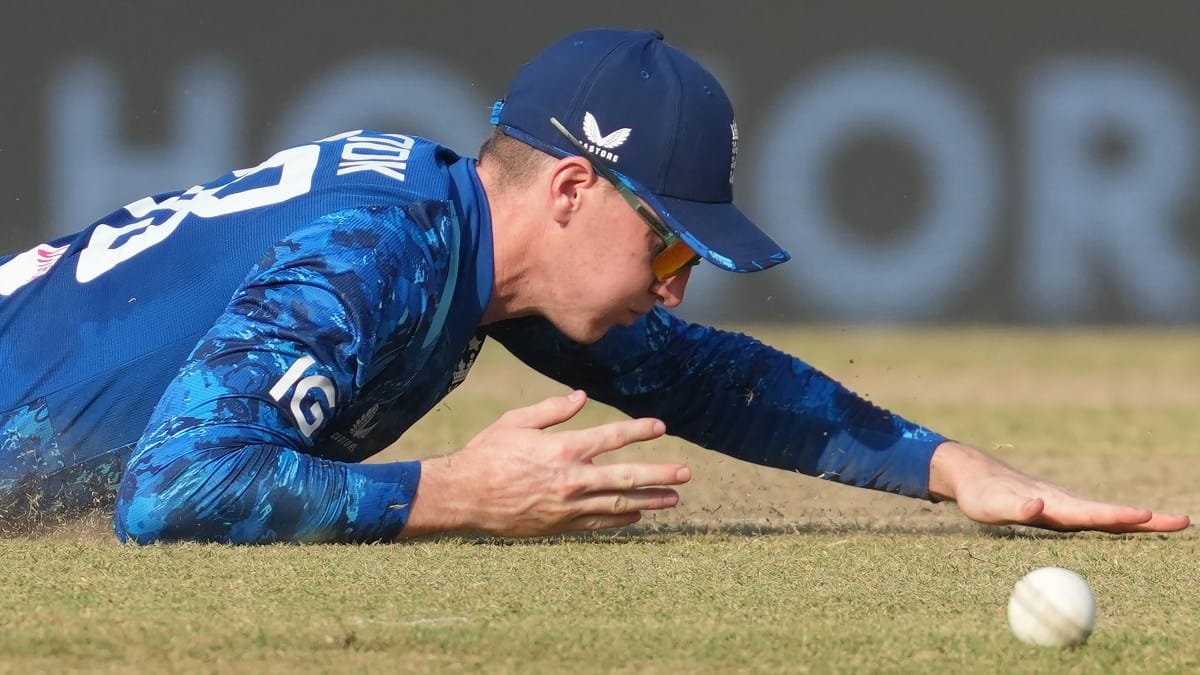
Pitch Controversy Overshadows England’s ODI Series Conclusion
As the England vs. Sri Lanka One Day International (ODI) series draws to a close, the focus has unexpectedly shifted from the on-field results to a contentious debate surrounding the playing conditions. Following the second ODI, English batsman Harry Brook alluded to the pitch as the “worst pitch” he had ever played on. This assessment has since been challenged by Sri Lankan player Asalanka, creating a stir in the post-match analysis.
The exchange highlights a recurring theme in international cricket: the subjective nature of pitch assessments and their potential impact on player performance and perceptions. While some pitches are renowned for favoring batsmen, leading to high-scoring ‘run-fests’, others present a more challenging environment, demanding greater skill and adaptability from both bowlers and batsmen.
Brook’s ‘Worst Pitch’ Assessment
Harry Brook’s candid remark after the second ODI, describing the pitch as the “worst ever,” suggests a surface that significantly hampered his batting experience. Such comments often stem from conditions that are difficult to score on, perhaps offering excessive turn for spinners, unpredictable bounce, or excessive seam movement.
However, the very same pitches where Brook honed his formative cricket skills, specifically at Burley-in-Wharfedale CC and Sedbergh School, are described as “clearly very good.” This contrast implies that Brook found batting considerably simpler on these earlier surfaces, suggesting a stark difference in the challenges presented by the international ODI pitch compared to his junior grounds.
Asalanka’s Rebuttal and Wider Context
Sri Lanka’s Asalanka has publicly questioned Brook’s assessment, implying that not all ODIs are played on what he terms “roads” – a colloquialism for batting paradises. His perspective suggests that Brook’s experience might be an outlier, or that the definition of a “good pitch” can vary widely.
This disagreement brings into sharp relief the differing expectations and realities of playing cricket across various venues. What one player deems “worst,” another might consider a fair test of skill. The context of international competition, where teams play on diverse surfaces, often leads to these kinds of discussions.
Why This Matters: The Nuance of Cricket Pitches
The debate over the “worst pitch” is more than just an anecdotal exchange; it touches upon fundamental aspects of cricket strategy and the integrity of the game. Pitches are not merely the stage upon which the drama unfolds; they are active participants, influencing the ebb and flow of a match.
A pitch that offers assistance to bowlers can lead to closer contests, potentially more exciting finishes, and a greater demonstration of bowling prowess. Conversely, flat, batting-friendly pitches can result in one-sided affairs and may diminish the tactical battles that are a hallmark of the sport.
Understanding pitch behavior is crucial for team selection, strategy, and even psychological preparation. Teams that can adapt to different conditions often have a significant advantage. For instance, a team accustomed to playing on dry, turning tracks in the subcontinent might struggle on a green, seaming surface in England, and vice versa.
The Data Behind the Batting Challenge
CricViz data analyst Ben Duckett’s statistics offer a glimpse into the complexities of batting. While Duckett possesses a formidable strike rate of 179 with the reverse sweep in ODIs, he is dismissed every 13 deliveries when employing this shot. This specific data point illustrates that even aggressive, high-percentage shots carry inherent risks, and a player’s effectiveness can be heavily influenced by the conditions they face.
When a pitch is difficult, batsmen are often forced to alter their natural game. Shots that might be effective on a good surface could become perilous. The data on dismissals, therefore, not only reflects a player’s risk-taking but also the conditions that might exploit those risks.
Broader Trends in ODI Cricket
The discussion also feeds into a larger conversation about the evolution of ODI cricket. In recent years, there has been a noticeable trend towards higher scoring rates, often attributed to rule changes, bigger bats, and a general increase in aggressive batting approaches influenced by T20 cricket.
However, this trend is not uniform. The quality of pitches plays a significant role. While many international venues are prepared to offer balanced contests, the occasional difficult surface, like the one possibly encountered by Brook, serves as a reminder that cricket is still a game played on natural turf, subject to its inherent variables.
The expectation that all ODI matches should be high-scoring slugfests is itself a product of recent history and perhaps a simplification of the sport’s rich diversity. Asalanka’s defense of the pitch implicitly argues for the validity of matches where scoring is more challenging, where bowlers can assert dominance, and where different skill sets are tested.
Looking Ahead: The Subjectivity of Success
As England and Sri Lanka conclude their series, the focus will eventually return to the on-field action and the broader implications for both teams. However, the brief but intense debate over the pitch conditions serves as a valuable reminder of the multifaceted nature of cricket.
It underscores that success in cricket is not solely measured by runs scored or wickets taken, but also by the ability to adapt and perform under varying circumstances. The interpretation of a pitch’s “fairness” will continue to be a subjective element, adding another layer of intrigue to the global cricketing landscape.
Future encounters between these nations, and indeed across all of international cricket, will undoubtedly see continued scrutiny of playing surfaces. The dynamic between batsmen’s expectations and the realities of the pitch will remain a fascinating sub-plot, influencing strategies and narratives for years to come.