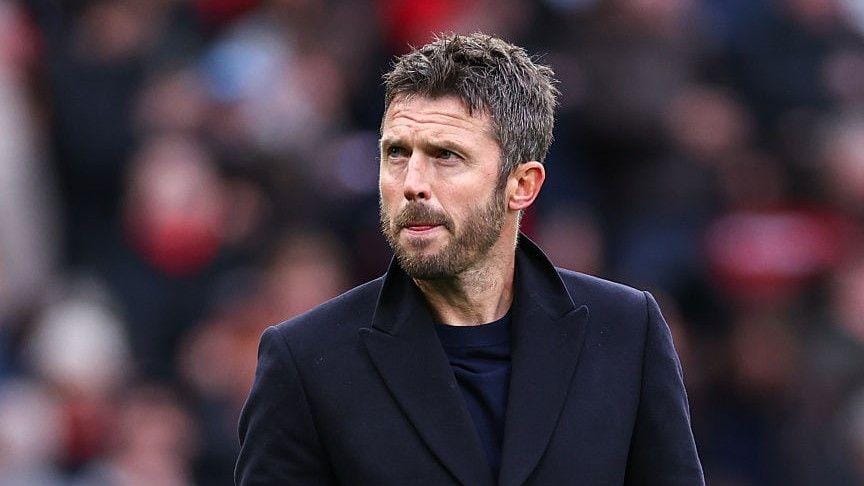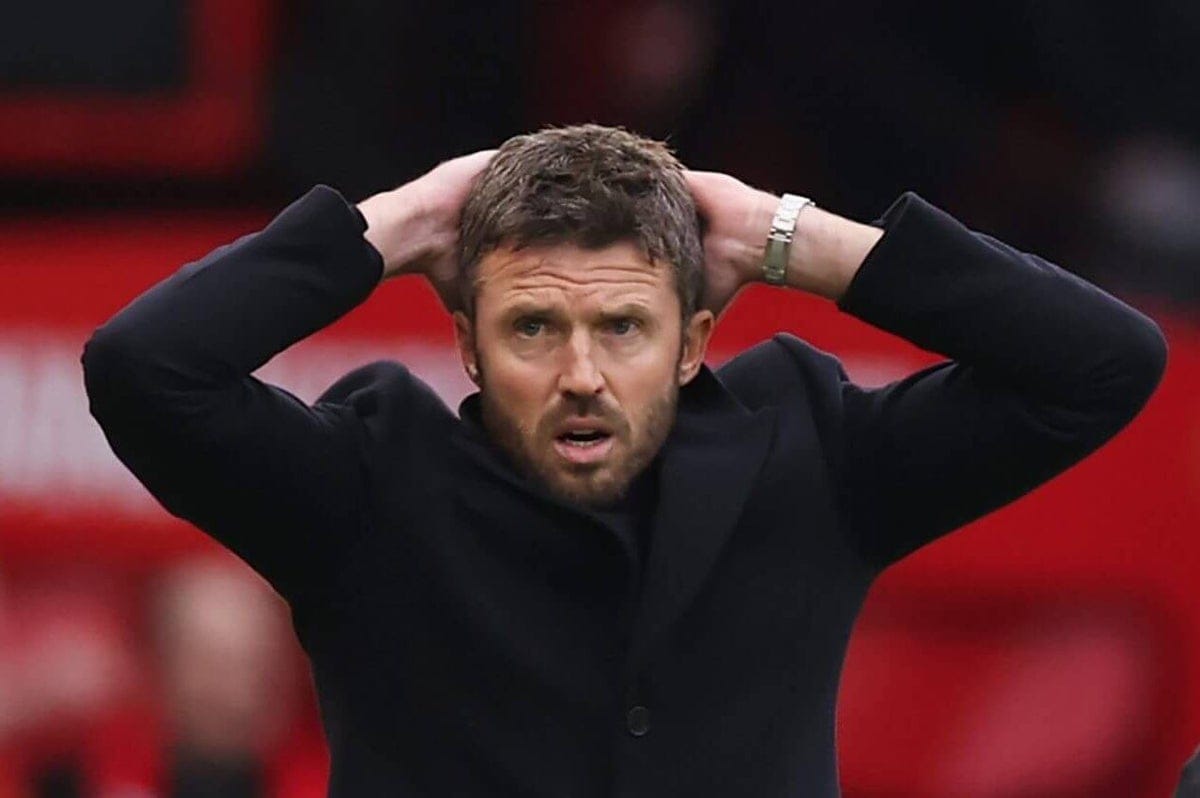
The Evolving Narrative Around Michael Carrick’s Future at Manchester United
As Michael Carrick diligently navigates his interim management role at Manchester United, a significant, albeit nuanced, discussion has commenced regarding his potential elevation to the permanent manager’s position. While the club has yet to experience a widespread ‘clamour’ from the fanbase or media for his definitive appointment, the early discourse suggests a notable segment of observers who now view the former Reds midfielder as a potentially viable, long-term solution for the demanding Old Trafford hot seat.
Initial reactions, articulated in a scattering of articles and informal comments, have largely ranged from cautious optimism to pragmatic assessments. Phrases such as ‘they could do a lot worse’ than to permanently entrust Carrick with the full-time responsibility underline a growing, albeit hesitant, consideration. These sentiments indicate a nascent period of evaluation, reflecting the inherent caution and profound scrutiny that consistently surrounds high-profile managerial appointments at elite clubs of Manchester United’s global stature.
The inherent pressures of the Premier League and the intense spotlight on Manchester United mean that every temporary managerial spell is subjected to rigorous analysis. Carrick’s initial performance and tactical decisions during his interim period are being weighed against the club’s complex needs and its desire for a stable, progressive future, setting the stage for a critical decision for the club’s hierarchy.
Strategic Alignment Amidst January’s Transfer Conundrum
Michael Carrick has conspicuously demonstrated a clear and consistent alignment with Manchester United’s overarching long-term strategic vision, particularly concerning player acquisitions. This steadfast commitment is evident in the club’s repeatedly stated position that any January transfer window activity would be undertaken exclusively if it adheres to deeper, more enduring organizational objectives and philosophies, a mantra Carrick appears to embrace wholeheartedly.
This adherence to the club’s long-term philosophy, even while operating in a temporary capacity, holds significant weight. It implies a managerial approach that consciously prioritizes sustainable growth and robust stability over immediate, often reactive, tactical measures. Such a disposition is frequently considered a paramount factor for executive boards when evaluating candidates for permanent leadership roles at elite sporting institutions, indicating a shared vision that transcends mere short-term results.
The January transfer window, notoriously complex and frequently a fertile ground for hasty, short-term fixes, serves as an unforgiving litmus test for a manager’s commitment to strategic planning. Successfully navigating this period demands not only a profound understanding of immediate tactical needs and squad imbalances but also a deep appreciation for the club’s financial health, intricate squad dynamics, and long-term trajectory. For a caretaker manager, operating effectively within these multifaceted constraints while simultaneously striving for improved immediate results presents a particularly formidable challenge, one that Carrick appears to be addressing in lockstep with the club’s publicly declared policy.
Manchester United’s explicit emphasis on a ‘long-term mantra’ for player signings underscores a deliberate and conscious effort to avoid previous pitfalls associated with short-sighted recruitment strategies. This disciplined approach, which Carrick is evidently following, strongly indicates a robust shared vision with the club’s hierarchy, a truly essential component for any candidate aspiring to secure a permanent and influential role within the club’s sporting structure. The implications extend beyond individual transfers, shaping the very identity and future competitiveness of the squad.
The Challenges of Mid-Season Recruitment
Mid-season transfer windows are inherently fraught with difficulties, amplified by inflated prices, limited availability of top talent, and the disruption to squad cohesion. For Manchester United, a club under constant global scrutiny, every transfer decision carries immense weight, affecting not just on-pitch performance but also commercial revenues and fan morale.
A caretaker manager’s role in this process is delicate. While they may identify immediate needs, major long-term signings are typically reserved for a permanent appointee with a clear mandate. Carrick’s apparent willingness to defer to the club’s ‘long-term mantra’ in this context signals a mature understanding of his current position and a strategic patience that could appeal to decision-makers.
The Eternal Question: Caretaker to Permanent Manager?
The debate surrounding whether an elite football club should ever elevate its caretaker manager to a permanent position is a perennial and deeply divisive one in the world of football. It encompasses a vast spectrum of complex considerations, ranging from the immediate psychological impact on the playing squad to the profound long-term strategic implications for the club’s identity and future trajectory.
Proponents of such appointments often argue persuasively that a caretaker, already deeply embedded within the club’s intricate culture and intimately familiar with the existing squad, possesses a distinct and often underestimated advantage. This internal knowledge facilitates not only immediate stability but also a remarkably seamless transition, bypassing the lengthy acclimatization period often required by external appointments. Their pre-existing rapport with players, deep understanding of dressing room dynamics, and profound grasp of the club’s foundational values can leverage intrinsic trust to achieve swift, positive results, frequently manifesting as the coveted ‘new manager bounce’ that can temporarily reinvigorate a flagging team.
Conversely, critics are quick to highlight the numerous potential pitfalls associated with promoting interim managers. The initial uplift and feel-good factor a caretaker provides can sometimes serve to mask deeper, more systemic issues within the club, leading to a temporary surge in performance that proves ultimately unsustainable over a full, demanding season or across multiple campaigns. Furthermore, a caretaker’s often limited experience at the absolute pinnacle of football management might genuinely preclude them from articulating and executing a truly comprehensive, long-term vision—a necessity for an institution of Manchester United’s global magnitude and aspirations.
The decision to appoint a caretaker permanently thus becomes a high-stakes gamble for club boards, demanding a delicate balance between the immediate emotional and on-pitch benefits against the imperative for strategic foresight, the implementation of a robust and sustainable transfer policy, and the sustained development of a winning philosophical framework. History, rich with compelling narratives, offers numerous vivid examples of both spectacular successes and cautionary tales, ensuring that each such decision is subjected to intense and widespread scrutiny by fans, media, and pundits alike across the footballing world.
The inherent and immense pressure associated with managing a top-tier football club, particularly one with a fervent global following, coupled with the relentless media spotlight, dictates that any permanent managerial appointment must be rigorously and unequivocally justified. For a caretaker manager, demonstrating not just tactical competence and man-management skills but also the undeniable capacity for enduring leadership, strategic innovation, and a long-term developmental outlook becomes absolutely paramount in securing a lasting mandate.
Historical Context of Caretaker Roles
Football history is replete with instances where interim managers have stepped in. Some, like Roberto Di Matteo at Chelsea or Zinedine Zidane at Real Madrid (albeit not strictly a caretaker, but promoted from within), achieved immediate, monumental success, leading to permanent roles. Others, however, eventually saw their initial momentum dissipate, revealing the complexities of long-term planning.
This mixed bag of outcomes underscores the boardroom’s dilemma. The emotional attachment to a popular former player or coach who brings short-term relief often battles with the logical imperative to secure a proven, experienced leader capable of building a dynasty. For Manchester United, a club that values stability and legacy, this decision carries even greater historical weight.
Michael Carrick: From Pitch Battles to Managerial Aspirations
Michael Carrick’s profound personal journey, eloquently described as moving ‘From the Highest of Highs to the Lowest of Lows,’ provides a particularly compelling and human backdrop to his burgeoning managerial aspirations. As he emerges as one of the prominent favourites for the permanent Manchester United manager’s job, his narrative transcends mere tactical prowess, deeply touching upon themes of resilience, character, and leadership honed through significant personal struggle.
The input data pointedly alludes to Carrick having ‘suffered rejection, depr,’ which speaks volumes about the often-unseen emotional and psychological toll that a career in elite professional sport can exact. These profound experiences, whether stemming from career setbacks, deeply personal challenges, or the relentless and intense public scrutiny inherent in top-flight football, undeniably play a crucial role in shaping an individual’s worldview, their leadership philosophy, and their capacity for empathy.
Such a rich and often challenging personal history can uniquely equip a manager with an unparalleled sense of empathy for players navigating their own peaks and troughs, fostering a deeper, more authentic connection and understanding within the squad. It suggests a leader who not only comprehends the tactical demands of the game but also deeply understands the mental fortitude, emotional intelligence, and resilience required, not just on the pitch, but crucially in the high-pressure, emotionally charged ecosystem of professional football management.
Carrick’s extensive and decorated playing career at Manchester United also furnishes him with an invaluable, almost innate, understanding of the club’s deeply ingrained DNA, its cherished traditions, and the immense, often unparalleled, expectations that are inextricably linked with wearing the iconic badge. This profound institutional knowledge is frequently touted as a paramount advantage for internal candidates, enabling them to connect with the club’s ethos and its demanding fanbase on an extraordinarily profound and authentic level.
The intricate transition from a decorated playing career to the coaching staff, and subsequently into a demanding caretaker managerial role, is itself a journey fraught with unique challenges and significant transformations. It necessitates a fundamental shift in perspective, moving from executing on the field to orchestrating from the sidelines, demanding an entirely different set of skill sets, a broader strategic overview, and an enhanced capacity for delegation and mentorship. Carrick’s discernible ability to navigate this complex transition while demonstrably maintaining a strong, authentic connection to the club speaks volumes about his inherent character, profound dedication, and emerging leadership qualities.
The Character of a Leader
In the unforgiving environment of elite football, a manager’s character often proves as crucial as their tactical genius. Carrick’s reported resilience in the face of personal ‘rejection’ and ‘depr’ suggests a leader who can absorb pressure, learn from adversity, and potentially inspire similar strength in his players. This emotional intelligence is a rare commodity and a valuable asset in the modern game.
His deep ties to Manchester United, having spent a significant portion of his playing career there, also means he inherently understands the ‘United Way’ – a philosophy emphasizing attacking football, youth development, and unwavering commitment. This intrinsic understanding could offer a continuity and cultural alignment that an external appointment might struggle to replicate, providing a compelling argument for his permanent consideration.
Manchester United’s Enduring Quest for Stability
Manchester United, an undisputed global footballing titan, has been engaged in a protracted and often arduous quest for sustained stability and a clearly defined footballing identity in the tumultuous post-Sir Alex Ferguson era. This ongoing and highly scrutinized search has considerably amplified the intensity of the spotlight on every subsequent managerial appointment, making the situation surrounding Michael Carrick’s interim stewardship particularly pertinent and critically important for the club’s future trajectory.
The sheer scale and global reach of the club’s operations, its truly immense and passionate global fanbase, and the relentless commercial and financial pressures it constantly faces mean that the manager’s role extends far beyond merely selecting a team and devising tactical formations. It encompasses the profound responsibility of being the public face of the entire institution, embodying its cherished values, and skillfully steering its intricate sporting direction amidst an unceasing barrage of intense media scrutiny and fervent fan expectation from every corner of the globe.
The club’s explicit desire to adhere strictly to a ‘long-term mantra,’ as perceptibly observed in Carrick’s disciplined approach to the recent transfer window discussions, unequivocally signals a deliberate and conscious effort to establish a sustainable and robust foundational strategy. This pronounced emphasis reflects a significant learning curve derived from previous managerial tenures, where short-term, often reactive, fixes sometimes regrettably overshadowed the imperative for a cohesive, future-oriented, and ultimately sustainable strategy that could withstand the rigors of elite competition.
For Manchester United, a permanent managerial appointment is consequently not merely about identifying someone who can consistently win games in the short term; it is about pinpointing a transformative leader who possesses the rare ability to unify the entire squad, articulate a crystal-clear and compelling footballing philosophy, meticulously develop prodigious young talent through the club’s famed academy, and expertly navigate the extraordinarily complex stakeholder landscape of a super club with unparalleled global reach. Carrick’s internal candidacy benefits immensely from his profound and intrinsic understanding of these intricate and demanding dynamics, making him a compelling, albeit still speculative, option.
The decision confronting Manchester United’s leadership is thus profoundly multifaceted, requiring a meticulous weighing of immediate on-pitch performance against the profound and undeniable need for a leader who possesses the vision and capability to cultivate a lasting and impactful legacy, one that proudly echoes the club’s most celebrated and successful periods. The comprehensive assessment of Michael Carrick will undoubtedly consider all these intricate layers, extending far beyond just the immediate results achieved on the pitch during his temporary stewardship, delving into his capacity for long-term influence and strategic execution.
Defining the Path Ahead: Criteria for a Permanent Appointment
The criteria for selecting a permanent manager at a club of Manchester United’s unparalleled stature are extensive, exceptionally rigorous, and profoundly demanding. Beyond possessing mere tactical acumen and exemplary man-management skills, a candidate must demonstrably exhibit a holistic and forward-thinking vision for the club’s entire sporting future. This comprehensive vision must encompass everything from nurturing emerging youth talent through the academy to implementing a coherent, sustainable, and effective transfer strategy that aligns with the club’s long-term ambitions.
A successful permanent manager is not only expected to instil a distinctive and recognizable playing style, but one that not only consistently delivers tangible results but also profoundly resonates with the club’s deeply ingrained identity and its vast, passionate fanbase. This arduous task necessitates a deep and nuanced understanding of contemporary football trends, seamlessly combined with a profound appreciation for historical context, thereby ensuring both crucial continuity and fostering vital innovation that keeps the club at the vanguard of the sport.
Furthermore, the inherent ability to operate with exceptional efficacy and strategic prudence within the highly competitive and often volatile transfer market, adeptly identifying and acquiring talent that impeccably aligns with the club’s established philosophy and stringent financial parameters, is absolutely paramount. This critical responsibility involves shrewd negotiation tactics, extensive and foresightful long-term scouting, and cultivating a highly collaborative and synergistic relationship with both the sporting director and the club’s specialized recruitment department. This is a monumental challenge for any manager, let alone one potentially taking over mid-season with immediate expectations.
The intricate decision-making process for Manchester United will also be profoundly influenced by the delicate interplay between the club’s powerful board, its historically influential figures and key stakeholders, and the omnipresent, resonant voice of its expansive global support base. Public perception, the dominant media narrative, and the often-volatile fan sentiment can all play an indelible role in shaping the ultimate outcome of such a critically important and high-profile appointment, reflecting the immense cultural significance of the club.
As the ongoing conversation and careful deliberation around Michael Carrick’s future continues to evolve, his performance and demonstrated capabilities in his interim role, his unwavering alignment with the club’s explicitly declared long-term objectives, and his evident, intrinsic understanding of Manchester United’s unique and demanding environment will be meticulously and exhaustively evaluated. The ultimate choice will not merely select a manager, but will unequivocally signify the profound strategic direction the club intends to embark upon, with the overarching aim of emphatically restoring its rightful place at the pinnacle of consistent elite football status.