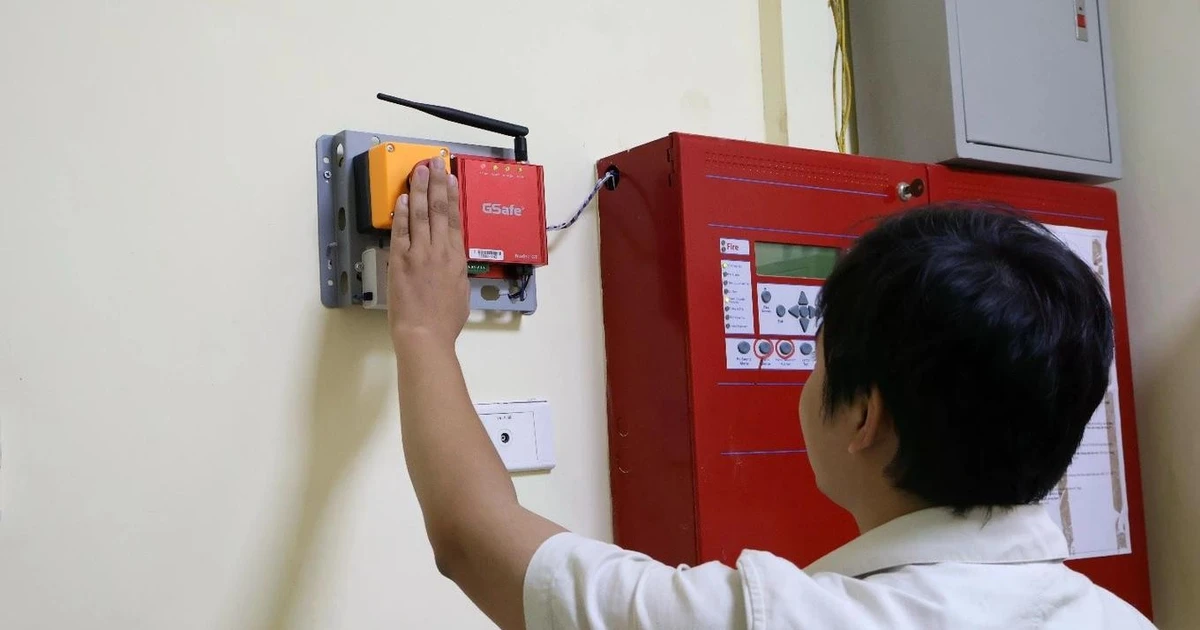
Modernizing Emergency Response Architecture
Industrial and commercial fire protection is undergoing an architectural transition driven by the convergence of connected field telemetry and municipal emergency dispatch platforms. In urban centers such as Hanoi, public safety authorities are transitioning tactical response frameworks from reactive suppression toward data-verified, early-stage intervention.
The Fire Prevention and Rescue Police Department of the Hanoi City Police, through Firefighting and Rescue Team No. 12, has directed commercial facilities and industrial plants to implement automated fire alarm transmission equipment. This administrative directive advances statutory targets prioritizing real-time hazard verification, operational latency reduction, and mitigation speed.
The institutional deployment of dedicated communications hardware supports a nationwide command, control, and incident management framework orchestrated by Vietnam’s Ministry of Public Security. By standardizing edge transmission devices across commercial properties, regulatory bodies aim to systematically remove manual bottlenecks within municipal dispatch workflows.
Compressing Latency in Emergency Dispatch Pipelines
In municipal fire suppression, the duration separating initial sensor detection from tactical dispatch authorization represents the critical operational variable. Traditional emergency protocols remain heavily reliant on manual telephone reporting from facility personnel or bystanders, introducing operational friction, unverified information, and procedural delays.
Integrating dedicated transmission hardware directly into on-premise fire detection infrastructure establishes deterministic telemetry links between private facilities and centralized command centers. Automated data transit enables emergency services to confirm thermal events instantly, mobilize specialized apparatus, and calibrate logistical deployments prior to on-scene arrival.
Minimizing this reporting interval preserves structural compartmentalization, limits fire propagation, and mitigates asset destruction. The operational guidelines established by the Hanoi police demonstrate that emergency force effectiveness depends fundamentally on automating primary alarm transmission from the protected asset to the command grid.
Operational Bottlenecks of Siloed Building Annunciators
Commercial and industrial facilities have historically relied on autonomous fire alarm control panels (FACPs) that restrict alert signals to localized physical consoles. Standard annunciators alert on-site occupants effectively, but isolated architectures demand manual verification by security staff before external escalation protocols can be activated.
This decentralized, unintegrated footprint presents acute vulnerabilities for property portfolios, logistics hubs, and geographically dispersed industrial operations. During unstaffed operational windows or off-shift periods, standalone building systems cannot deliver real-time risk visibility to enterprise operations executives or off-premise stakeholders.
The operational liabilities of disconnected panels have accelerated commercial demand for telemetry bridges capable of capturing contact-closure or digital signals and transmitting them off-site. Upgrading isolated building panels into connected data nodes converts reactive alarm hardware into enterprise-wide operational risk networks.
Export Economics and Indigenous Brand Ownership
Concurrently with domestic regulatory integration, Southeast Asian safety hardware manufacturers are advancing their positions across the technology value chain. On October 28, 2026, GlobalSafe International Technology and Trade Joint Stock Company signed an exclusive international distribution agreement with King Fire Pte. Ltd., a Singapore-based fire protection specialist.
The agreement grants King Fire exclusive rights to distribute GlobalSafe-branded remote fire alarm monitoring hardware and cloud interfaces within Singapore, serving as a beachhead for wider regional distribution across the Association of Southeast Asian Nations (ASEAN). Crucially, the transaction operates under GlobalSafe’s proprietary brand rather than an original equipment manufacturer (OEM) or white-label structure.
By deploying domestic intellectual property directly into mature regulatory markets under its own trademark, the enterprise captures upstream margin premiums typically conceded to international intermediaries. This development demonstrates that Vietnamese engineering can fulfill the stringent technical and legal requirements of tier-one regional markets.
Cloud-Native Telemetry across Distributed Real Estate
The operational framework of modern alarm monitoring relies on industrial Internet of Things (IIoT) protocols and decentralized cloud infrastructure. GlobalSafe engineered its hardware and software stack to decouple status monitoring from the physical boundaries of facility-bound panels through encrypted cloud transport layers.
This networked model affords corporate safety directors and facility operators synchronized oversight across distributed real estate footprints. If an abnormal event, sensor fault, or thermal condition registers at any single asset, alert packets propagate simultaneously to enterprise consoles, mobile management endpoints, and designated monitoring authorities.
Centralized cloud dashboards also streamline diagnostic auditing and periodic compliance verification without requiring recurring on-premise inspections. Migrating from siloed, building-specific panels to interconnected cloud telemetry aligns life-safety infrastructure with broader enterprise industrial asset management standards.
Institutional Compliance and Enterprise Capital Deployment
Aligning municipal enforcement mandates with commercial hardware development creates structural synergy between public emergency services and private capital. Fire departments require low-latency, tamper-resistant data to deploy operational assets efficiently, while enterprise owners require verifiable safeguards to protect physical assets and ensure business continuity.
As fire prevention authorities mandate the adoption of certified transmission units, facility capital allocation shifts toward hardware that simultaneously satisfies statutory reporting mandates and internal operational risk protocols. Compliance transitions from a static regulatory cost into a proactive physical-security and asset-preservation investment.
The institutionalization of continuous communication channels between private facilities and public safety dispatchers produces a unified municipal safety grid. Systemic data exchange optimizes emergency logistics for public services while delivering lower intervention arrival times and professional containment for enterprise properties.
Cross-Border Validation and Regulatory Maturation
The introduction of proprietary IoT fire safety platforms into Singapore serves as an operational benchmark for Vietnamese technology within institutional environments governed by strict compliance mandates. Singapore maintains exacting statutory regimes and rigorous testing standards for physical safety infrastructure, establishing high market-entry hurdles for foreign platforms.
Navigating these regulatory baselines through an exclusive institutional partnership allows hardware developers to optimize international deployment frameworks, technical support pipelines, and cross-border distribution models. Success in this testing ground establishes a commercial precedent for ongoing expansion across broader Southeast Asian industrial corridors.
As municipal fire departments deploy centralized command frameworks aligned with national security directives, integrated fire telemetry will redefine physical security standards across commercial real estate and industrial manufacturing facilities.