
Strategic Consolidation in the Republican Heartland
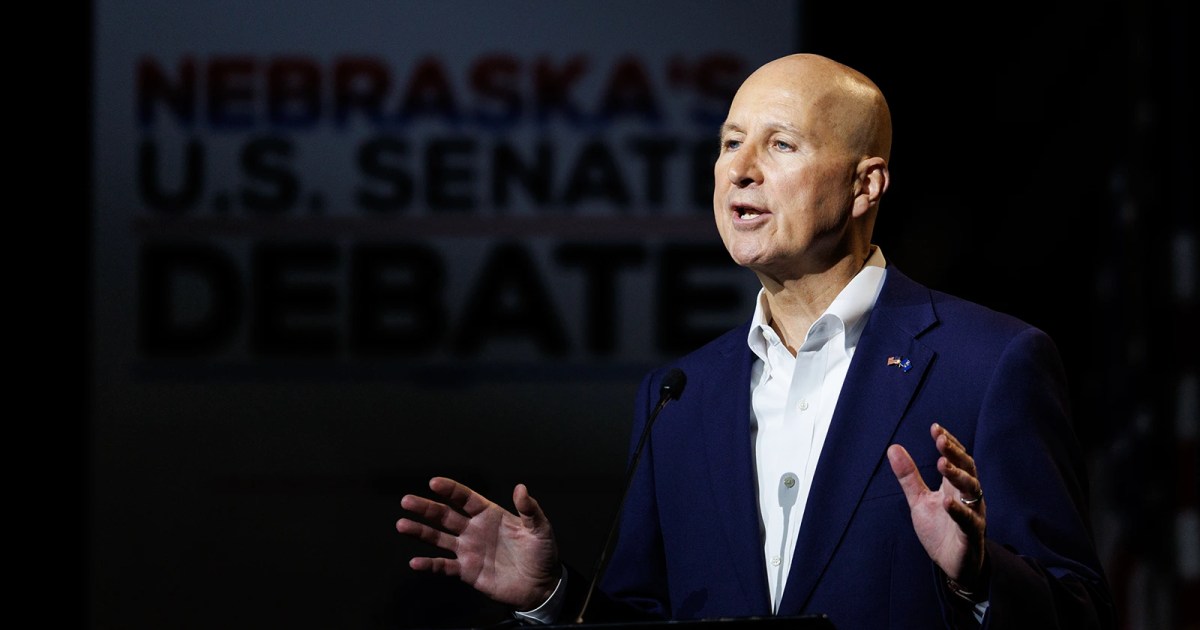
With the general election cycle entering its final phase, the Republican Party has initiated a defensive pivot toward Nebraska—a state typically insulated from national political volatility. President Donald Trump’s intervention in Grand Island underscores an urgent effort to stabilize Senator Pete Ricketts’ campaign against Dan Osborn, an independent challenger whose non-partisan platform has successfully disrupted traditional polling models.
The deployment of national GOP resources to a reliably red jurisdiction suggests a recalibration of the party’s path to a Senate majority. This strategic realignment acknowledges that the fragility of the Republican coalition is no longer confined to swing states, but extends into the agricultural base where structural threats from outside the two-party system are gaining traction.
The Osborn Variable: Disrupting Partisan Equilibrium
Senator Pete Ricketts, despite his incumbency and significant financial backing, is navigating a statistical dead heat. Dan Osborn’s candidacy represents a sophisticated structural risk; by eschewing the Democratic label, Osborn has circumvented the ideological barriers that historically preclude non-Republican victories in the Cornhusker State. This has forced the GOP to shift from a posture of national messaging to one of localized damage control.
Nebraska’s historical status as a GOP stronghold makes this competitive environment an outlier. The Trump campaign’s primary objective in Grand Island is to re-nationalize the contest, framing a vote for an independent as a de facto endorsement of Democratic federal control. This tactic aims to collapse Osborn’s coalition of dissatisfied conservatives and moderate independents back into partisan lines.
Economic Volatility and Agricultural Policy Friction
The political landscape in Nebraska is increasingly defined by localized economic friction. Diesel costs exceeding $6 per gallon have heightened operational overhead for the state’s agricultural producers, creating a climate of fiscal anxiety. This is further complicated by the fallout from the suspension of beef tariffs—a move intended to curb consumer inflation that has inadvertently introduced market volatility for domestic cattle producers.
For a constituency centered on the cattle industry, these policy shifts represent direct threats to profit margins. The Grand Island rally serves as a critical forum for the GOP to address these grievances, attempting to bridge the gap between populist trade rhetoric and the practical realities of high-input farming. The efficacy of this outreach will depend on the campaign’s ability to redirect blame toward federal administrative oversight rather than internal party decisions.
Operational Metrics and Media Saturation
The scale of the event at the Pinnacle Bank Expo Center functions as a logistical demonstration of force. Beyond the optics of a capacity crowd, the rally serves as a high-intensity data-harvesting operation, crucial for the GOP’s ‘get-out-the-vote’ (GOTV) infrastructure in the state’s rural counties. Local media saturation, led by outlets like NTV, ensures the campaign’s defensive narrative permeates all regional media markets simultaneously.
By scheduling the event to align with prime-time news cycles, the GOP ensures that its messaging on institutional stability and economic recovery dominates the final weeks of the campaign. This saturation is intended to neutralize Osborn’s momentum by outspending and out-messaging the independent movement through sheer volume.
Institutional Risks for the Senate Majority
The implications of the Ricketts-Osborn race extend far beyond state lines. A loss or even a narrow victory in Nebraska would signal a systemic breakdown in the GOP’s ability to hold rural America against independent insurgencies. Such an outcome would likely necessitate a total reassessment of the Republican National Committee’s resource allocation and incumbent protection strategies moving forward.
If the ‘Osborn model’ proves successful, it could serve as a blueprint for independent challenges in other deep-red states, fundamentally altering the map for future legislative cycles. Trump’s visit to Grand Island is, therefore, a preemptive strike against the emergence of a third-way political force that could permanently dilute the GOP’s geographic hegemony.