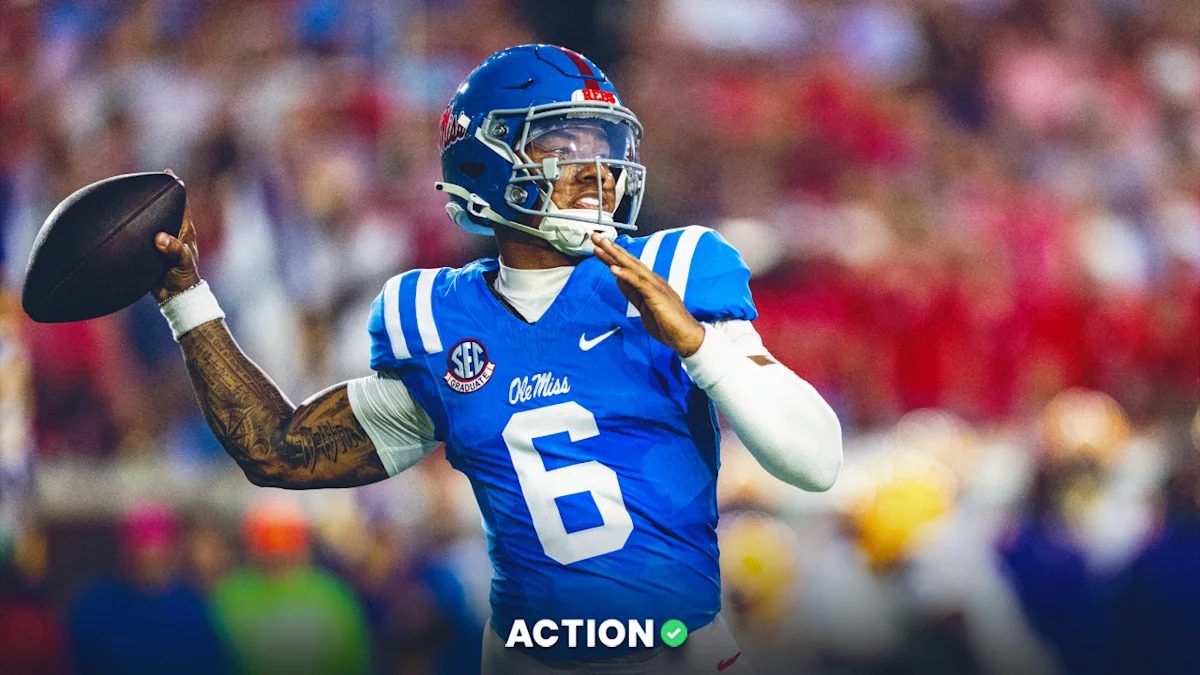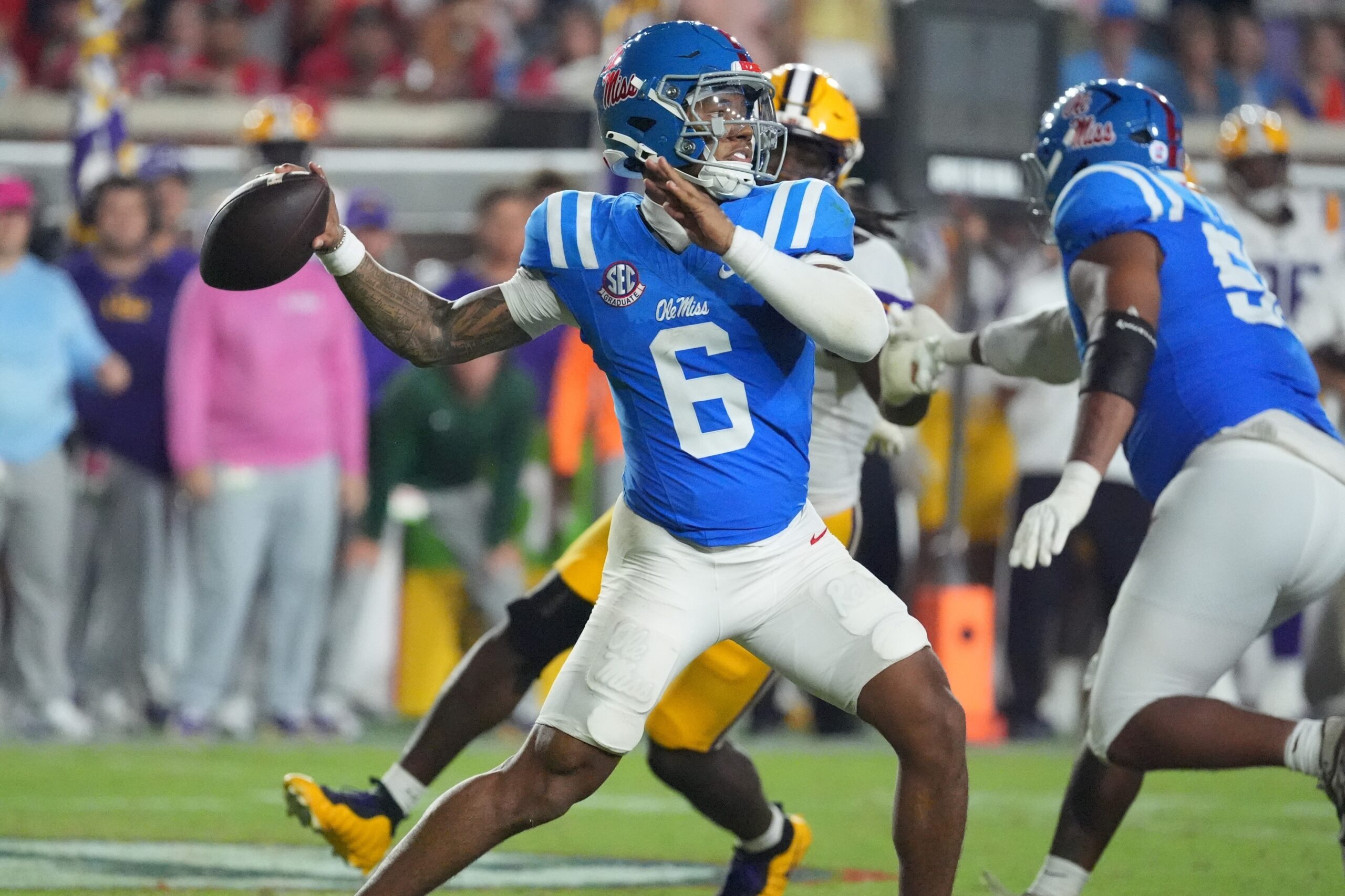
Collegiate athletics markets frequently diverge from national ranking consensus, establishing structural betting dynamics independent of perception. This divergence is evident as the Florida Gators open as a 3.5-point betting favorite against the fourth-ranked Ole Miss Rebels in Gainesville. Market pricing establishes Florida at -150 on the moneyline and Ole Miss as a +125 underdog, despite the Rebels securing a high-profile victory to conclude their matchup against LSU.
Oddsmakers heavily weigh the post-rivalry letdown sequence, a recurring operational vulnerability in college football. Teams coming off high-stakes, emotionally draining intra-conference victories frequently experience regression the following week. In pricing Florida as a 3.5-point favorite—a line that reportedly surprised Gators leadership—market analysts prioritized behavioral scheduling cycles over nominal rankings.
Scheduled for a 3:30 p.m. ET window on ABC, the broadcast amplifies programmatic stakes for both athletic departments. For Florida, defending home turf serves as a vital proof of program stability, while Ole Miss must demonstrate elite execution outside its home environment.
The Valuation Paradox Between Rankings and Market Spreads
The gap between national rankings and wagering lines highlights the analytical methodology governing high-stakes athletic forecasting. Sportsbooks structured the point spread at Florida -3.5 with an over/under set at 58.5 points, expecting efficient offensive output while assigning a distinct tactical advantage to the host.
Wagering dynamics indicate asymmetric confidence among price setters, offering Florida at -102 and Ole Miss at -120 at the 3.5 threshold. Market analysts have pointed toward Florida laying three points alongside an over total recommendation of 59 or better as preferred market positions, reflecting an expectation of balanced scoring tilted toward the host controlling the tempo.
Florida’s coaching staff publicly expressed surprise at being favored over a top-four opponent, a maneuver designed to temper external expectations. Internally, however, the line affirms the quantitative value attributed to Florida’s operational environment and roster baseline on native turf.
Venue-Driven Compression and Quarterback Attrition
Ben Hill Griffin Stadium—The Swamp—operates as an environmental bottleneck that degrades passing efficiency for visiting offenses. Ole Miss quarterback Trinidad Chambliss enters with a reputation as an unflappable distributor, yet historical precedent demonstrates that collective venue pressure erodes procedural discipline.
Archival data across the previous decade underscores the statistical degradation visiting passers endure here. A cohort of five prominent quarterbacks—Arch Manning in 2025, Jaxson Dart in 2024, Bo Nix in 2019, Joe Burrow in 2018, and Drew Lock in 2016—completed only 74 of 149 passes (49.7%), yielding five touchdowns, 11 interceptions, and 17 sacks.
This sub-50% completion threshold establishes an empirical hazard for visiting systems reliant on rapid rhythm and downfield accuracy. For Chambliss, navigating this statistical trend represents the central tactical hurdle governing Ole Miss’s operational viability.
The Elite Exception: Draft Pedigree and Structural Resilience
Historical anomalies demonstrate that exceptional execution can occasionally dismantle venue advantages. Miami quarterback Cam Ward orchestrated a decisive 41-17 victory in the 2024 season opener by remaining composed against disruption, while Alabama’s Bryce Young executed under similar pressure in Gainesville during the 2021 campaign.
Both Ward and Young eventually ascended to the number-one overall selection in the NFL draft. This trajectory suggests that neutralizing The Swamp requires top-tier individual mastery and poise, setting a definitive strategic benchmark for Chambliss’s draft trajectory.
Coaching observations further validate this tangible atmospheric pressure. Jon Sumrall acknowledged feeling astounded by his initial exposure to the venue’s atmosphere, reinforcing that sensory pressure is an omnipresent reality for visiting staffs.
Total Output Expectations and Market Dynamics
The 58.5-point over/under reflects an assumption that neither defense will achieve total disruption. Commercial markets pricing the over at 59 or better anticipate responsive offensive schemes capable of producing points despite environmental friction.
Analytical models pricing Ole Miss as a +125 underdog acknowledge a viable path toward an upset, provided Chambliss avoids the multi-turnover sequences that doomed previous visiting quarterbacks. If he matches the poise of recent top overall selections, Ole Miss can dismantle the mathematical model favoring Florida.