
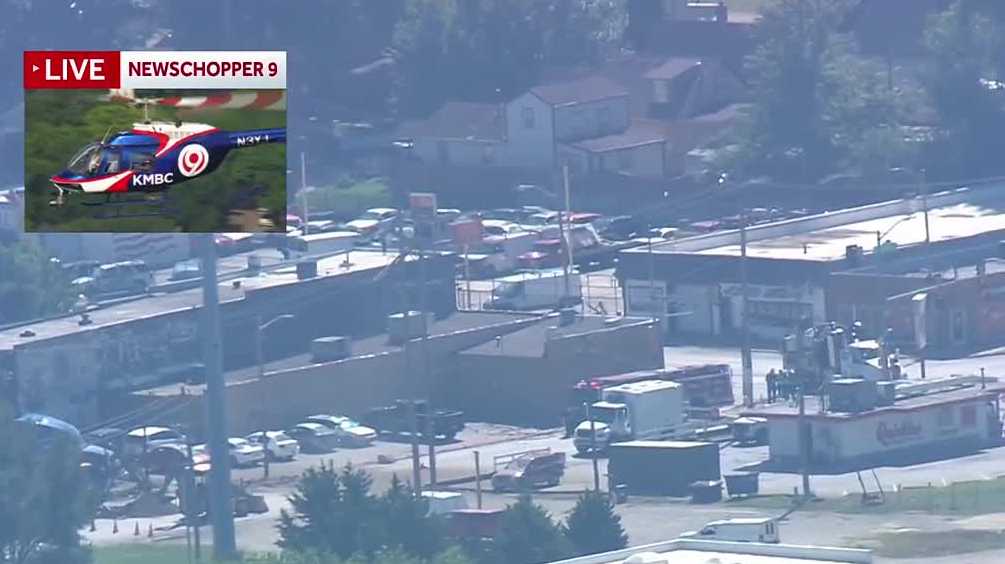
Significant Gas Line Rupture Triggers KCK Emergency Response
A major gas line rupture in Kansas City, Kansas, specifically within the Armourdale neighborhood, resulted from a contractor’s heavy equipment striking a primary utility conduit. This incident immediately activated comprehensive emergency protocols, demonstrating the critical role of rapid municipal and utility response in mitigating potential hazards and ensuring public safety.
Evacuation Protocols and Public Safety Management
To safeguard public welfare, authorities promptly implemented temporary evacuation orders and restricted access to affected commercial and residential zones, primarily along the Kansas Avenue corridor between Seventh and 18th streets. This pre-emptive measure addressed the critical risk of gas blast and vapor migration, causing immediate operational suspensions for businesses and residents within the designated safety perimeter. Public safety agencies simultaneously established stringent transit controls, optimizing emergency vehicle access and mitigating potential ignition vectors.
Urban Infrastructure Vulnerability and Utility Management Challenges
The KCK gas line rupture starkly highlights inherent vulnerabilities within urban subterranean infrastructure, particularly the persistent operational friction between aggressive surface development and legacy utility networks. Contractor operations, especially with heavy machinery in densely populated commercial and industrial zones, frequently contend with outdated or inaccurate utility mapping. This specific incident underscores metropolitan centers’ critical dependence on aging arterial utility grids, necessitating enhanced, proactive coordination between municipal planning offices, private sector contractors, and utility asset owners to preempt similar disruptions.
Logistical Recovery and Long-Term Pipeline Security
Following successful containment, transportation authorities initiated a systematic logistical normalization, progressively reopening major thoroughfares. Kansas Avenue was largely restored to general traffic flow, with only targeted, localized restrictions remaining at critical intersections like 10th Street. Concurrently, utility crews transitioned from emergency response to meticulous structural evaluation and mechanical repair phases. These remediation steps are crucial for re-establishing baseline energy distribution stability and bolstering long-term pipeline security, minimizing prolonged civic and economic impact.
Accountability, Regulatory Compliance, and Operational Refinement
The KCK incident prompts an immediate review of subsurface utility engineering and excavation protocols, which are governed by stringent regulatory frameworks designed to prevent accidental penetrations of high-pressure systems. Municipal oversight bodies will scrutinize contractor compliance with safety mandates and ‘call before you dig’ procedures. The coordinated procedural response by local law enforcement and utility technicians exemplifies a standard crisis management lifecycle, yielding critical empirical data on response velocity, inter-agency communication efficiency, and public safety coordination for future operational refinement.
Economic Impact and Commercial Resilience in Urban Districts
Even brief, mandatory operational suspensions for commercial enterprises within the cordoned zone, particularly along major arteries like Kansas Avenue, impose tangible short-term friction on local economic activity and supply chain continuity. These disruptions, while contained, highlight the financial vulnerabilities of businesses dependent on uninterrupted infrastructure. The rapid deployment of technical repair units is paramount to minimizing economic downtime. Insurers and risk management professionals will analyze this event to assess and enhance the operational resilience frameworks for urban commercial districts against future infrastructure-related shocks.

Photo by royharryman on Pixabay.