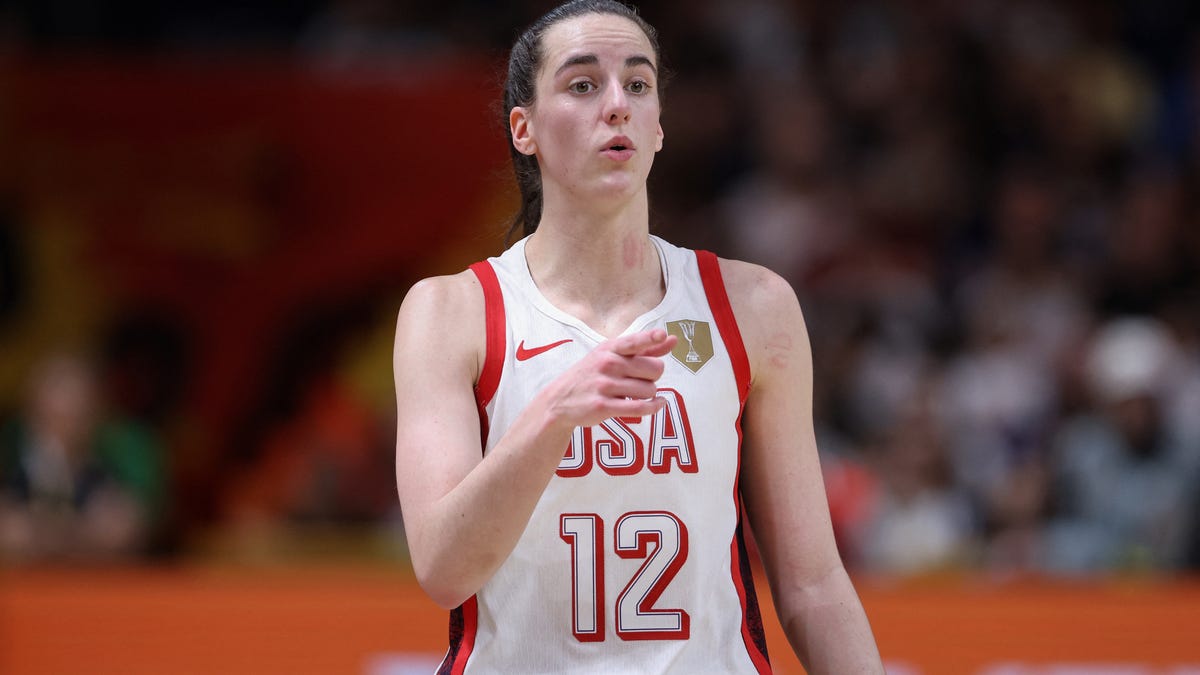
The 2026 FIBA Women’s Basketball World Cup quarter-finals in Berlin established a definitive benchmark for operational dominance as Team USA secured a 108-56 victory over Hungary. This 52-point margin reflects a structural execution of offensive efficiency that neutralized the Hungarian defensive scheme within the opening ten minutes. By establishing a 15-0 scoring run early, the U.S. coaching staff effectively managed player fatigue ahead of the high-leverage semifinal scheduled for September 12.
Statistical analysis reveals a significant delta in shooting efficiency: the United States converted 59% of field goals compared to Hungary’s 34%. This was most pronounced from the perimeter, where a 52.2% three-point conversion rate created a defensive gravity that forced Hungary to overextend rotations, leaving the interior vulnerable to a 62.2% conversion rate on two-point attempts.
Offensive Architecture and Facilitation Metrics
The performance of Caitlin Clark, contributing 10 points and nine assists, highlights a strategic shift toward high-volume facilitation. By prioritizing ball movement, Clark’s presence generated high-percentage looks for teammates like Napheesa Collier, whose 19-point, six-rebound performance provided the interior anchor. Additionally, Rhyne Howard’s four steals underscored a transition-heavy strategy, fueling 39:04 of total time leading.
The broadcasting of the upcoming semifinal on TBS and HBO Max signifies the commercial expansion of international basketball. Media placement reflects the market value of a roster featuring high-profile athletes whose professional affiliations, such as Clark’s with the Indiana Fever, catalyze global viewership. The attendance of 5,303 at the Berlin Arena further validates European interest in elite-level knockout stages.
Strategic Outlook for the Spain Semifinal
The September 12 matchup against Spain represents a significant escalation in competitive difficulty. Spain’s disciplined defensive structure will necessitate a continued reliance on the distributed scoring load demonstrated against Hungary, where five U.S. players reached double figures. The stakes remain binary: a victory secures a gold-medal game berth on September 13, while a loss relegates the program to the bronze-medal contest.
Operational focus must now shift toward perimeter defense. Spain typically employs sophisticated offensive sets that will test the U.S. developmental pipeline’s athletic and technical advantages. As the tournament concludes in Berlin, Team USA remains the clear favorite, leveraging high-efficiency shooting and strategic personnel management to maintain tournament momentum.