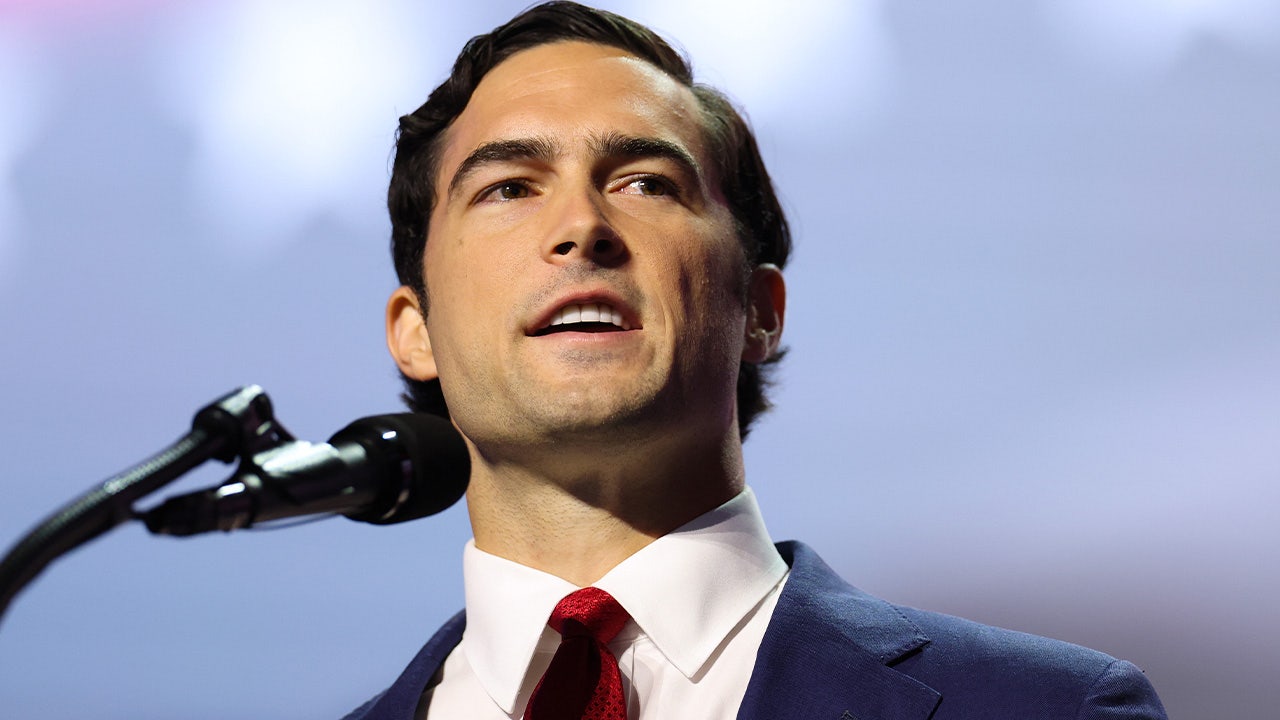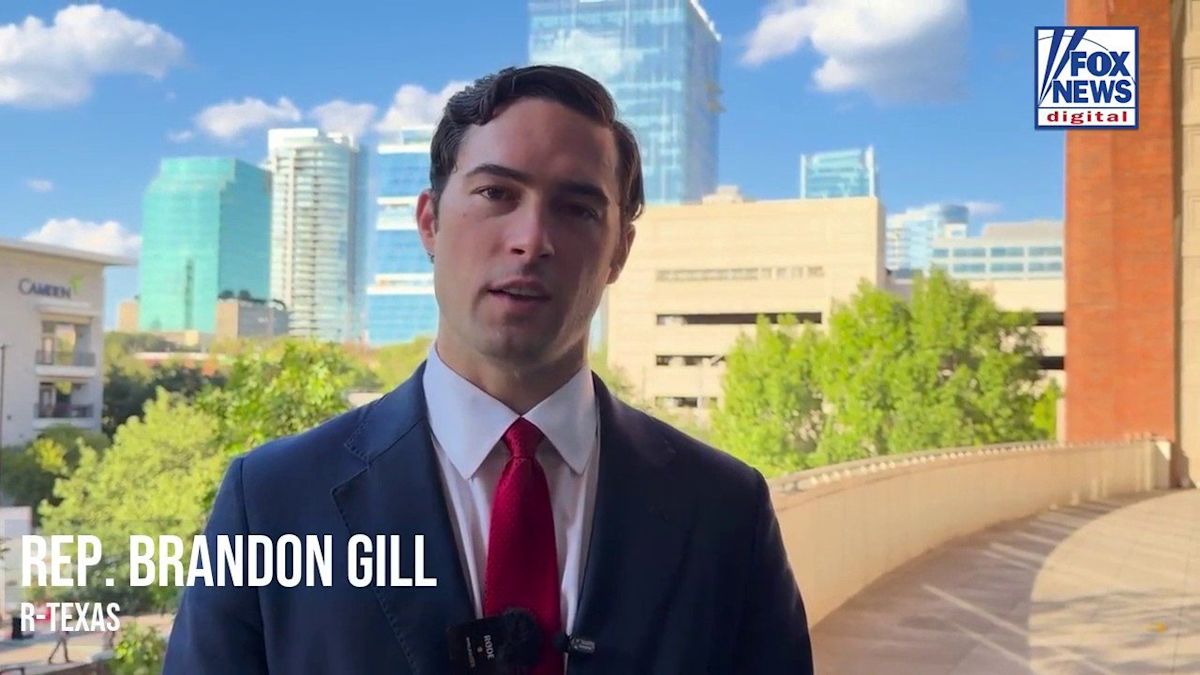
GOP Firebrand Brandon Gill Defends Viral Satirical Land Acknowledgment, Rejecting Apology
Republican Representative Brandon Gill has publicly declared he will not apologize for a widely circulated satirical land acknowledgment delivered at the Republican midterm convention. This stance firmly positions Gill as a prominent figure within the GOP, actively engaging in and challenging cultural narratives often associated with progressive and Democratic discourse.
Delivered in Dallas, Texas, Gill’s address characterized the United States as the creation of “great American patriots, pioneers and explorers” who “bled and died to build the greatest civilization ever known to man.” This framing starkly contrasts with the typical land acknowledgment practice, which often recognizes Indigenous peoples, acknowledges historical injustices, and situates national origins within a context of displacement or “stolen land.” The enthusiastic reception from the Republican audience highlights a receptive base for this alternative national narrative.
Strategic Maneuvering in Cultural Debates
Gill’s deliberate subversion of the land acknowledgment ritual represents a strategic effort to reshape the political discourse surrounding national identity and historical interpretation. By co-opting and repurposing a symbol often employed in progressive identity politics, Gill aims to neutralize its impact and reframe it as an affirmation of American exceptionalism. This tactic seeks to consolidate support among a specific segment of the Republican base and appeal to voters disillusioned with what he labels “woke” cultural trends.
This approach is designed to highlight perceived Democratic hypocrisy and an “apology-driven” interpretation of national history. His subsequent statements to Fox News Digital explicitly stated his intent to “fight back against Democrats’ way of viewing the United States,” underscoring a calculated strategy to engage in and potentially win cultural battles through provocative messaging that resonates with a conservative audience seeking a strong affirmation of national pride.
Amplification and Media Leverage for Political Ascent
The viral nature of Gill’s speech, amplified across various media platforms, provides him with significant national exposure beyond his congressional district. This enhanced visibility allows him to project his message to a broader audience, solidifying his position as a rising figure within the Republican party. Notably, his allocated speaking time at the convention surpassed that of more established figures like Ken Paxton, signaling the party’s interest in cultivating his brand of conservative populism and his capacity to energize the base.
This media leverage is a critical component for politicians seeking advancement within party ranks. By consistently generating high-profile and often controversial moments, Gill commands attention, shapes narratives, and builds a personal brand that transcends traditional political metrics. This strategy is particularly effective in the current fragmented media landscape, where strong, often polarizing, content achieves rapid dissemination and engagement.
Challenging Progressive Norms and Their Underlying Incentives
Gill’s critique extends beyond land acknowledgments to encompass a broader rejection of Diversity, Equity, and Inclusion (DEI) policies, which he deems “utterly intellectually indefensible.” His rhetoric specifically targets issues such as transgender rights for minors, the definition of gender, and the inclusion of men in women’s spaces, framing these as radical departures from societal norms and fundamental American values.
This confrontational approach directly challenges the incentive structures that have propelled progressive social policies into mainstream discourse. By framing these issues as extreme and out-of-touch, Gill aims to create a political wedge, mobilizing voters who feel alienated by rapid social change and appealing to a desire for a return to more traditional values. His more extreme accusations, such as falsely claiming Democrats seek to “dismantle” the Christian faith, are crafted to evoke strong emotional responses and solidify partisan divisions.
Economic and Foreign Policy Framing: Connecting to Broader Grievances
Beyond cultural issues, Gill consistently links current economic challenges and national security concerns to the policies of the Biden administration, while simultaneously commending the economic record of the Trump administration. This economic framing is a core element of Republican messaging, designed to capitalize on voter dissatisfaction with inflation and economic uncertainty.
His claims regarding Democrats enabling “millions of undocumented immigrants into the country,” despite data indicating substantial deportation rates under both Obama and Biden administrations, illustrate a strategic use of selective information to bolster a narrative of border insecurity. This narrative is designed to resonate with voters prioritizing immigration control and national sovereignty, thereby further segmenting the electorate and reinforcing partisan identities.
Midterm Election Strategy: Emphasizing a Dichotomy for Voter Choice
Gill articulates a clear “us versus them” dichotomy for the upcoming midterm elections, presenting voters with a stark choice between his vision of America and what he characterizes as the “extremist” agenda of the Democratic party. This framing simplifies complex issues into easily digestible narratives, aiming to drive voter turnout among the Republican base by highlighting perceived threats and offering a definitive alternative.
The emphasis on a “clear choice” is a classic campaign strategy designed to mobilize voters by highlighting perceived dangers and offering a decisive counter-position. By focusing on a potent mix of economic anxieties, immigration concerns, and cultural values, Gill and the GOP are attempting to consolidate their electoral coalition and persuade undecided voters by appealing to latent fears and a desire for traditionalism.
Institutional Positioning and Future Trajectory within the GOP
Brandon Gill’s prominent role at the Republican midterm convention, exceeding that of seasoned politicians like Ken Paxton, indicates a deliberate effort by party leadership to elevate new voices and energize the base. His performance suggests a strategic investment in figures capable of effectively articulating and defending the party’s evolving platform, particularly in the cultural and ideological spheres.
This institutional backing provides Gill with a platform to further solidify his influence and potentially shape future party policy and messaging. His demonstrated ability to generate viral content and command significant media attention makes him a valuable asset in the ongoing effort to define the Republican brand and counter opposing narratives, positioning him for continued advancement within the party hierarchy.
The Ascendancy of “Firebrands” in Modern Political Landscapes
The emergence of figures like Brandon Gill, often labeled “firebrands,” reflects a broader trend in contemporary politics where confrontational rhetoric and active engagement in culture war issues are rewarded with media attention and political capital. These politicians frequently prioritize perceived authenticity and ideological purity, appealing directly to a base that feels unrepresented by more moderate or establishment figures.
This dynamic creates a strong incentive for politicians to adopt more extreme stances to gain visibility and differentiate themselves in a crowded political field. The success of such figures can significantly influence the broader strategic direction of their respective parties, pushing them towards more combative and ideologically driven platforms, potentially at the expense of bipartisan cooperation or nuanced policy debates.
Implications for Progressive Counter-Messaging and Strategy
Gill’s strategy of co-opting and satirizing progressive messaging presents a direct challenge to the effectiveness of current communication tactics employed by Democrats and progressive groups. By mocking and reinterpreting symbols like land acknowledgments, he aims to strip them of their intended impact and expose them to ridicule, potentially alienating undecided voters and hardening opposition.
This necessitates a recalibration of progressive strategies for engaging with cultural issues. The party may need to develop more resilient messaging that can withstand such direct challenges and avoid being easily caricatured. Furthermore, the emphasis on sensitive issues like transgender rights and immigration, framed by Gill as radical, requires a more robust and nuanced defense that addresses public concerns without alienating core supporters.
Capitalization of Perceived Grievances and Identity Politics
Gill’s rhetoric effectively taps into a perceived sense of grievance among a significant segment of the electorate. These voters often feel that traditional American values are under attack and that their concerns are being dismissed by political and media elites. His speeches and public statements are strategically designed to validate these feelings and position him as a champion of their cause.
This strategy is particularly potent in mobilizing voters who feel disenfranchised or overlooked by the political establishment. By articulating these grievances, Gill not only solidifies his support base but also contributes to the broader polarization of the political landscape, making compromise and consensus-building increasingly challenging.
The Performance of Political Identity and Brand Building
The convention speech and subsequent viral moment underscore the increasingly performative nature of modern political communication. Gill’s “firebrand” persona and his willingness to engage in provocative stunts are calculated moves designed to generate attention and define his political identity as an unapologetic conservative warrior on the front lines of cultural battles.
This emphasis on performance can sometimes overshadow substantive policy discussions, as politicians prioritize creating memorable moments that can be easily shared and debated on social media. The success of this approach hinges on the ability to consistently generate such impactful moments and maintain a compelling narrative that resonates with the target audience, often at the expense of nuanced policy development.
Long-Term Strategic Implications for the Republican Party’s Direction
The embrace and elevation of figures like Brandon Gill suggest a strategic direction for the Republican party that prioritizes cultural combat and ideological purity. This approach aims to energize the base and create a clear differentiation from Democrats, but it also carries inherent risks, including the potential to alienate moderate voters and complicate legislative action.
The party’s ultimate success will depend on its ability to balance this confrontational style with the need to appeal to a broader electorate and govern effectively. The long-term impact of this strategy on the GOP’s electoral coalition and its capacity to forge bipartisan consensus remains a critical question for future political analysis.