Judicial Intervention on Executive Authority and Mail-in Voting
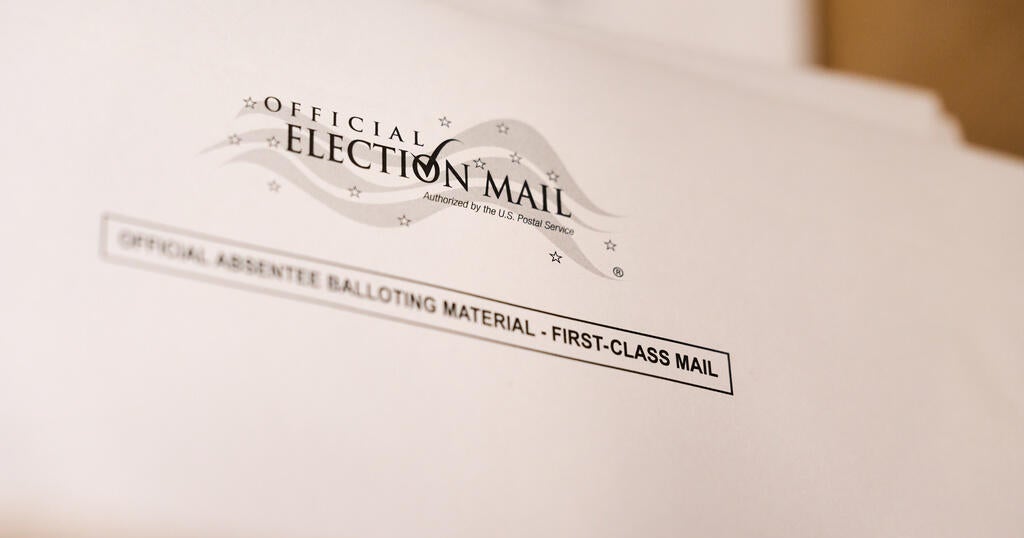
The Trump administration has escalated its legal campaign against mail-in voting procedures, lodging a third appeal with the Supreme Court. The administration seeks to overturn a lower court injunction that currently prohibits the U.S. Postal Service (USPS) from implementing restrictive requirements previously established by a March executive order. This strategic move to the nation’s highest court highlights a critical juncture where executive mandates clash with judicial oversight of electoral infrastructure, aiming to reassert federal control over ballot handling logistics before the midterm election cycle becomes operationally irreversible.
Solicitor General John Sauer’s filing underscores the rapidly diminishing window for administrative adjustments as ballots begin entering the mailstream in states like North Carolina and Alabama. The legal argument posits that the ongoing judicial stay creates a vacuum in mandatory standards, substituting them with voluntary measures that could undermine institutional consistency and potentially lead to disparate ballot handling across jurisdictions.
Operational Urgency and the Mailstream Threshold
The ‘mailstream’ signifies a pivotal phase in election logistics where the physical custody of ballots transfers from state control to the federal purview of the USPS. Once this process commences, the executive branch’s capacity to impose new verification or handling protocols diminishes significantly, creating acute urgency in the administration’s legal timeline. For states like North Carolina, which have initiated ballot mailings, the absence of a definitive judicial ruling introduces operational friction for local election boards responsible for navigating evolving rules governing ballot transport and verification.
The administration contends that the persistence of the injunction risks systemic chaos by leaving critical preparatory steps to the discretion of the USPS and individual states. This shift from mandated to voluntary compliance is framed as a vulnerability that could compromise ballot integrity and the perceived legitimacy of the election.
USPS IT Vulnerabilities and Operational Capacity
Internal operational risks within the USPS have been brought to light by a whistleblower report detailing significant IT concerns with a new mail ballot verification system. These allegations suggest a potential functional deficiency in the technical infrastructure required to support the administration’s proposed mandates, raising questions about the system’s readiness for high-volume deployment. The whistleblower’s claims indicate a misalignment between policy objectives and operational capacity, posing a substantial reputational and operational risk that could compromise the perceived integrity of the mail-in process.
These technical hurdles represent a fundamental challenge to the chain of custody for millions of votes. A failure in a centralized verification system would necessitate reliance on manual or legacy processes, further complicating election logistics during a high-stakes period.
Strategic Implications of Supreme Court Intervention
The administration’s repeated appeals to the Supreme Court signal a strategy to secure a definitive, top-down resolution, bypassing the protracted deliberations of lower courts. This approach acknowledges the Supreme Court as the sole entity capable of establishing the nationwide uniformity the administration deems necessary. By framing the issue as one of preventing chaos and confusion, the Solicitor General invokes the court’s inclination towards electoral stability. However, the timing of the appeal, as ballot mailing begins, places the court in a challenging position of potentially altering operational rules mid-game.
A ruling favorable to the administration would necessitate an immediate pivot to mandatory enforcement of the March executive order, requiring rapid scaling of the IT systems currently under scrutiny. This decision will also influence the USPS’s resource allocation for the remainder of the election cycle.
Historical Context and State-Level Election Law Divergence
The current legal dispute unfolds against a backdrop of significant expansion in mail-in voting. From only 21 states allowing universal mail-in voting in 2000, the number has grown to 37 states and the District of Columbia. This evolution has created a complex regulatory patchwork that the USPS must navigate as a single federal entity. The remaining 13 states with restrictive mail-in voting policies present a diminishing but still significant segment that aligns more closely with the administration’s restrictive objectives.
The divergence between state laws and federal executive orders creates compliance challenges for postal officials. This friction is amplified when federal requirements are in flux due to ongoing litigation and injunctions, complicating operational planning and execution.
Institutional Incentives and Stakeholder Exposure
The Trump administration’s incentive lies in consolidating control over the mail-in process to ensure vote integrity, as it defines it. Conversely, the judiciary is incentivized to maintain the status quo and prevent abrupt policy shifts that could disenfranchise voters. The USPS is caught between these governmental branches, managing compliance risks with executive orders and court-mandated pauses while addressing internal warnings about technical failures. Voters and state election officials are the most exposed stakeholders, facing the risk of ballot invalidation or logistical breakdowns due to legal uncertainty.
The distinction between voluntary and mandatory compliance is central to the dispute. Mandatory requirements offer predictability for the USPS but impose rigid operational burdens potentially unmet by compromised IT infrastructure. The administration’s insistence on mandatory rules reflects a lack of confidence in decentralized, voluntary approaches, viewing them as sources of potential error mitigated only by strict federal oversight.
Long-Term Ramifications for Election Infrastructure and Federalism
The Supreme Court’s decision will set a precedent for how executive orders influence the operational conduct of independent agencies like the USPS during election cycles, defining the boundaries of executive power in managing democratic infrastructure. A victory for the administration would signal increased federal intervention, potentially leading to standardized, albeit more restrictive, national requirements, fundamentally altering the federal-state balance in election administration. Conversely, upholding the injunction would reinforce the judiciary’s role as a check on executive actions and preserve the current state-federal regulatory patchwork.
The whistleblower’s report on IT concerns injects technical reality into the legal arguments. Even a legal victory for the administration could be an operational loss if the enforcement systems are non-functional, creating a credibility gap between policy intent and technical execution with high stakes for democratic process integrity. Warnings from USPS officials aim to prevent catastrophic failures during peak mailing seasons.
Market Stability and the Credibility of the Mail System
The uncertainty surrounding mail-in voting rules has broader implications for institutional stability and market confidence, as markets favor predictable regulatory environments. The legal battle over mail ballots is a conflict over the reliability of the nation’s administrative and logistical systems, essential for both economic and electoral functions. As the Supreme Court deliberates, the decision will shape the future interaction between Americans and their government via mail, impacting the credibility of the USPS itself.
Conclusion: A Pivotal Moment for Election Integrity
The administration’s third appeal marks a critical juncture in the 2026 election cycle, with the window for administrative change rapidly closing. The Supreme Court’s response will dictate the operational reality for the USPS and millions of voters. Regardless of the outcome, the underlying issues of IT infrastructure, federal-state friction, and the limits of executive authority will continue to challenge the integrity of mail-in voting. This conflict highlights the struggle to adapt democratic principles to modern logistical and technical realities, with the Supreme Court acting as the ultimate arbiter of the rules governing American democracy’s next chapter.