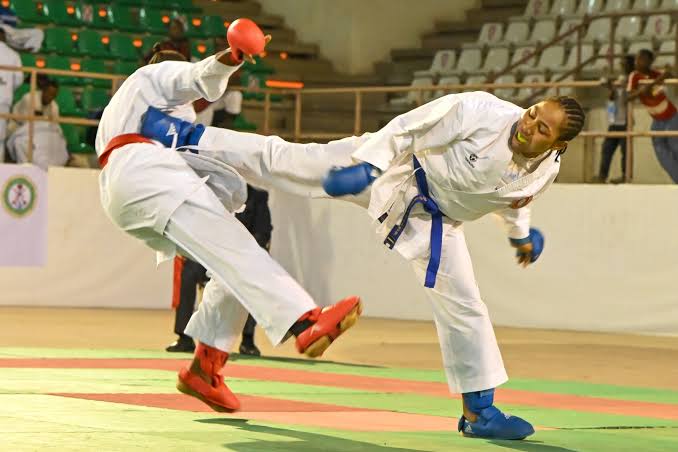
International martial arts governance operates at the critical juncture of elite athlete development and complex event execution. Recent competitive developments starkly illustrate these divergent operational realities, demonstrating how robust institutional preparation directly dictates sporting outcomes and national standing.
In Europe, well-established grassroots athletic pipelines have produced historic returns on the international stage, evidencing effective long-term investment. Conversely, administrative and infrastructural bottlenecks in West Africa have severely disrupted critical ranking fixtures, underscoring the operational fragility of continental qualifiers and exposing the systemic risks associated with shared sports infrastructure.
Grassroots Excellence & Strategic Return on Investment
The performance of regional training centers represents the indispensable foundation for national governing body success. North Devon martial arts club Union Karate-Do established a benchmark for local developmental models, successfully placing ten of its athletes into the Team GB delegation for the European International Martial Arts Games. This deep representation underscores a robust, integrated talent pathway from local dojo to national squad.
The cohort secured a formidable total of 16 medals across multiple disciplines—seven gold, four silver, and five bronze. This cumulative output is not merely a tally but a clear indicator of sustained technical regimens, multi-event specialization, and systematic athlete progression. It explicitly demonstrates how localized dojos, through dedicated long-term investment, can serve as primary talent incubators that yield significant competitive advantages at the national and international levels.
Technical versatility across distinct competition formats proved pivotal in maximizing the team’s aggregate podium presence. John Findlay exemplified this by capturing silver in individual Kata before anchoring Team GB to a gold medal in the high-stakes Team Kumite division. Intergenerational continuity within the club was further demonstrated as Jasper Findlay contributed directly to the Team Kumite gold medal victory, highlighting effective succession planning.
Bobby Ryan expanded the delegation’s medal footprint by securing gold in Kata, silver in Weapons, and bronze in Kumite, showcasing broad competitive competency and mastery across various martial arts disciplines. Ashley Baraniak mirrored this multi-event capability, clinching gold in Kumite alongside bronze finishes in both Kata and Weapons. Brooke Cain added a bronze medal in Kumite, while Steve Escritt completed a triple-gold performance by winning Kumite titles, capping months and years of sustained preparation and strategic training.
Infrastructural Friction & Operational Risk in Abuja
In stark contrast to seamless competitive execution, institutional and logistical vulnerabilities can abruptly stall high-stakes sporting fixtures. The 5th Japanese Ambassador’s Karate Tournament in Abuja faced an immediate operational crisis after organizers failed to resolve venue challenges, forcing a critical one-day postponement. This incident not only disrupted the sporting calendar but also carried significant diplomatic and competitive ramifications.
Scheduled to commence on Thursday, August 20, 2026, at the Velodrome of the Moshood Abiola National Stadium, the tournament’s competitive schedule was displaced entirely to Friday. The resulting administrative bottleneck left 483 athletes, representing 18 distinct states, stranded in the federal capital. Such delays trigger cascading failures, imposing severe financial burdens, compromising athlete welfare through compressed recovery windows and altered nutritional schedules, and diminishing the overall integrity of the competition.
Technical Director of the Karate Federation of Nigeria (KFN), Dave Jegede, confirmed that the initial individual kata eliminations and finals could not proceed as scheduled. Jegede stated that the federation was forced to utilize the entirety of Thursday to reorganize the competitive programme, a scramble that directly reflects operational fragility rather than planned execution, ahead of a rescheduled Friday morning commencement.
Asset Privatization & Facility Management Constraints
The failure to deliver the competition venue as scheduled reveals deeper systemic vulnerabilities within shared sports infrastructure. Jegede identified the recent privatization of the Moshood Abiola National Stadium Velodrome, alongside recurring electricity failures, as the primary drivers of the delay. This highlights a critical governance challenge where facility management transitions impact operational sovereignty.
When national athletic venues transition into private management, sports federations frequently lose operational control over crucial aspects such as scheduling, technical setup, and facility guarantees. Without robust contractual clarity, explicit service-level agreements, and baseline infrastructure contingencies, administrative handoffs between private venue managers and public sports bodies present elevated execution risks and often result in eroded facility guarantees. Furthermore, electrical grid instability at major national facilities introduces severe operational vulnerabilities to essential systems like precision timing, athlete registration portals, and safe ambient venue conditions, directly impairing the federation’s capacity to deliver regulated combat environments under international standards.
High-Stakes Federation Rankings & Continental Qualification
The operational disruptions in Abuja carry profound competitive consequences due to the regulatory weight assigned to the Japanese Ambassador’s Cup. Head of Media for the KFN, Ohis Asein, previously confirmed that the tournament was formally designated as a KFN Ranked Event – Factor 6. This designation elevates the fixture to one of the most critical calendar dates for national ranking points and seedings, directly influencing national team selection and athlete career progression.
Consequently, administrative delays directly jeopardize the performance trajectories of national competitors attempting to solidify their standing ahead of international selection windows. Beyond national points allocations, the championship serves as the primary qualification event for the upcoming African Karate Championships (UFAK), scheduled to take place in Algiers, Algeria, from September 6 to 13, 2026. With only weeks separating the Abuja trials from the continental championship in Algiers, the compressed timeline leaves zero margin for technical error. Displaced competition schedules not only increase athlete fatigue and heighten injury exposure but also complicate final administrative submissions to continental regulatory bodies, risking the overall readiness and representation of Nigeria at UFAK.
Bilateral Partnerships & Reputational Capital
The Japanese Ambassador’s Karate Tournament represents a high-profile diplomatic collaboration between the Embassy of Japan and the Karate Federation of Nigeria. This annual three-day championship is designed to showcase elite national martial artists across diverse categories in the Package A complex, serving as a significant platform for cultural exchange and soft power projection.
Institutional partnerships between diplomatic missions and host national federations rely heavily on reliable administrative delivery and organizational discipline. Logistical failures at such visible touchpoints generate significant reputational fallout that extends beyond domestic federation politics, potentially impacting broader bilateral cultural programs and eroding mutual trust. The administrative team now faces the formidable challenge of condensing three days of scheduled eliminations and finals into a narrower operational window. The KFN’s ability to promptly restore operational stability at the Velodrome will be crucial in preserving the integrity of both the national rankings and the subsequent continental selection roster, while also demonstrating its capacity to honor international diplomatic commitments.