Orbital Synchronization and Strategic Context
The lunar event of August 27–28, 2026, represents a significant recalibration of celestial visibility for the Western Hemisphere. Following the total solar eclipse of August 12—which primarily favored European longitudes—this deep partial lunar eclipse shifts the observational focus to North America. Occurring at the descending node of the lunar orbit, this alignment facilitates a near-total immersion of the lunar disc into the Earth’s umbral core, serving as a primary astronomical benchmark for the 2026 calendar year.
Technical Metrics: Magnitude vs. Obscuration
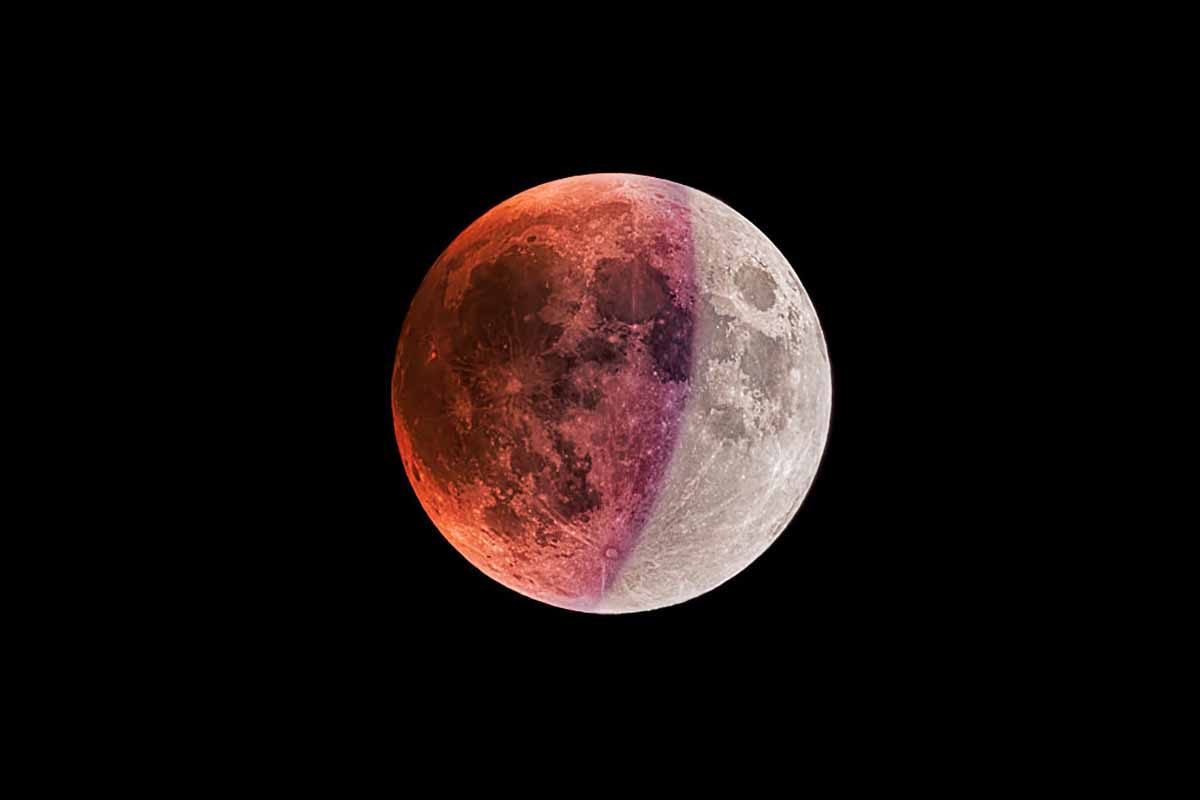
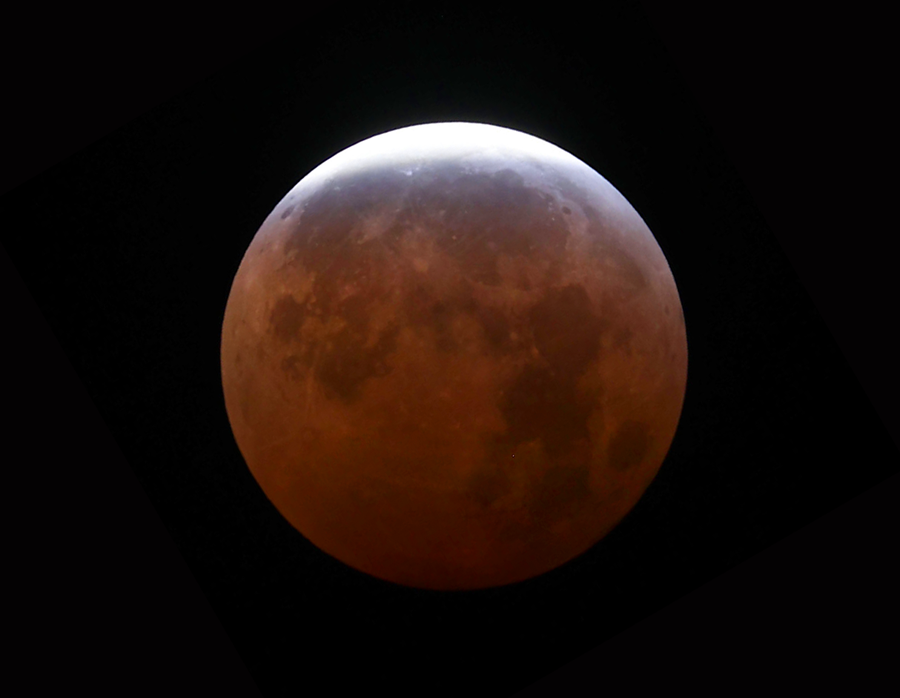
Analytical precision regarding this event requires distinguishing between magnitude and obscuration. The eclipse carries an umbral magnitude of 0.93, indicating that approximately 93% of the Moon’s diameter will be submersed in the central shadow. However, due to the circular geometry of the Earth’s shadow, the total surface obscuration reaches 96%. This high-density coverage ensures that the Rayleigh scattering—the filtering of sunlight through the Earth’s atmosphere—will impart the characteristic copper-red ‘Blood Moon’ aesthetic to nearly the entire lunar surface, leaving only a 4% silvered sliver on the northern limb.
Geographic Visibility and Logistics
Visibility is optimized for the contiguous United States and Canada, with the moment of greatest eclipse occurring at 12:13 a.m. EDT (04:13 UTC) on August 28. In these regions, the Moon will be positioned at a high altitude, minimizing atmospheric extinction and maximizing the clarity of the chromatic shift. Conversely, the Pacific Northwest and Alaska face significant constraints; in Anchorage, the Moon rises post-peak with 40% of its surface already shadowed. Hawaiʻi is excluded from the maximum phase entirely, as the peak occurs while the Moon remains below the horizon, necessitating a data-collection strategy centered on the Eastern and Central time zones.
Atmospheric Dynamics and Research Utility
The intensity of the reddish hue during the 96% phase is a direct variable of Earth’s stratospheric conditions. Volcanic aerosols and cloud density along the terrestrial terminator dictate the transition from bright orange to deep brown. For the scientific community, this event provides a controlled environment to measure the thermal cooling of the lunar regolith. The 4% penumbral exposure serves as a luminosity control, allowing researchers to calibrate low-light sensors and refine refraction models without the total loss of a reference light source typical of total eclipses.
Institutional and Media Frameworks
The timing of the peak at 12:13 a.m. EDT aligns with late-night broadcasting cycles, offering a lucrative window for digital engagement and live telemetry streaming. Beyond public interest, the event holds operational importance for satellite telemetry; the reduction in solar flux impacts power management for solar-dependent lunar orbiters. Documenting this specific Saros series event allows for the refinement of long-term ephemeris data, contributing to the broader understanding of orbital drift and the evolution of shadow geometry over centuries.