
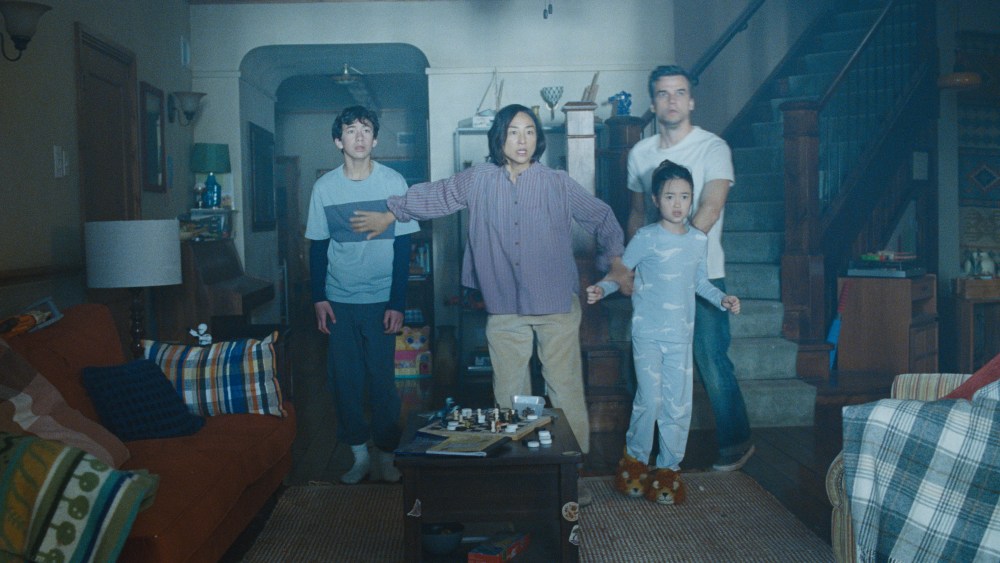
The release of The Last House on Netflix represents a significant pivot for director Louis Leterrier. Moving from the expansive budgets of Fast X to a hyper-contained “bottle film,” Leterrier aligns with a broader streaming trend: balancing high-profile franchise expenditures with high-concept, low-overhead psychological thrillers. This production model minimizes physical assets while maximizing narrative tension, a metric critical for maintaining audience retention within the Netflix algorithm.
The Narrative Architecture of Environmental Confinement
The film’s central mystery hinges on a rainwater seal—a physical anomaly that prevents exit or entry. Unlike traditional technological or military barriers, this environmental constraint introduces a specific brand of existential dread. By subverting the natural world, screenwriter Matthew Robinson renders conventional escape methods obsolete, forcing the narrative into an intensive study of domestic sustainability. The focus on a “well-stocked pantry” serves as a commentary on middle-class insulation; the family’s survival, punctuated by milestones like Christmas, highlights a socio-economic disparity against neighbors struggling without similar resources.
Strategic Casting and Demographic Market Alignment
The selection of Greta Lee and Wagner Moura is a calculated move to capture disparate market segments. Lee, associated with indie-prestige projects, and Moura, a seasoned international performer, provide the gravitas necessary to sustain a film devoid of traditional action set pieces. This casting mitigates the risk of the “unthrilling thriller” critique by grounding speculative fiction in a domestic reality. Furthermore, the inclusion of child actors Noah Alexander Sosnowski and Riley Chung allows the film to explore the intergenerational psychological toll of confinement, marking the passage of time through domestic routine rather than external events.
Algorithmic Pacing and the ‘Mystery Box’ Model
The film’s “economical” disclosure strategy—deliberately withholding answers regarding the origins of the barrier—aligns with the “mystery box” storytelling popularized in contemporary television. This methodology is designed to prevent viewer drop-off, keeping the central conflict just out of reach until the final act. While this pacing risks alienating audiences accustomed to Leterrier’s high-speed filmography, it reflects an institutional gamble on whether a director known for kinetic movement can successfully execute a story defined by absolute stasis.
Institutional Implications for Contained Sci-Fi
As production costs escalate, The Last House serves as a case study for the viability of contained sci-fi. For Netflix, it is a strategic asset: a high-concept project with manageable financial risk that generates critical engagement. The film’s exploration of the home as a site of involuntary confinement reflects post-pandemic anxieties, positioning it as an intellectually stimulating narrative that survives the volatility of the streaming market. Ultimately, the success of such projects will dictate how platforms greenlight similar low-location, performance-driven genre fiction in the future.
Photo by Jade87 on Pixabay.