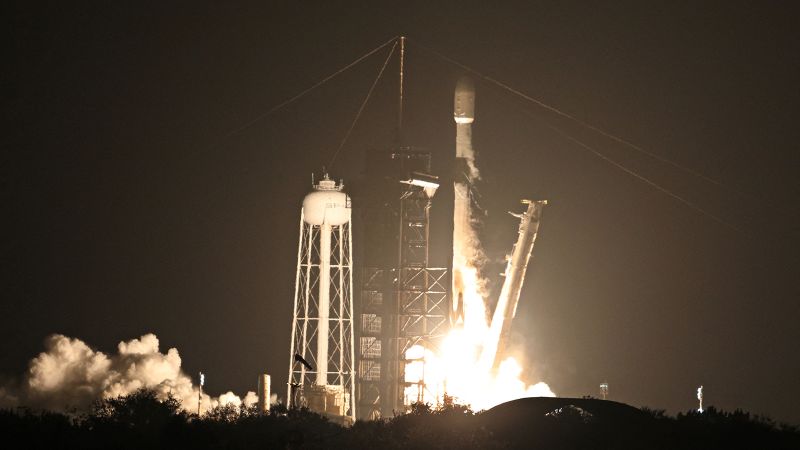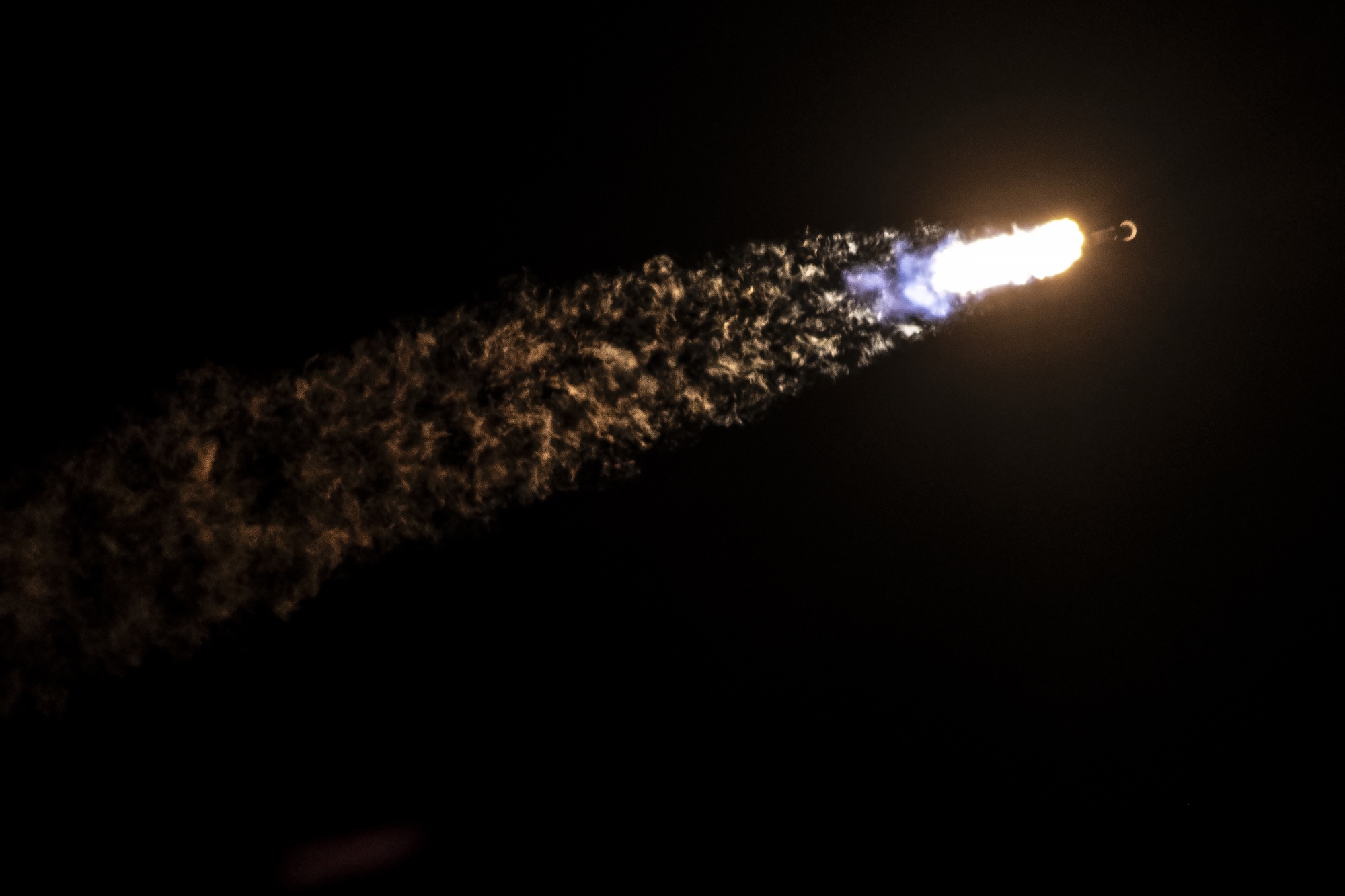
The projected impact of a SpaceX Falcon 9 upper stage on the lunar surface represents more than a ballistic casualty; it is a catalyst for re-evaluating the governance of cislunar space. While the primary mission—launching Firefly Aerospace’s Blue Ghost and ispace’s Resilience—successfully navigated its delivery phase, the second stage’s post-deployment trajectory reveals the systemic limitations of current deep-space debris mitigation protocols.
The Physics of High-Energy Orbital Decay
Unlike low-Earth orbit (LEO) missions, where atmospheric drag provides a predictable mechanism for incineration, high-energy trajectories targeting the moon operate within complex three-body gravitational systems. Spent stages in these orbits lack the delta-v (velocity change) capacity for a controlled Earth reentry or a heliocentric disposal. Consequently, hardware is left to the vagaries of solar radiation pressure and gravitational perturbations from the Earth-Moon-Sun system, which eventually transition stable orbits into terminal collision courses.
Regulatory Lag and the ‘Passivation’ Fallacy
Current aerospace standards emphasize ‘passivation’—the venting of residual propellants and battery discharge—to prevent autonomous fragmentation. However, this event proves that passivation is insufficient for lunar-adjacent missions. The lack of active guidance systems on spent stages means that ‘disposal’ is effectively an unmanaged environmental variable. This highlights a regulatory vacuum: while the Outer Space Treaty provides a broad framework, specific technical norms for cislunar hardware lifecycle management remain underdeveloped, leaving commercial operators to navigate high-risk scenarios with minimal oversight.
Strategic Realignment: From Passivity to Active Stewardship
The collaboration between NASA and SpaceX to study this impact near the Einstein crater signals a shift toward proactive orbital stewardship. Future mission profiles will likely necessitate dedicated fuel margins for ‘active disposal’—either via targeted lunar impacts in non-sensitive zones or injection into stable ‘graveyard’ orbits. While these requirements impose payload penalties and increase launch costs, they are becoming essential for maintaining the operational integrity of the lunar economy, particularly as the Artemis program increases hardware density in the region.
The Kinetic Opportunity: Scientific Silver Linings
Despite its unintentional nature, the impact serves as a controlled kinetic experiment. Traveling at high velocity, the stage will generate an ejecta plume and seismic signatures that offer raw data on lunar regolith composition and sub-surface structure. For NASA, this data is vital for calibrating lunar seismic sensors and understanding the physics of hypervelocity impacts in a vacuum, effectively turning a debris management failure into a high-value geophysical observation.
Conclusion: Defining the New Standard of Space Logistics
The Falcon 9 lunar impact marks the end of the ‘frontier’ era of deep-space transport. As cislunar space transitions into a high-traffic commercial corridor, the industry must evolve from ‘launch-and-leave’ philosophies toward comprehensive lifecycle accountability. The findings from this event will likely inform the next generation of international standards, ensuring that the expansion of the lunar economy does not compromise the environmental stability of the moon’s orbital plane.