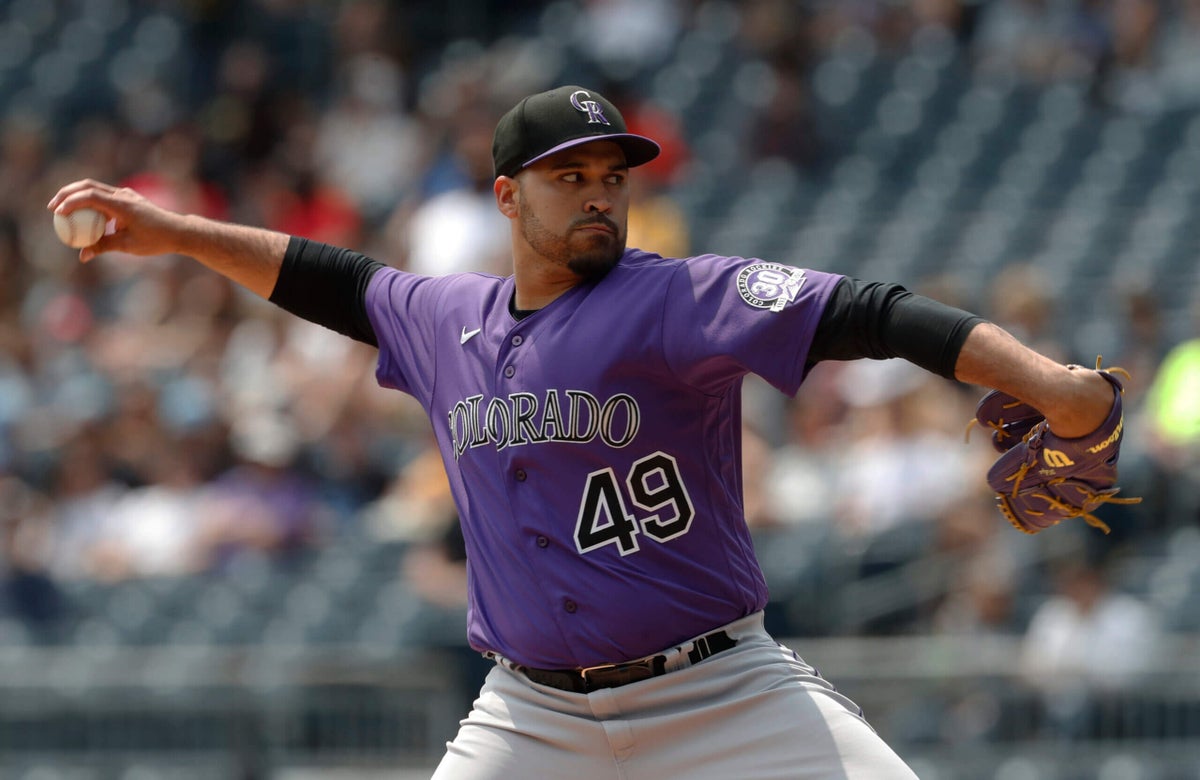
The Milwaukee Brewers’ acquisition of right-hander Antonio Senzatela from the Colorado Rockies serves as a sophisticated case study in arbitrage, targeting the discrepancy between a pitcher’s atmospheric environment and his underlying metric profile. By securing the 31-year-old before the 2026 deadline, Milwaukee is banking on the continued stabilization of Senzatela’s secondary offerings following his transition to high-leverage relief.
In exchange for the veteran, Colorado receives left-hander Mark Manfredi and infielder Juan Martinez. This transaction concludes Senzatela’s nine-year tenure in Denver, an era defined by the physical volatility of Coors Field and a resurgence fueled by Paul DePodesta’s analytical restructuring of the Rockies’ pitching philosophy.
Metric Validation and the Relief Transition
Senzatela’s 2026 campaign is characterized by a 3.61 ERA underpinned by a superior 3.36 FIP over 52 1/3 innings. This peripheral gap suggests that his performance, while statistically impressive, was actually suppressed by the high-BABIP environment of Colorado. His move to the bullpen has allowed his arsenal to play up; by narrowing his focus to shorter bursts, Senzatela has mitigated the fatigue-induced command issues that plagued his later years as a starter.
The Brewers’ internal modeling likely prioritized his refined contact management. Allowing only four home runs across 34 appearances in 2026 indicates a significant mechanical adjustment. By integrating him into a ‘pitching laboratory’ that includes Trevor Megill and Abner Uribe, Milwaukee aims to further optimize his pitch sequencing—specifically leveraging his velocity floor in a high-leverage vacuum.
Financial Leverage and the 2027 Option
The trade’s architecture reveals a calculated risk-reward balance. Milwaukee absorbs the remainder of Senzatela’s $50.5 million contract, but the focal point is the $14 million club option for 2027. This provides the Brewers with a crucial performance hedge: they secure a veteran late-inning asset for a championship run while retaining the right to exit the commitment should age or injury history intervene.
For the Rockies, the move is a pragmatic shedding of a substantial salary obligation. By offloading the final guaranteed year of the deal, the front office gains the capital flexibility necessary to support a roster overhaul around younger, cost-controlled talent.
Prospect Analysis: Colorado’s Developmental Return
The return for Colorado focuses on high-ceiling tools. Mark Manfredi (26) brings an elite 13.4 K/9 rate, addressing the Rockies’ chronic deficiency in swing-and-miss left-handed depth. While his 4.3 BB/9 remains a developmental hurdle, his ability to generate whiffs is essential for surviving the atmospheric constraints of Denver.
Complementing Manfredi is 19-year-old Juan Martinez, a high-speed infielder who slashed .307/.426/.487 in the Arizona League. Martinez represents a shift toward dynamic athleticism; his 27 steals and disciplined plate approach suggest a modern offensive profile that translates across diverse stadium environments, rather than relying on altitude-assisted power.
Conclusion: Institutional Shifts
This trade underscores a broader MLB trend: the repurposing of veteran starters into specialized relief assets to extend career longevity and maximize market value. For Milwaukee, it is a consolidation of bullpen dominance. For Colorado, it is a definitive break from a ‘painful history’ of pitching mismanagement, prioritizing a sustainable pipeline over sentimental ties to homegrown starters.