Technical Parameters of the July 2026 Lunar Opposition
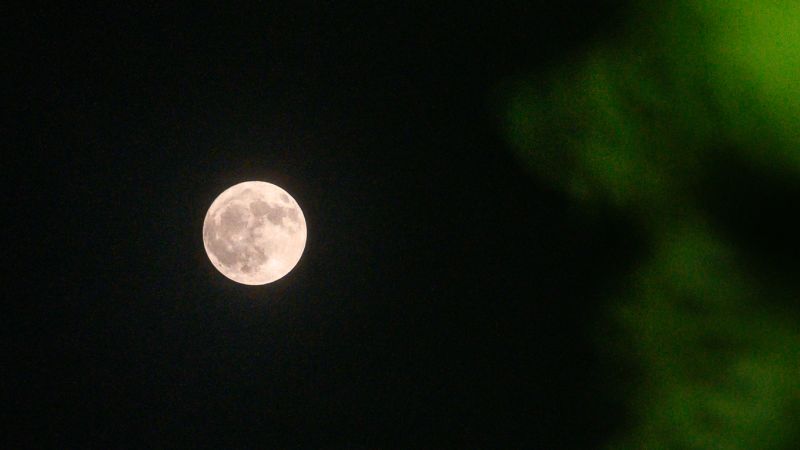
The July 2026 full moon, taxonomically identified as the Buck Moon, is projected to reach astronomical opposition at 10:36 a.m. ET on Wednesday, July 29. This precise syzygy—the alignment of the Earth, Moon, and Sun—occurs during daylight hours for Western Hemisphere observers. Consequently, the window for high-fidelity terrestrial observation shifts to the nocturnal periods immediately preceding and following the mathematical peak, during which the satellite will maintain a perceptual fullness of approximately 99%.
Strategic observation requires an understanding of lunar transit times. While the 10:36 a.m. metric is a fixed point in orbital mechanics used by the Old Farmer’s Almanac and NASA for data synchronization, the visual experience is dictated by local atmospheric extinction and the observer’s geographic coordinates. This discrepancy between ‘peak’ and ‘visibility’ underscores the need for localized planning in citizen science initiatives.
Institutional Oversight: NASA’s Goddard Space Flight Center
Noah Petro, Chief of the Planetary Geology, Geophysics and Geochemistry Lab at NASA’s Goddard Space Flight Center, provides the institutional framework for interpreting this event. His guidance emphasizes the mitigation of artificial light interference and the selection of vantage points with unobstructed horizons. NASA’s role extends beyond mere calculation; it functions as an epistemological bridge, translating complex orbital perturbations into actionable data for public engagement.
The Goddard Space Flight Center’s involvement ensures that lunar observation remains grounded in planetary science. By standardizing the metrics for such events, NASA facilitates a global baseline for environmental monitoring and astronomical education, reinforcing the moon’s role as a primary laboratory for geophysics.
Geospatial Dynamics and Hemispheric Trajectory Variance
A defining characteristic of the July 2026 Buck Moon is its low-altitude arc across the Northern Hemisphere. This phenomenon is a direct result of the moon mirroring the sun’s winter solstice path from six months prior. According to EarthSky data, this low trajectory increases the ‘moon illusion’—where the satellite appears larger near the horizon due to atmospheric perspective—while also subjecting the light to increased refraction.
In contrast, Southern Hemisphere observers will witness a high-elevation transit. This hemispheric disparity is a critical variable for astrophotographers and researchers focusing on lunar albedo. The symmetry of these cycles provides a predictable model for long-term orbital tracking and maritime navigation planning.
Nomenclature: Convergence of Biology and Traditional Ecological Knowledge
The ‘Buck Moon’ designation signifies the biological synchronization of North American cervids, specifically the rapid velvet-growth phase of male deer antlers. This nomenclature serves as a phenotypic marker, linking celestial cycles to terrestrial ecological shifts. Beyond this, various Indigenous naming conventions—such as those referencing berry ripening cycles—represent a sophisticated form of Traditional Ecological Knowledge (TEK).
The institutionalization of these names by meteorological publishers integrates cultural heritage into modern scientific discourse. This synthesis highlights the enduring relevance of lunar cycles as chronological anchors for both biological systems and human cultural identity.
Operational Requirements for High-Fidelity Observation
Optimal visibility of the July 29 event is contingent upon two primary factors: the Bortle scale rating of the observation site and the clarity of the southeastern horizon. To maximize contrast, observers should target the moonrise immediately following sunset, as the Rayleigh scattering of the atmosphere provides a vivid color profile (red/orange hues) during the early stages of transit.
Advanced planning involves monitoring isobaric charts to predict cloud cover. For institutional and educational programs, the broad ‘fullness’ window—extending 24 hours on either side of the peak—allows for operational flexibility, ensuring that regional meteorological volatility does not preclude successful data collection.
Economic and Strategic Implications for the Wellness Sector
The lunar cycle remains a potent driver in the wellness and lifestyle markets. The July 2026 Buck Moon, framed through the narrative of ‘growth and exploration,’ serves as a catalyst for cyclical consumer behavior. Organizations within this sector utilize these celestial milestones for strategic product launches and engagement campaigns, capitalizing on the psychological resonance of seasonal transitions.
This commercial alignment demonstrates the economic leverage of astronomical events. By tapping into the recurring nature of the lunar cycle, businesses create a predictable rhythm for market engagement, bridging the gap between ancient cultural observation and modern strategic marketing.
Information Integrity in Astronomical Media
The dissemination of lunar data requires a rigorous distinction between astronomical facts and cultural interpretations. Entities like EarthSky and NASA provide the foundational metrics that prevent the degradation of information integrity across digital media. The role of specialized analysis is to filter out technical redundancies and provide a coherent, data-driven narrative that addresses the needs of both professional astronomers and the informed public.
Conclusion: The Orbital-Cultural Synthesis
The July 2026 Buck Moon is a multifaceted event where orbital mechanics intersect with institutional policy and cultural history. From the precise geochemistry of the Goddard Space Flight Center to the traditional names preserved by the Old Farmer’s Almanac, the event serves as a testament to the moon’s enduring influence on human systems. Understanding these dynamics offers a deeper appreciation of the Earth-Moon system as a unified field of scientific and strategic study.