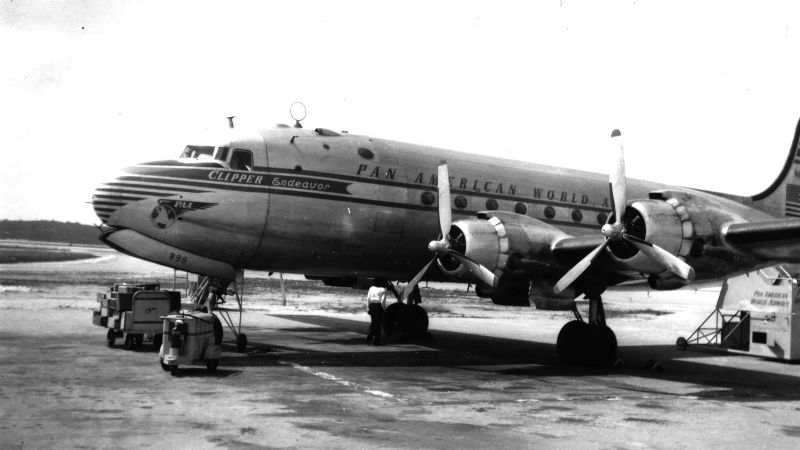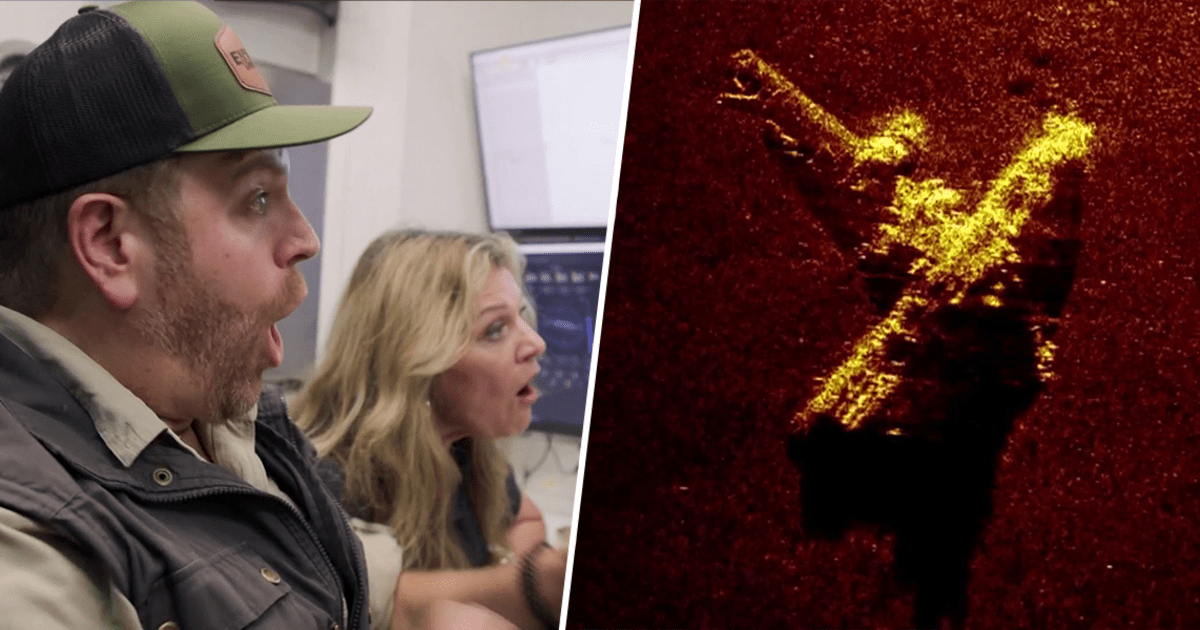
The recent location of the Pan Am Clipper Endeavor wreckage off the Puerto Rican coast represents a significant milestone in maritime forensic archaeology. Resting at a depth of 2,000 feet, the Douglas DC-4 serves as a preserved record of the April 11, 1952, ditching of Flight 256—a disaster that remains a cornerstone of international aviation safety reform.
The mission, a collaboration between the Air/Sea Heritage Foundation and Discovery’s “Expedition Unknown,” utilized high-resolution side-scan sonar and autonomous underwater vehicles (AUVs) to isolate the debris field. The confirmation of the site via visual identification of the landing gear and the distinct Pan Am livery provides empirical closure to a search that spanned over seven decades.
Asymmetric Thrust and Mechanical Criticality
The loss of Flight 256 was precipitated by a catastrophic failure of the No. 3 and No. 4 engines shortly after departure from San Juan. This loss of 50% of total propulsion, concentrated entirely on the starboard wing, created a severe asymmetric thrust condition that compromised the Douglas DC-4’s aerodynamic stability. The flight crew’s subsequent nine-minute struggle to maintain altitude highlights the marginal recovery envelopes of piston-driven transoceanic aircraft during the post-war era.
The structural integrity of the airframe during the water landing was initially successful, but the rapid ingress of water led to the vessel sinking in under twenty minutes. This failure mode emphasizes the vulnerability of early unpressurized and early-pressurized cabins to impact-related seal breaches during maritime ditching maneuvers.
The Survival Gap: Catalyzing Regulatory Reform
Analysis of the 1952 incident revealed a profound “survival gap”: while the majority of the 69 passengers survived the impact, 52 ultimately perished due to drowning and exposure. This discrepancy was attributed to a lack of passenger preparedness; at the time, pre-flight safety demonstrations and the clear labeling of flotation devices were not industry standards.
The subsequent Civil Aeronautics Board investigation into Flight 256 served as the primary catalyst for the mandatory implementation of pre-flight safety briefings. This shift represented an evolution in aviation philosophy, moving from a focus on mechanical reliability to a holistic approach that prioritizes passenger education and rapid evacuation protocols. The modern safety briefing is the direct institutional legacy of the Clipper Endeavor’s loss.
Technological Synergy in Deep-Sea Exploration
The recovery of this site underscores the increasing efficacy of private-public partnerships in historical preservation. By leveraging media-driven funding and advanced subsea robotics, researchers can now access deep-water environments that were previously cost-prohibitive. The forensic data gathered from the Clipper Endeavor—including the degradation patterns of its aluminum alloys—provides long-term insights into the preservation of mid-century aviation materials in high-salinity, high-pressure environments.
As a documented historical site, the wreckage stands as both a memorial to the victims and a physical testament to the iterative nature of safety engineering. Each identified component offers a data point in the ongoing study of how failures in the past have engineered the redundancies of the present.