Strategic Continuity vs. Defensive Resilience
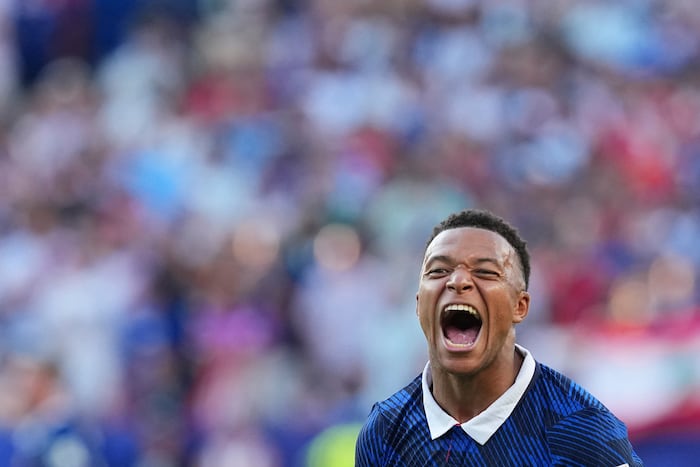
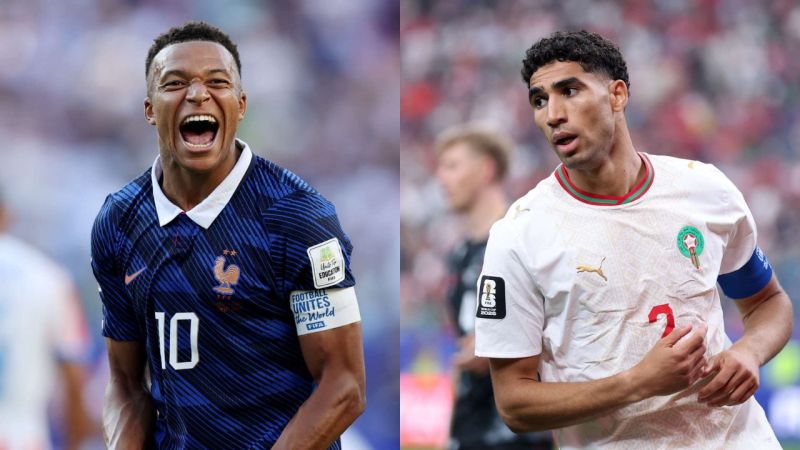
The 2026 FIFA World Cup quarterfinals arrive at a critical juncture as France and Morocco face off at Boston Stadium in Foxborough. This fixture is less a standard knockout match and more a study in technical endurance. For Morocco, it offers a chance to rectify their 2022 exit; for France, it is a test of their evolution under Didier Deschamps. The narrative centers on how both squads manage the transition from the high-octane Round of 16 into a quarterfinal phase defined by tightening margins and physiological limits.
Tactical Reconfigurations: The Doué-Barcola Pivot
Didier Deschamps has signaled a pivot in France’s offensive architecture by favoring Désiré Doué over Bradley Barcola. This adjustment suggests a move away from pure transition speed toward a more nuanced, ball-retentive approach designed to dismantle Morocco’s disciplined low block. By anchoring the midfield with Adrien Rabiot and Manu Koné, France balances physical dominance with the creative versatility required to isolate Kylian Mbappé in high-value zones. The objective is clear: maintain territorial control while mitigating the risks of a counter-attack.
Morocco’s operational flexibility faces its steepest challenge yet following the injury of Ismael Saibari. Manager Mohamed Ouahbi has recalibrated the midfield by integrating Anass Salah-Eddine and Chemsdine Talbi, emphasizing defensive stability over verticality. This restructured core must support Achraf Hakimi and Brahim Díaz, whose roles transition from creative outlets to primary transition engines. The inclusion of Issa Diop and Noussair Mazraoui in front of Yassine Bounou indicates a commitment to a compact defensive shell, specifically tasked with neutralizing the lateral threat posed by Ousmane Dembélé and Michael Olise.
Environmental Constraints: The 110-Degree Thermal Threshold
The match serves as a case study in athletic performance under extreme environmental stress. With a heat index projected to reach 105–110 degrees Fahrenheit, the 4 p.m. kickoff introduces a layer of volatility that could render traditional high-press systems obsolete. Teams will likely shift toward a conservative, possession-oriented rhythm to conserve glycogen stores and manage core temperatures. This ‘thermal attrition’ elevates the importance of the bench, as the five-substitution rule becomes the primary tool for maintaining tactical integrity.
Mandatory cooling breaks, while disruptive to momentum, will be essential. These administrative pauses favor the side that can maintain mental focus amidst frequent restarts. For Morocco, this environment demands a low-error game; for France, it requires a measured tempo that prevents their elite sprinters from reaching premature fatigue. The Foxborough heat is not merely a backdrop but an active participant that will dictate the match’s velocity and the timing of second-half tactical shifts.
Economic Decentralization and Municipal Fan Engagement
Beyond the pitch, the 2026 tournament demonstrates a new model of decentralized sports consumption. Cities like Miami Beach are leveraging the event through large-scale watch parties at Lummus Park, capturing tourism revenue without hosting the physical match. This secondary market activation, supported by municipal infrastructure and accessible parking rates, underscores the World Cup’s role as a regional economic catalyst. From the presence of Argentine fans in South Florida to the Norwegian national team training in Fort Lauderdale, the tournament’s logistical footprint has effectively turned the entire East Coast into a high-density football corridor.
Institutional Stakes and Global Standing
A French victory would validate the continued dominance of the post-Qatar developmental model, cementing the roles of emerging talents like Manu Koné and Bradley Barcola in the national hierarchy. Conversely, a Moroccan victory would prove that their historic 2022 run was a benchmark of a sustainable elite system rather than an isolated phenomenon. As the winner prepares for a 48-hour recovery window before the semifinals, the ability to navigate the logistical and physical demands of Foxborough will be remembered as the defining factor of their campaign.