The Engineering Constraints of Large-Format Cinema
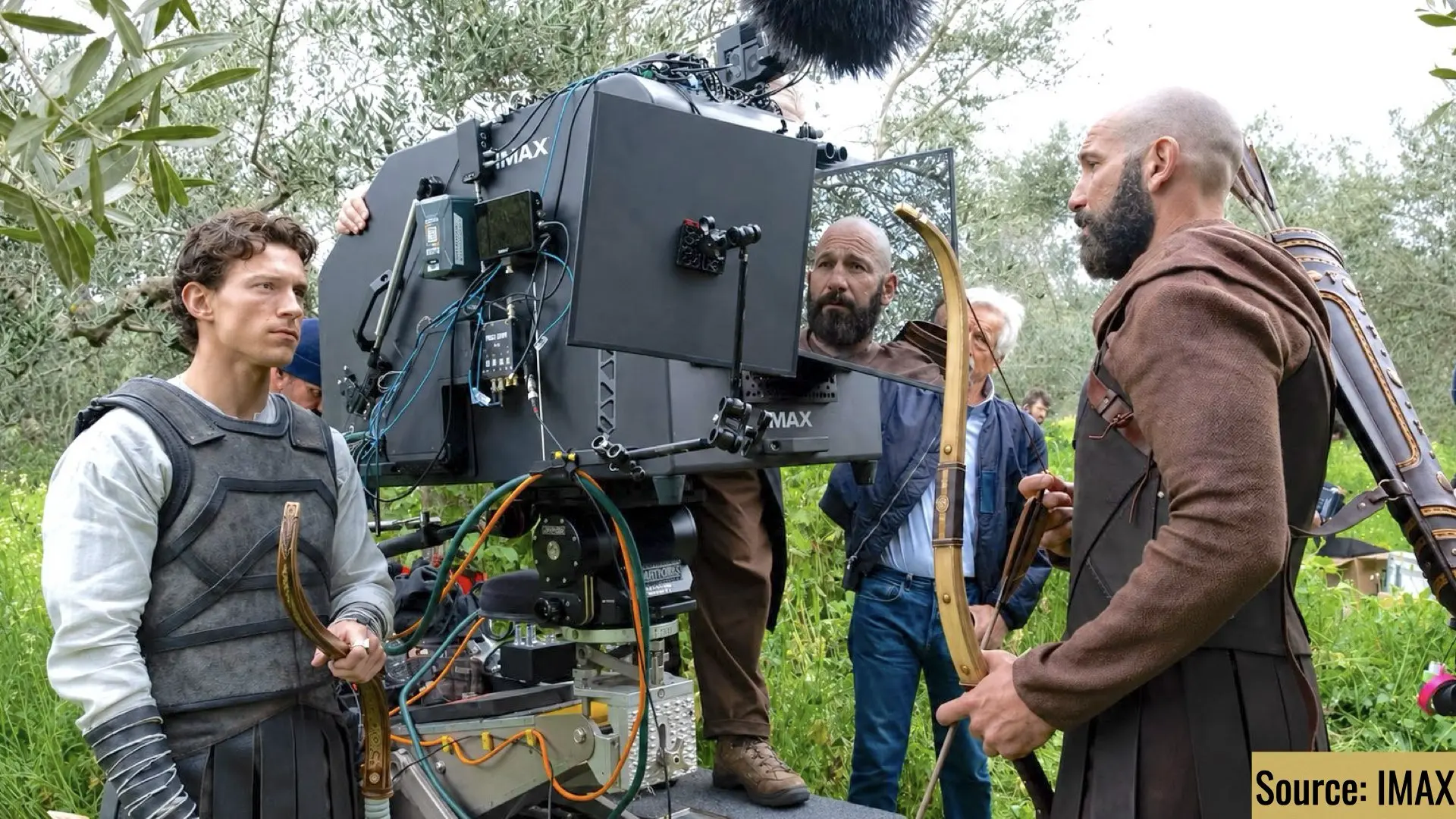
The production of Christopher Nolan’s ‘The Odyssey’ represents a paradigm shift in the operational deployment of 15/65 IMAX film technology. By committing to an entirely IMAX-captured workflow, the production team confronted significant physical and acoustic limitations inherent to large-format cameras. The necessity of a sound blimp—a housing engineered to isolate the mechanical noise of the IMAX film movement—transformed the camera into a substantial physical obstruction. This created a structural barrier, impeding the direct line of sight critical for nuanced actor performances and organic spatial interaction on set.
Strategic Innovation in Optical Design
To counteract the detrimental impact of the blimped camera on interpersonal dynamics, the production ingeniously implemented a specialized mirror system. This technical innovation enabled actors to maintain vital eye contact via reflections, effectively circumventing the physical impediment of the camera housing. This solution underscores the evolving symbiosis between high-fidelity capture formats and performance-centric cinematography. In contemporary filmmaking, the infrastructure required to support IMAX resolution profoundly influences the physical set environment, compelling directors to innovate at the nexus of optics and logistical challenges.
The Economic and Competitive Stakes of IMAX
The decision to establish IMAX as the primary visual language for ‘The Odyssey’ is a meticulously calculated strategic maneuver within the premium large-format (PLF) market. By standardizing the production on 15/65 film, the studio asserts distinct product differentiation, leveraging the demonstrable physical superiority of the medium over digital alternatives. This approach entails considerable financial risk; the logistical overhead associated with operating and maintaining IMAX equipment on a film set is substantially greater than that of standard digital capture. Nevertheless, the unparalleled visual fidelity achieved serves as a paramount marketing asset, positioning the film as an indispensable theatrical event rather than a commoditized piece of content.
Institutional Positioning and Audience Expectations
The marketing campaign for ‘The Odyssey,’ including its trailer releases, strategically amplifies the film’s technical milestones to cultivate audience anticipation. By highlighting practical engineering solutions, such as the innovative mirror system, the studio reinforces a narrative of authentic, high-effort filmmaking—a critical driver for the premium-tier audience segment. The inclusion of a high-profile ensemble cast, including Oscar winners Matt Damon and Anne Hathaway, complements the project’s technical prestige. This dual-pronged strategy of merging auteur-driven technical innovation with established star power is designed to maximize box office performance in an increasingly fragmented media landscape.
The Evolution of Production Logistics
‘The Odyssey’s’ production model mirrors a broader trend in high-budget cinema where the technical demands of the capture format dictate workflow across all departments. The reliance on IMAX film cameras mandates an extraordinary level of precision, impacting everything from set design and lighting to camera operation and performance direction. This operational rigidity necessitates a departure from more conventional, adaptable filming methodologies. The mirror system, therefore, is not merely an ingenious workaround but a prime example of how modern production design must proactively incorporate the physical footprint of essential, high-fidelity tools.
Market Consequences of Technical Rigor
As audiences increasingly differentiate between the theatrical and home viewing experiences, the value proposition of films like ‘The Odyssey’ becomes inextricably linked to their technical scale. The unwavering commitment to IMAX serves as a clear signal to the market: the film is engineered for the grandest possible display, establishing a competitive moat against content primarily designed for streaming platforms. This strategic decision compels exhibitors to prioritize the film in their scheduling, aligning its technical specifications with the capabilities of IMAX-equipped venues. The success of this model is poised to influence future studio capital allocation toward high-format production workflows.
Institutional Implications for Future Productions
The technical challenges and bespoke solutions documented in ‘The Odyssey’ establish a valuable blueprint for subsequent large-format productions. By standardizing these innovations, the industry may experience a reduction in the operational friction associated with IMAX filming, potentially lowering the barrier to entry for other filmmakers considering the format. However, the inherent requirement for such specialized infrastructure ensures that IMAX will continue to represent an elite tier of cinematic production. The substantial capital intensity of these projects remains a significant impediment, ensuring that only a select number of films can sustain this level of technical investment annually.
Synthesis of Technical and Creative Strategy
The sophisticated integration of the mirror system into ‘The Odyssey’s’ production vividly demonstrates how technical constraints can act as powerful catalysts for creative problem-solving. This crucial synthesis is fundamental to preserving film’s relevance as an artistic medium in an era dominated by digital visual effects and extensive post-production manipulation. By championing practical, in-camera solutions, the production maintains a level of visual integrity that is increasingly rare. This deliberate focus on the tangible reality of the set, even when mediated by reflective surfaces, remains a defining characteristic of Nolan’s directorial approach and a cornerstone of the film’s unique market identity.