Statistical Disruption of Trans-Pacific Benchmarks
Kelsey Pfendler’s current trajectory from Monterey to Hawaii represents a fundamental disruption of established performance metrics in solo trans-Pacific rowing. By maintaining a velocity targeting a 44-day completion, Pfendler is not merely challenging the existing women’s record of 86 days; she is effectively compressing the temporal requirement for the 2,400-mile crossing by nearly 50%. This margin suggests that previous benchmarks may have been limited by conservative routing or sub-optimal energy management, barriers Pfendler has overcome through a synthesis of advanced meteorology and physical conditioning.
The strategic timing of her May 21 departure maximized the utility of seasonal trade winds, a critical variable for solo operators who lack the redundant propulsion of a multi-person crew. This synchronization allows for sustained forward momentum, mitigating the risk of stagnation in high-pressure systems that traditionally hamper solo attempts.
Operational Evolution: From Team Dynamics to Solo Autonomy
Pfendler’s transition from team-based competition to a solo endeavor highlights a significant pivot in risk management and operational lifecycle protocols. In a crewed environment, continuity is achieved through shift rotations, allowing for physiological recovery without halting the vessel. Conversely, the solo rower must integrate navigation, maintenance, and propulsion into a singular, uninterrupted workflow.
Sustaining record-breaking speeds under these constraints indicates a highly refined metabolic and psychological recovery protocol. The absence of a secondary operator heightens the stakes of technical failure, making her proficiency in vessel systems as vital as her physical output. Her performance underscores a trend where elite endurance athletes are increasingly leveraging data-driven insights to manage the isolation and workload of solo trans-oceanic routes.
Technological Transparency and Institutional Verification
The integration of YB Races telemetry and digital live-streaming transforms this isolated crossing into a high-visibility event, providing a continuous audit trail for record verification. For stakeholders and sponsors, this transparency is essential for mitigating the reputational risks inherent in extreme solo sports. Real-time tracking data not only serves the public interest but acts as a critical point of institutional proof, ensuring that the achievement is validated against international standards without the typical delays of post-voyage reporting.
Furthermore, the use of social media platforms as a strategic communication tool facilitates real-time engagement, which is vital for securing the capital required for such resource-intensive expeditions. The arrival in Hawaii, documented via live-stream, serves as the final evidentiary link in a journey defined by technical and athletic precision.
Psychological Resilience and the Coastal Transition
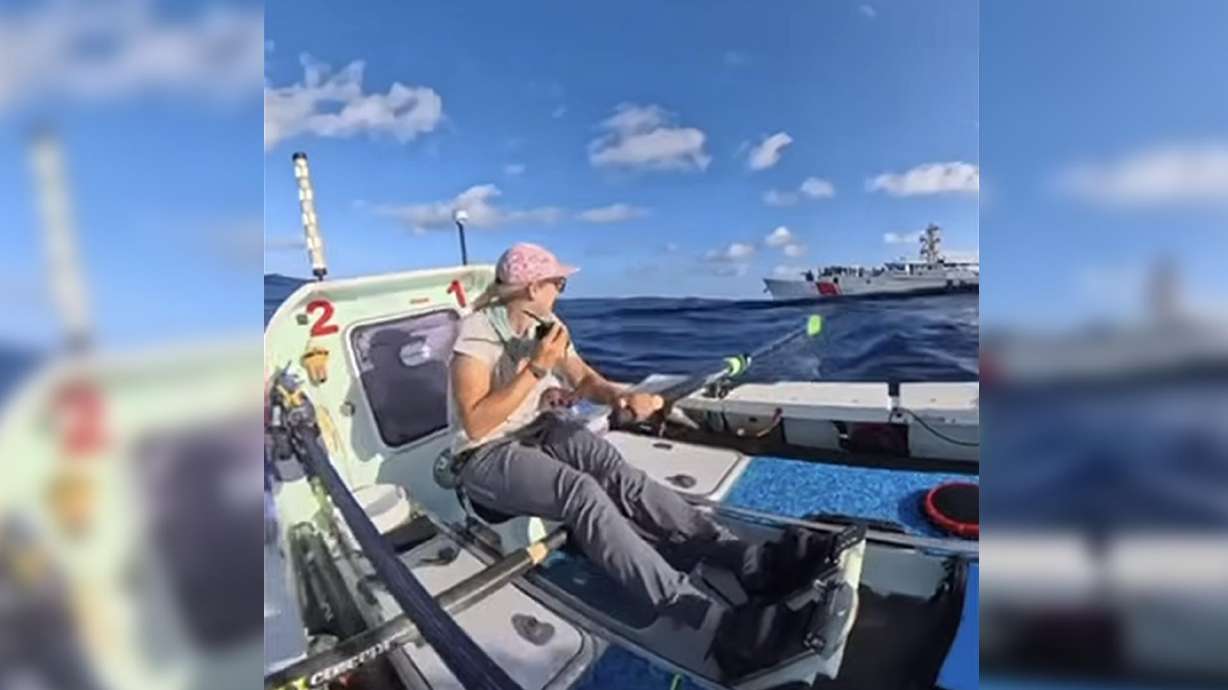
As Pfendler approaches the islands of Molokai and Oahu, the psychological demands shift from the monotony of deep-ocean navigation to the high-acuity requirements of coastal arrival. In high-stakes endurance, maintaining morale is a functional necessity rather than a secondary benefit. Strategic interventions—such as mid-ocean morale boosts—act as psychological resets, preventing the cognitive decline often associated with prolonged isolation and cumulative fatigue.
The final approach to the Hawaiian archipelago introduces navigational volatility, where complex coastal currents and shifting wind patterns demand intense focus despite 44 days of exertion. This phase is traditionally the most dangerous, as the rower must navigate hazardous littoral zones where error margins are minimal and physical reserves are at their lowest.
Demographic Shifts and the Future of Ocean Rowing
Pfendler’s bid to become the youngest woman and first American female to complete this route signals a demographic expansion in the ocean rowing community. Traditionally the domain of a narrow international cohort, the entry of younger American athletes indicates broader institutional support and access to sophisticated sports science. Her challenge to Lia Ditton’s 2020 record demonstrates how competitive standards can be elevated when modern training frameworks are applied to legacy routes.
This success establishes a new baseline for future expeditions, likely forcing a re-evaluation of logistical and physical preparations across the sport. When a record is broken by over 40 days, it indicates that the previous standard no longer reflects the technological or athletic ceiling of the discipline. Pfendler’s achievement thus serves as both a personal milestone and a new strategic blueprint for the next generation of trans-oceanic rowers.