The Structural Volatility of the Expanded Round of 32
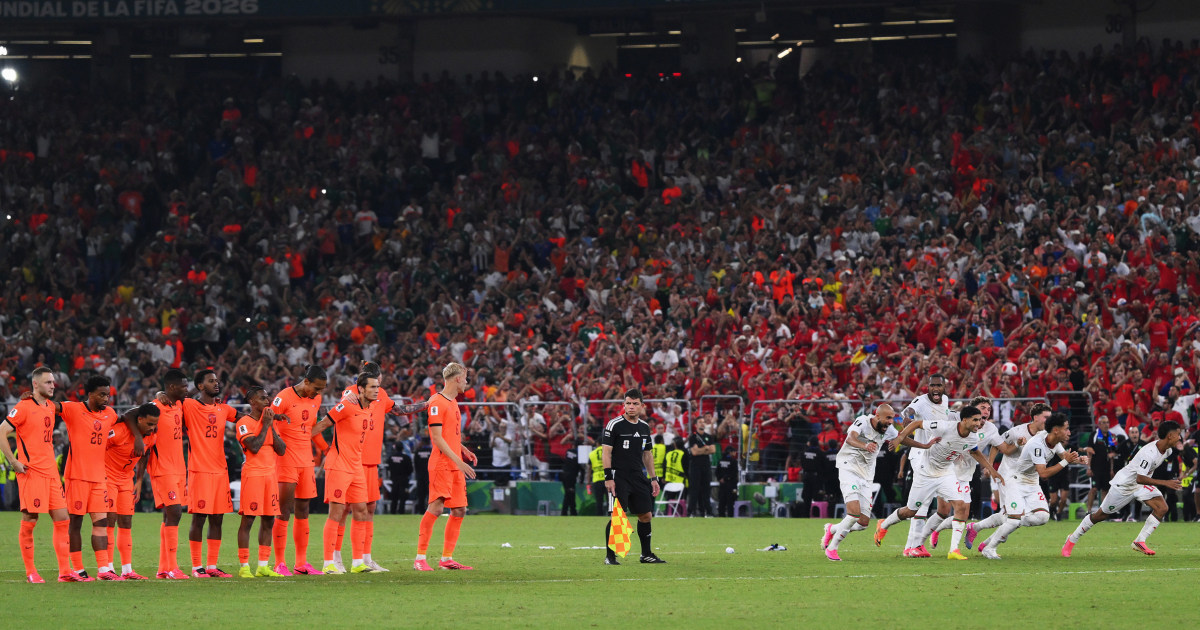
The immediate elimination of Germany and the Netherlands in the Round of 32 exposes the highly volatile competitive landscape of the expanded tournament format. By introducing an additional single-elimination layer directly following the group stage, the tournament design amplifies competitive variance. Historical dominance and squad valuation no longer guarantee progression, as a single tactical miscalculation or penalty shootout instantly dissolves established international hierarchies.
For governing bodies and tournament organizers, these early exits disrupt the projected competitive equilibrium of the bracket. The departure of elite UEFA nations alters the historical matchups anticipated for the later rounds, creating highly unpredictable pathways for surviving teams. This structural shift forces coaching staffs to abandon long-term planning and rapidly adapt to highly defensive, resilient opponents that thrive in high-friction, single-elimination scenarios.
Commercial Realignment and Broadcast Valuation Shifts
The premature exit of high-GDP football nations like Germany and the Netherlands presents immediate commercial challenges for global broadcasters and sponsors. These territories represent premium consumer markets characterized by high average revenue per user (ARPU), robust merchandise sales, and elevated advertising buy-rates. The sudden absence of these core audiences forces media rights holders to immediately recalibrate their monetization strategies for the remaining fixtures.
From a media perspective, the loss of these major markets depresses peak live-viewership projections in key European time zones. Advertisers who purchased premium commercial packages based on the anticipated deep runs of traditional European giants must now pivot to matchups featuring emerging nations. Conversely, the progression of Paraguay and Morocco unlocks high-growth consumer demographics in South America and North Africa, demanding agile, localized digital campaigns to capture the sudden surge in regional engagement.
Logistical Friction and Micro-Climatic Demands
The vast geographical footprint of the 2026 tournament across North America imposes unprecedented physical and logistical demands on advancing squads. Morocco’s transition from a grueling penalty shootout in Monterrey, Mexico, to a Round of 16 fixture in Houston, Texas, highlights the complexity of cross-border team travel. Managing physiological recovery, travel fatigue, and rapid climate adaptation within tight competitive windows has become a primary performance variable.
The physical toll of consecutive 120-minute matches, compounded by interstate travel, tests the limits of modern sports science. Squads must contend with diverse environmental variables—ranging from high humidity in Texas and Monterrey to the high-altitude hypoxia of Mexico City. Under these conditions, the operational efficiency of a national federation’s medical, nutritional, and logistical infrastructure directly dictates on-pitch performance, favoring organizations with superior recovery resources.
The Streaming Paradigm: NBCUniversal’s Peacock and Telemundo Leverage
The broadcasting distribution strategy of Telemundo and Peacock highlights the structural shift occurring within sports media consumption. By balancing traditional linear Spanish-language television with direct-to-consumer digital streaming, NBCUniversal maximizes audience reach across fragmented demographics. This dual-distribution framework is uniquely positioned to monetize the high-tension, viral nature of knockout stage penalty shootouts.
For Peacock, live sports acquisition serves as a primary vehicle for subscriber conversion and churn mitigation. The unpredictable drama of the Round of 32 provides highly engaging, unscripted content that drives platform dwell time. Concurrently, Telemundo’s linear dominance capitalizes on the deep-rooted cultural affinity for football within the North American Hispanic demographic, securing sustained advertising yields even as traditional European markets exit the tournament ecosystem.
Tactical Convergence and the Neutralization of Elite Systems
The tactical triumphs of Paraguay and Morocco over Germany and the Netherlands illustrate a broader trend of defensive convergence in international football. Highly disciplined, compact defensive blocks coupled with physical conditioning successfully neutralized the complex, possession-based positional play of their European counterparts. This tactical parity proves that structured defensive organization can effectively bridge the talent gap in single-elimination matches.
In high-stakes knockout environments, low-risk transition play often yields higher success rates than elaborate attacking setups. By absorbing sustained pressure and stretching matches into extra time and penalty shootouts, underdog nations systematically exploit the psychological pressure bearing down on favored opponents. Consequently, specialized preparation for penalty shootout scenarios has transitioned from a contingency plan to an essential tactical discipline.
Host Nation Pressure: The Mexico City Crucible
The upcoming Round of 32 clash between Mexico and Ecuador in Mexico City represents a critical commercial and cultural nexus for the tournament. As a co-host, the Mexican national team carries immense institutional and economic pressure to secure progression. Playing at the high-altitude Estadio Azteca offers a profound home-field advantage but also subjects the squad to intense domestic scrutiny.
The host nation’s continued participation is vital to sustaining local economic momentum, ticket resale values, and public engagement throughout the host cities. Ecuador’s tactical challenge will depend on their ability to manage energy expenditure in high-altitude conditions while resisting intense local crowd pressure. This fixture epitomizes the high-stakes, regionalized drama of the tournament’s knockout phase, where home-field advantage meets tactical survival.
Round of 16 Horizon: Canada vs. Morocco in Houston
The confirmed Round of 16 matchup between Morocco and Canada in Houston, Texas, establishes an intriguing cross-continental clash. Having endured a demanding physical path through Monterrey, Morocco enters the fixture with significant defensive momentum. Canada must formulate a tactical strategy capable of breaking down the resilient defensive structures that frustrated the Netherlands’ attack.
This fixture underscores the shifting geopolitical balance of international football, displaying the success of the tournament’s expanded format. Houston’s diverse demographic profile guarantees a highly charged, neutral stadium environment, forcing both squads to adapt to dynamic crowd energy. As the remaining teams vie for a quarterfinal berth, the structural, commercial, and athletic dynamics of this tournament continue to redefine the landscape of modern sports business.