
Strategic Imperatives: The Houston Knockout Crucible
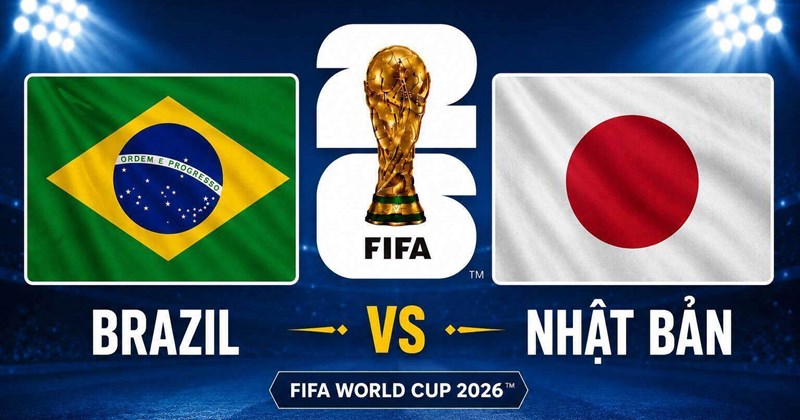
The transition to the Round of 32 in Houston marks a definitive shift for Brazil from group-stage experimentation to the binary constraints of knockout football. This fixture is not merely a hurdle, but a validation of the structural reforms under the current technical staff. Japan enters as a disciplined tactical unit, optimized to exploit the transitional vulnerabilities often present in high-possession paradigms. For the Seleção, the objective is dual-pronged: securing immediate progression while mitigating squad attrition and disciplinary risks ahead of a potential encounter with either Norway or the Ivory Coast.
The logistical choice of Houston introduces specific variables; climate-controlled conditions and high-capacity infrastructure offer a psychological and commercial advantage to the Brazilian side. Historically, Brazil has thrived in the North American market, and the current institutional expectations are at a decadal peak following recent performance metrics. Success here requires a balance between offensive dominance and the intensive recovery protocols necessary for a deep tournament run.
Tactical Evolution: The Ancelotti Paradigm
The appointment of Carlo Ancelotti has infused the Brazilian squad with a level of European tactical pragmatism previously absent. This evolution was evidenced by the team’s response to the 1-1 draw against Morocco in Group C. Following that early defensive lapse, the squad executed a disciplined recalibration, resulting in seven unanswered goals across subsequent matches. The 3-0 victories over Haiti and Scotland were not products of individual flair alone, but the result of a structured approach designed to dismantle low-block architectures through superior spatial awareness and rapid verticality.
By maintaining clean sheets in the final two group fixtures, the technical staff has prioritized a balanced transition game. This maturity represents a significant departure from the volatile performances of previous cycles. The focus on defensive solidity ensures that Brazil enters the knockout phase with a reliable foundation, reducing the likelihood of the single-point failures that have historically plagued their exit campaigns.
The Neymar Variable and Squad Depth
The return of Neymar after a 981-day injury hiatus is the most significant personnel development of the tournament. In his fourth World Cup, Neymar provides a veteran presence that alters the ‘defensive gravity’ of the opposition, effectively creating pockets of space for emerging offensive talents. His reintegration has been strategically managed to prioritize physical sustainability, shifting his role from a purely physical threat to a primary playmaker—an evolution that aligns perfectly with Ancelotti’s tactical requirements.
Furthermore, Brazil’s offensive distribution—demonstrated by multiple goal-scorers in the group stage—reduces the strategic risk of over-reliance on a single individual. This depth forces opponents to defend across multiple channels, a challenge that Japan’s compact mid-block will struggle to neutralize over 90 minutes. Internal competition for starting positions remains a key driver for the high intensity levels required in the knockout rounds.
Historical Context: Breaking the Post-2002 Cycle
Brazil’s current trajectory draws inevitable comparisons to the 2002 championship-winning side, matching their longest winning streak at a World Cup since that era. While Brazil has topped every group since 1982, the transition to the knockout phase has been an Achilles’ heel, with eliminations occurring in four of the last five cycles. This historical context renders the Japan fixture a pivotal test of whether the current squad can translate group-stage consistency into knockout resilience.
The 2002 benchmark is more than a statistic; it represents the last successful navigation of the psychological and tactical hurdles of a full tournament. By emulating that era’s winning consistency, the 2026 squad suggests they are better equipped for the rigors of the expanded bracket. The challenge now is to break the cycle of premature exits and maintain momentum through the increased physical and mental load of an additional knockout round.
Institutional and Commercial Trajectory
Beyond the pitch, the Seleção’s performance carries immense weight for the Brazilian Football Confederation (CBF) and its global partners. A deep run in the North American market maximizes brand equity and strengthens the team’s position within the global sports economy. High-profile figures like Neymar serve as commercial catalysts, driving unprecedented viewership and engagement metrics. From an institutional perspective, victory over Japan would validate the high-stakes investment in elite European coaching and modernize the national team’s global standing.

Photo by heibe on Pixabay.