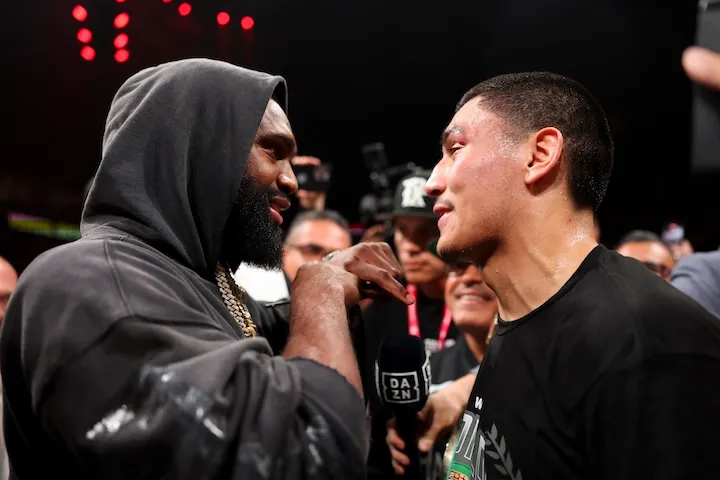
The Structural Dynamics of a High-Stakes Matchup
The potential confrontation between Jaron ‘Boots’ Ennis and Vergil Ortiz Jr. represents a critical nexus point in the current professional boxing landscape. While market demand for the bout remains high, its realization is subject to intricate promotional, legal, and operational variables extending beyond simple athlete availability.
Eddie Hearn of Matchroom Boxing has publicly outlined a cautious strategy regarding the timeline for this fight. The necessity of a ‘warmup’ bout for Ortiz, following a period of inactivity, highlights the industry’s standard practice of risk mitigation for high-value assets.
Promotional Friction and Institutional Alignment
The relationship between Golden Boy Promotions and Vergil Ortiz Jr. has been characterized by documented institutional friction, including legal challenges. These administrative complexities significantly influence the speed at which high-value fights can be negotiated and finalized, as contractual stability is a prerequisite for major event planning.
Internal disagreements between promoters and fighters directly decelerate the matchmaking process, creating a vacuum where potential marquee events are delayed, impacting the strategic market positioning of both athletes and their respective promotional entities.
Competitive Positioning and Market Value
Jaron Ennis, currently aligned with Matchroom Boxing, holds a distinct position in the welterweight and junior middleweight hierarchies. His career trajectory is defined by a high knockout ratio and consistent activity, necessitating an opponent of commensurate caliber to maintain his market value and competitive momentum.
Conversely, Vergil Ortiz Jr. maintains a significant standing, currently holding the No. 1 position among The Ring’s junior middleweight contenders. This ranking provides Ortiz with substantial leverage in negotiations, allowing his team to prioritize long-term career health over immediate, high-risk matchups.
Market Dynamics and Strategic Risk Mitigation
The boxing industry operates on a model where optimal timing for a fight is as critical as the contest itself. A premature matchup between two undefeated, high-value prospects can diminish a promotional firm’s significant asset, prompting a conservative scheduling approach.
Hearn’s assertion that Ortiz requires a warmup fight is a strategic calculation to ensure optimal performance and revenue generation. By prioritizing a return to form, the involved promotional entities are effectively managing the risk profile of their investment.
The Impact of Legal and Contractual Precedents
The litigation involving Ortiz and Golden Boy Promotions serves as a potent example of how legal disputes can disrupt the professional development of elite athletes. Such conflicts introduce uncertainty, inherently detrimental to the planning of large-scale, pay-per-view events requiring substantial lead time.
For stakeholders, the resolution of internal legal and financial matters is as vital as the athletes’ training camps. A promoter’s ability to secure a fighter’s commitment hinges on a stable legal and financial environment, a crucial focal point for industry observers.
Future Trajectories and Promotional Strategy
As the industry progresses, the consolidation of talent and the influence of major promotional platforms will continue to shape the feasibility of high-value bouts. The Ennis-Ortiz dynamic exemplifies a broader trend where the alignment of promotional interests is the primary determinant of fight realization.
The eventual matchup, should it materialize, will be framed not only by the fighters’ physical capabilities but by the successful navigation of these complex institutional layers. Market observers will continue to monitor the activity levels of both athletes as a proxy for their readiness for a career-defining contest.
Conclusion: Systemic Constraints on Matchmaking
The delay in finalizing the Ennis-Ortiz fight reflects the intricate balance between athlete development, promotional risk management, and legal stability. While the demand for the bout is clear, the structural realities of the boxing ecosystem necessitate a more measured pace.
Stakeholders must navigate these constraints to ensure that when the fight finally occurs, it maximizes both competitive integrity and commercial value. The current impasse is not merely a scheduling issue but a manifestation of the strategic priorities that define modern professional boxing.