Tactical Centralization and Individual Brilliance in Global Football
The 2026 FIFA World Cup has transitioned past its initial group stages, establishing a highly competitive environment where individual attacking output directly correlates with team progression. Within elite international football, the Golden Boot operates not merely as a subjective accolade, but as a quantitative metric of offensive efficiency. High-stakes tournament play demands optimized conversion rates, transforming the race for this individual award into a critical tactical indicator for national team strategies and predictive sports markets.
Messi’s Historical Ascent: Quantitative and Market Analysis
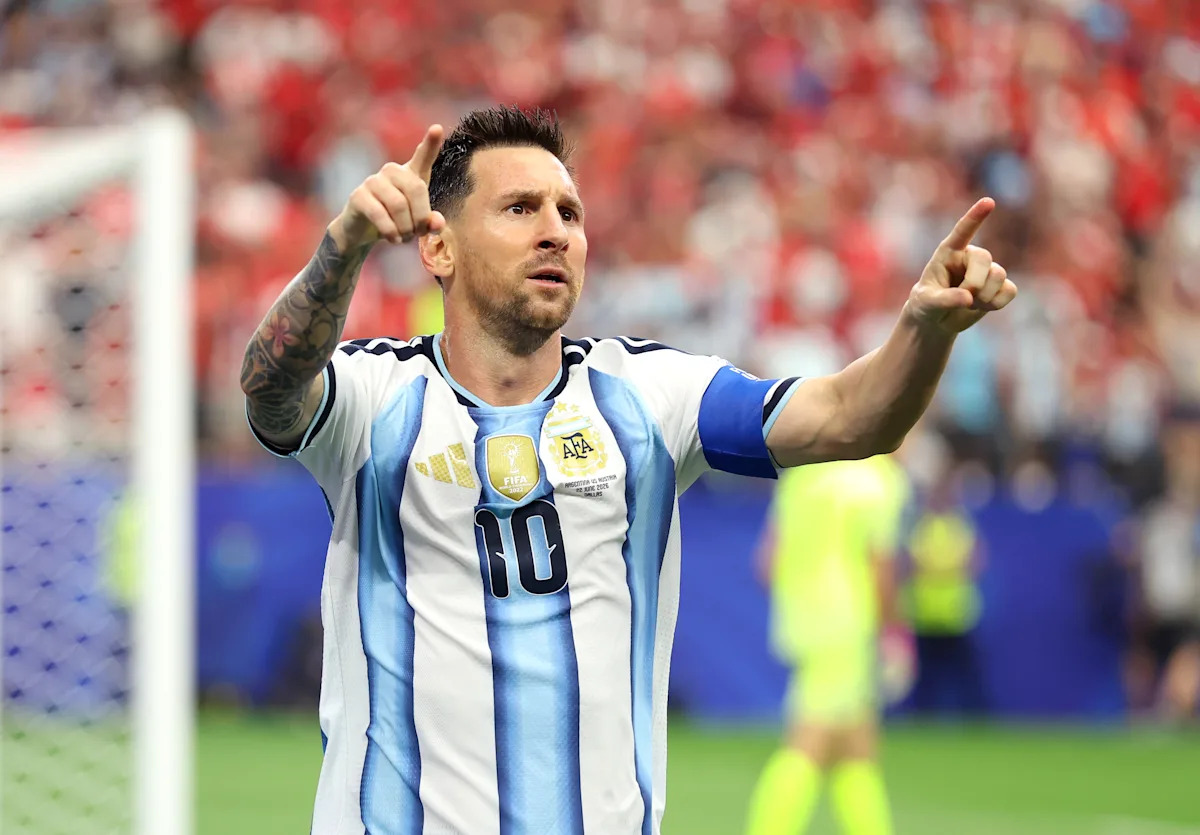
Lionel Messi has secured a commanding position in the golden boot standings, characterized by historic milestones and high tactical utilization. By scoring against Austria, Messi registered his 17th tournament goal, surpassing Germany’s Miroslav Klose to become the all-time leading male goalscorer in FIFA World Cup history. His subsequent 18th goal surpassed Brazil’s Marta, establishing him as the highest-scoring player in World Cup history across both men’s and women’s divisions.
This unprecedented scoring volume has fundamentally adjusted sports betting markets. Oddsmakers currently list Messi as the favorite at +150, reflecting a high market-implied probability of securing the Golden Boot. This valuation is grounded in extreme tactical centralization: Argentina has scored five goals in the tournament so far, with Messi accounting for 100% of these conversions. While this concentration highlights his elite clinical efficiency, it also exposes a significant strategic dependency for the national team, making their offensive output highly vulnerable to defensive containment or physical variance.
Contender Dynamics and Market-Implied Probabilities
Behind the leader, a tier of elite forwards presents distinct tactical profiles and competitive odds. Predictive models and oddsmakers have structured the chasing pack based on historical conversion rates and projected team longevity:
- Kylian Mbappé (+360): Standing as the primary challenger, Mbappé’s value is driven by his explosive transition speed and high-volume shooting within a structurally dominant side.
- Harry Kane (+500): Offering consistent penalty-box execution, Kane benefits from structured build-up play and primary penalty-taking duties.
- Mikel Oyarzabal (+1300): A high-efficiency option whose output is highly dependent on team-wide possession dominance.
- Erling Haaland (+1500): A highly direct physical threat whose lower odds reflect team-level qualification hurdles and structural volume constraints.
- Deniz Undav (+2000): Serving as a tactical wild card with strong domestic conversion metrics translating to the international stage.
- Lamine Yamal (+3000) & Vinícius Júnior (+3000): High-ceiling wingers whose lower implied probabilities stem from wider distribution of scoring duties within their respective squads.
Operational Rules, Tiebreakers, and Strategic Adjustments
The institutional mechanics governing the Golden Boot introduce additional tactical parameters. FIFA’s reliance on non-penalty goals and primary assists as decisive tiebreakers forces elite forwards to balance direct finishing with creative playmaking. This operational framework shifts the optimal tactical role of a modern striker, incentivizing holistic offensive contributions over isolated target-man positioning. As teams enter the knockout phases, defensive configurations will tighten, elevating the importance of set-piece efficiency and secondary assists in determining the final recipient of the award.