
The Divergence of Organizational Trajectories
The 2026 Major League Baseball season presents a stark and unexpected role reversal between the St. Louis Cardinals and Kansas City Royals. Preseason analytics projected the Royals as legitimate contenders and the Cardinals as a franchise undergoing a multi-year rebuild. However, as these cross-state rivals prepare for a three-game series at Kauffman Stadium, their current trajectories tell a dramatically different story. The Cardinals arrive with a surprising 40-32 record, signaling an accelerated competitive maturity and a compressed developmental timeline. Conversely, the Royals languish at 30-45, having regressed significantly from contention, now pivoting towards future asset evaluation. This 10-game differential isn’t merely a statistical anomaly; it underscores a fundamental divergence in institutional efficiency, player development efficacy, and overall roster execution. St. Louis’s momentum, built on a high-performing young core that has won nine of its last thirteen games, starkly contrasts with Kansas City’s operational paralysis, challenging the conventional lifecycle of an MLB rebuild.
The Mechanics of an Accelerated Rebuild
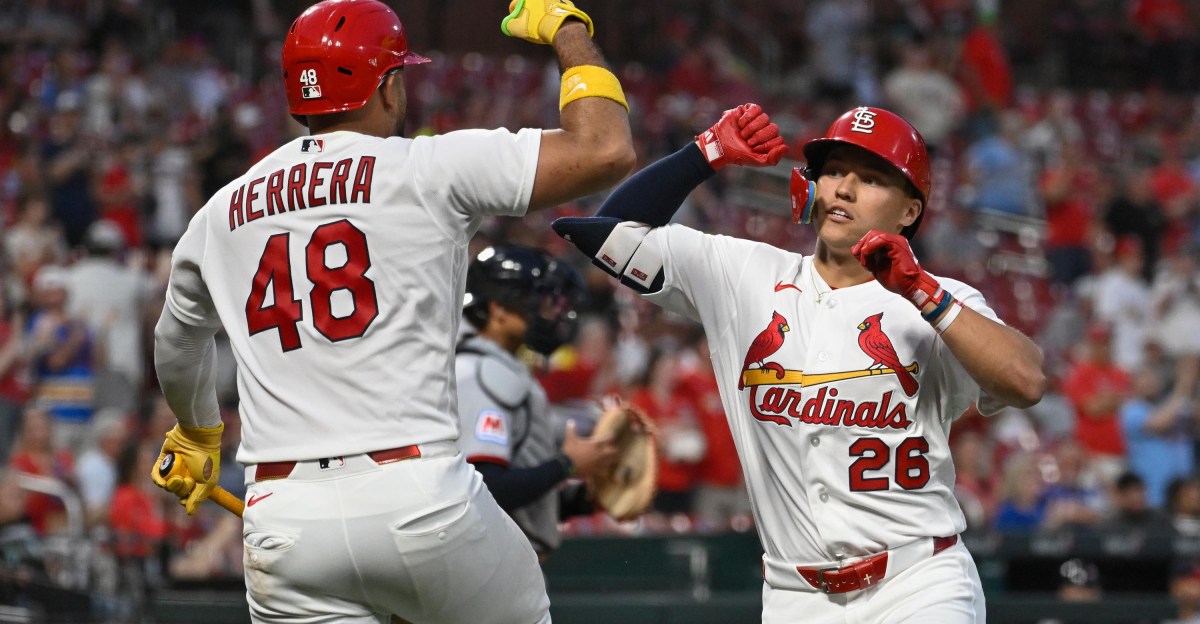
The Cardinals’ precocious success stems directly from a refined player development model emphasizing high-ceiling talent and strategically aggressive promotion. This approach has allowed St. Louis to circumvent the typical extended period of non-competitiveness associated with structural overhauls. Central to this offensive resurgence is Jordan Walker, whose 18 home runs and 56 RBIs rank him among the league’s top ten power hitters. Walker’s consistent ability to deliver in the middle of the order forces opposing pitchers to make high-leverage mistakes, fundamentally altering game dynamics. Complementing this raw power is Iván Herrera’s elite plate discipline, evidenced by his .398 on-base percentage—seventh best in MLB. Herrera’s capacity to extend innings, coupled with a remarkable .453 road OBP, provides the Cardinals a crucial strategic advantage, particularly in competitive environments like Kauffman Stadium, by consistently creating scoring opportunities.
Statistical Disparities in Run Production and Prevention
A deeper statistical examination reveals the pronounced operational chasm between these two franchises. The Cardinals, despite their youth, average a respectable 4.53 runs per game (14th in MLB) while allowing 4.38 runs per game (15th). This near league-average performance on both offense and defense results in a positive run differential, a critical metric for predicting sustainable winning percentages over a full season. It signifies a balanced roster capable of consistently outscoring opponents. Conversely, the Kansas City Royals exhibit significant inefficiencies across both phases of play. Their offense struggles, ranking 26th with a meager 4.01 runs scored per game, compounded by a pitching staff that surrenders 4.69 runs per game (19th). This creates a substantial negative run differential (-0.68 runs per game), a systemic deficit that even elite situational hitting would struggle to consistently overcome, highlighting a fundamental imbalance in their roster construction and execution.
Noah Cameron and the Volatility of Sophomore Performance
The Royals’ struggles are starkly personified by Noah Cameron, the left-handed starter for the series opener, whose 2026 performance exemplifies the team’s broader volatility. Following a stellar 2025 rookie season where he posted a 2.99 ERA and finished fourth in AL Rookie of the Year voting, Cameron has regressed to a 3-4 record with a 4.11 ERA this year. His outings fluctuate between flashes of dominance and critical mechanical lapses, as seen in his last start against Houston, where he surrendered two two-run home runs over just 4 1/3 innings due to admitted pitch execution failures. Paradoxically, Cameron boasts a remarkable historical record against the Cardinals, holding a 1.96 ERA and a minuscule .148 opponent batting average. Yet, this individual mastery has failed to translate into team success, with the Royals losing all three of his career starts against their cross-state rivals, a pattern indicative of deeper institutional deficiencies.
Institutional Failures and Bullpen Reliability
The Royals’ systemic failure to convert Cameron’s strong outings against St. Louis into victories directly implicates a broader institutional breakdown in late-game management and bullpen reliability. A prime example occurred in June 2025, when Cameron delivered six scoreless innings, only for the Kansas City bullpen to squander a 3-0 lead, culminating in a 6-5 loss. This recurring pattern of blown leads doesn’t just impact individual game outcomes; it erodes team morale and undermines strategic planning, particularly when a resilient, rebuilding opponent like the Cardinals consistently exploits these late-inning vulnerabilities. The Cardinals’ demonstrated ability to rally from deficits highlights a mental toughness and tactical execution often absent in struggling teams. For the Royals, this persistent issue has transformed a projected contending year into a premature evaluation period for their 2027 roster, further compounded by an inconsistent offense that frequently leaves starters like Cameron with insufficient run support, destabilizing the entire pitching rotation.
Tactical Matchups and Roster Composition
Beyond the overarching organizational narratives, this series will be decided by critical tactical matchups that expose specific roster strengths and weaknesses. Alec Burleson, for instance, presents a significant vulnerability for the Cardinals against left-handed pitching, with a paltry .186/.220/.244 slash line this season. The Royals’ left-handers could strategically exploit this, potentially neutralizing a portion of the Louis lineup after navigating the formidable top of the order. Conversely, the Cardinals receive a boost from Nathan Church’s return from the Injured List; his .321 average over nine games since rejoining the roster adds crucial offensive depth and situational hitting prowess. The presence of former Royals outfielder Nelson Velázquez in the Cardinals’ dugout introduces a layer of familiarity for scouting but also underscores the dynamic, fluid nature of modern MLB roster construction and player movement. Ultimately, these granular tactical decisions and individual execution gains will be paramount in determining the series outcome.
Strategic Implications for the Trade Deadline
As the MLB mid-season mark nears, the starkly divergent records of the Cardinals and Royals will decisively shape their respective strategies in both capital and player markets. St. Louis, significantly ahead of its rebuilding schedule, is poised to act as a buyer, seeking veteran depth to fortify its young core for a legitimate postseason push. Conversely, the Royals are firmly positioned as sellers, compelled to extract maximum value from assets that no longer align with a rapidly shifting competitive timeline. The performance of key players, such as Noah Cameron in high-profile rivalries like this, will be rigorously scrutinized by scouts and front offices league-wide, impacting potential trade value. In essence, this series transcends a typical rivalry; it functions as a compelling case study in the unpredictable nature of MLB rebuilds. The Cardinals exemplify how robust player development and tactical discipline can accelerate competitive timelines, while the Royals serve as a potent cautionary tale of how quickly a projected contender can unravel, losing its competitive footing to institutional inefficiencies.

Photo by GeorgeB2 on Pixabay.