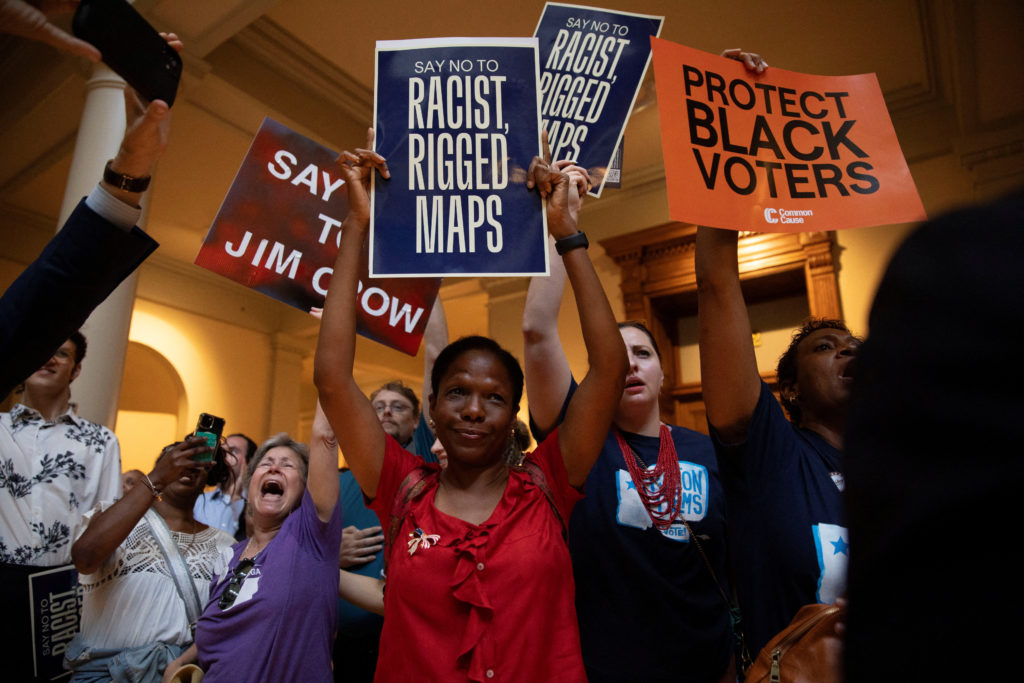
Georgia Republican legislative leaders have rejected Governor Brian Kemp’s proposal for a special session dedicated to redrawing congressional and legislative districts.
This decision, announced Wednesday, signifies a strategic divergence from the immediate redistricting efforts seen in some other Southern states following a U.S. Supreme Court ruling that has introduced complexities regarding the federal Voting Rights Act (VRA). The move prioritizes a more measured and deliberative approach to map adjustments, contrasting with calls from former President Donald Trump for rapid redistricting aimed at bolstering the Republican party’s House majority.
Strategic Prioritization of a Deliberate Process
House Speaker Jon Burns underscored the commitment to a meticulous process, stating, “We believe that it’s important to do things the Georgia way; responsibly; transparently; and with ample opportunity for public input.” This emphasis reflects a strategic decision to avoid hasty actions, particularly in light of the Supreme Court’s April decision which has created significant uncertainty surrounding minority voter protections and their legal standing in redistricting. The implication is a concerted effort to avoid potential legal challenges and public backlash associated with rushed redistricting, thereby safeguarding the party’s long-term political stability and credibility.
Governor Kemp had advocated for the special session with the stated purpose of redistricting for the 2028 elections, not the upcoming November 2026 contests. This timing suggests a strategic intent to allow for a more thorough analysis of the Supreme Court’s ruling and its downstream effects on voter demographics and representation before undertaking significant map changes. By deferring redistricting, Kemp’s administration may aim to mitigate immediate political fallout and ensure any redrawn maps are demonstrably more durable and less susceptible to legal contestation.
Balancing Stakeholder Interests and Risk Mitigation
The legislative leaders’ rejection positions Governor Kemp to potentially face criticism for failing to secure legislative consensus for his redistricting initiative, especially given the perceived urgency following the Supreme Court’s decision. However, by aligning with legislative leadership, the lawmakers are mitigating their own risk of association with a process that could prove contentious and legally fraught. This stance also allows them to publicly champion transparency and public engagement, potentially enhancing their image among a broader electorate concerned with fair electoral practices.
This decision creates a clear contrast with states that have moved swiftly to redraw districts, actions often viewed as politically motivated maneuvers to consolidate power. Georgia’s Republican leadership is thus navigating a complex political landscape, balancing the imperative to maintain a Republican advantage with adherence to principles of responsible governance and broad public engagement. This measured approach could be interpreted as a strategic effort to preemptively address concerns about voter disenfranchisement and bolster the legitimacy of future electoral maps.
Divergence from National Party Strategy and Influence
The legislative leaders’ stance represents a notable divergence from the national Republican party’s strategy, which has been significantly influenced by Donald Trump’s calls for aggressive, immediate redistricting. While some states have heeded these calls, Georgia’s Republican leadership appears to be prioritizing a more localized and cautious approach. This internal party dynamic underscores the varying strategic priorities and risk tolerances among different factions within the Republican party, particularly concerning the sensitive issue of electoral map manipulation.
The emphasis on a “Georgia way” suggests a potential cultural or institutional preference for a more deliberative political process, distinct from the more immediate and politically charged environment of national redistricting battles. This could indicate a strategic calculation that a slower, more transparent process will ultimately yield more stable and legally defensible electoral outcomes, even at the cost of foregoing immediate political gains. It also allows legislative leaders to distance themselves from the more aggressive tactics employed elsewhere, potentially appealing to a broader base of voters concerned about democratic processes.
Impact of the Supreme Court’s Voting Rights Act Decision
The Supreme Court’s decision impacting the Voting Rights Act is a central factor driving this debate, fundamentally altering the legal and political calculus for redistricting. The ruling has effectively reduced the federal government’s direct oversight capacity in pre-clearing redistricting plans that may dilute minority voting strength, placing greater emphasis on state-level legal challenges and interpretations of existing laws. This shift necessitates a more nuanced understanding of how redistricting impacts minority representation and requires meticulous legal and demographic analysis.
By citing an “incomplete understanding of the ramifications” of the ruling, Georgia’s Republican leaders acknowledge the inherent complexity and potential legal pitfalls associated with redrawing districts in the current environment. This cautious approach signifies a strategic recognition that any redistricting effort must be meticulously crafted to withstand rigorous legal scrutiny, particularly in a state with a significant minority population. The decision to delay redistricting allows for a more thorough examination of legal precedents and demographic shifts, aiming to produce maps that are both politically advantageous and legally sound.
Broader Political and Electoral Considerations
The decision not to redraw congressional maps has immediate implications for the upcoming November elections, as current district boundaries will remain in place. This provides a degree of stability for incumbent representatives and their constituents. However, it also means that any potential shifts in electoral advantage due to demographic changes will not be addressed through redistricting in the short term.
Furthermore, the legislative leaders’ focus on other pressing matters, such as the potential reimposition of a moratorium on gasoline taxes, indicates a strategic prioritization of issues with broader immediate public appeal. This suggests a political calculation that addressing economic concerns may be more beneficial for the party’s electoral prospects in the short term than engaging in a potentially divisive redistricting battle. It also allows them to demonstrate responsiveness to constituent concerns on tangible economic issues.
Future Redistricting Landscape and Opportunities
The rejection of an immediate special session does not preclude future redistricting efforts. The 2028 election cycle provides a distinct opportunity for Georgia to undertake redistricting once the full impact of the Supreme Court’s decision has been more comprehensively assessed and understood. This extended timeline allows for more comprehensive data collection and analysis, as well as greater public engagement, potentially leading to a more equitable and sustainable redistricting outcome.
The ongoing debate over redistricting in Georgia reflects a broader national tension between partisan advantage and the principles of fair representation. The state’s Republican leadership’s decision to proceed cautiously, prioritizing transparency and public input, may set a precedent for how other states approach redistricting in the post-Voting Rights Act era. This approach could influence the legal and political strategies employed by both parties in future redistricting cycles, shaping the electoral landscape for years to come.
The Crucial Role of Public Input in Redistricting
Speaker Burns’ emphasis on “ample opportunity for public input” suggests a strategic understanding of the importance of process legitimacy in redistricting. In an era of heightened political polarization, processes that are perceived as transparent and inclusive are more likely to be accepted by the public, even by those who disagree with the eventual outcomes.
This commitment to public input, while potentially slowing down the redistricting process, could serve to inoculate the resulting maps against accusations of partisan gerrymandering. It also aligns with a broader trend in governance where public engagement is increasingly recognized as a critical component of effective and legitimate policy-making. The inclusion of diverse voices in the redistricting process can lead to more robust and representative electoral districts.
Economic Considerations and Strategic Political Balancing
The legislative leaders’ mention of other matters, including a moratorium on gasoline taxes, indicates a strategic decision to balance redistricting discussions with other pressing economic issues. This suggests an awareness of the broader political environment and the necessity of addressing issues that directly impact constituents’ daily lives.
By deferring redistricting, the legislative leaders can allocate more focus to economic policies that may yield immediate and widespread positive effects, potentially bolstering their electoral standing. This dual focus on economic relief and a deliberate approach to redistricting reflects a sophisticated political strategy aimed at maximizing public approval and minimizing potential controversy.
Long-Term Institutional Strategy and Legislative Authority
The decision to reject the governor’s call for a special session on redistricting reflects a potential power dynamic between the legislative and executive branches in Georgia. By asserting their prerogative on the timing and process of redistricting, legislative leaders are reinforcing their institutional authority.
This assertion of legislative independence is a significant structural development, indicating that redistricting decisions will be subject to the consensus-building and procedural norms of the General Assembly. It suggests a long-term strategy to ensure that redistricting is not solely dictated by the executive branch or external political pressures, but rather by a process perceived as more representative of the legislative body’s collective will.
Federal vs. State Control in the Evolving Redistricting Landscape
The Supreme Court’s decision has fundamentally shifted the balance of power in redistricting, granting states more autonomy while simultaneously increasing the potential for partisan manipulation. Georgia’s Republican leadership’s response highlights the complex interplay between federal court rulings and state-level political decision-making.
By choosing a slower, more deliberative path, Georgia’s leaders are attempting to navigate this new landscape by emphasizing state-level control and process integrity. This approach could influence how other states interpret and implement redistricting laws in the wake of the weakened Voting Rights Act, potentially leading to a more fragmented and varied national redistricting landscape.
Defying Donald Trump’s Pleas: Internal Party Dynamics
The explicit mention of defying Donald Trump’s pleas underscores the internal political currents within the Republican party. While Trump advocates for aggressive redistricting to secure House seats, Georgia’s legislative leaders are demonstrating a willingness to chart their own course, prioritizing what they deem to be a more responsible and transparent process.
This defiance suggests a strategic calculation that aligning too closely with Trump’s more aggressive political tactics might alienate moderate voters or create unnecessary political risk. By opting for a more measured approach, they may be seeking to broaden their appeal and position themselves as pragmatic leaders, distinct from the more polarizing elements of the national party.
Transparency and Public Trust as Cornerstones of Electoral Integrity
The commitment to transparency and public input, as articulated by Speaker Burns, is a critical element in building public trust in the electoral process. Redistricting has historically been a contentious issue, often associated with partisan gerrymandering and a lack of accountability.
By prioritizing these principles, Georgia’s Republican leaders are attempting to frame their approach to redistricting as one that serves the broader public interest, rather than narrow partisan goals. This strategy aims to preempt criticism and build a foundation of legitimacy for any future redistricting maps, potentially increasing their durability and acceptance.
The 2028 Election Cycle as a Strategic Window for Redistricting
The focus on the 2028 election cycle for redistricting represents a significant strategic decision. It allows for a more comprehensive assessment of demographic shifts and the long-term implications of the Supreme Court’s ruling on the Voting Rights Act.
This extended timeline provides an opportunity to gather more precise data on population changes and voter behavior, leading to maps that are more likely to reflect the evolving demographics of the state. It also allows for a more thorough public discourse on the principles and objectives of redistricting, potentially leading to a more consensus-driven outcome.
Navigating the Complex Post-VRA Redistricting Landscape
The Supreme Court’s decision has fundamentally altered the legal framework for redistricting, placing greater emphasis on state-level legal challenges and interpretations of existing voting rights laws. Georgia’s Republican leadership’s cautious approach reflects an understanding of this new legal reality.
By delaying redistricting, they are allowing time for the legal implications of the Supreme Court’s ruling to be more fully understood and for potential legal challenges to be anticipated. This strategic pause is designed to ensure that any redrawn maps are legally sound and can withstand scrutiny, thereby protecting the party’s long-term electoral interests.
The Role of Media Narrative in Shaping Public Perception
The media’s role in framing the narrative around redistricting is crucial. The decision by Georgia’s Republican leaders to reject a rushed process, while defying Trump, provides a distinct angle for coverage that emphasizes deliberation and transparency.
This narrative can be leveraged to shape public perception, positioning the state’s leadership as responsible stewards of the democratic process. Conversely, states that engage in rapid, politically charged redistricting may face greater scrutiny and criticism from media outlets and advocacy groups concerned about fair representation.