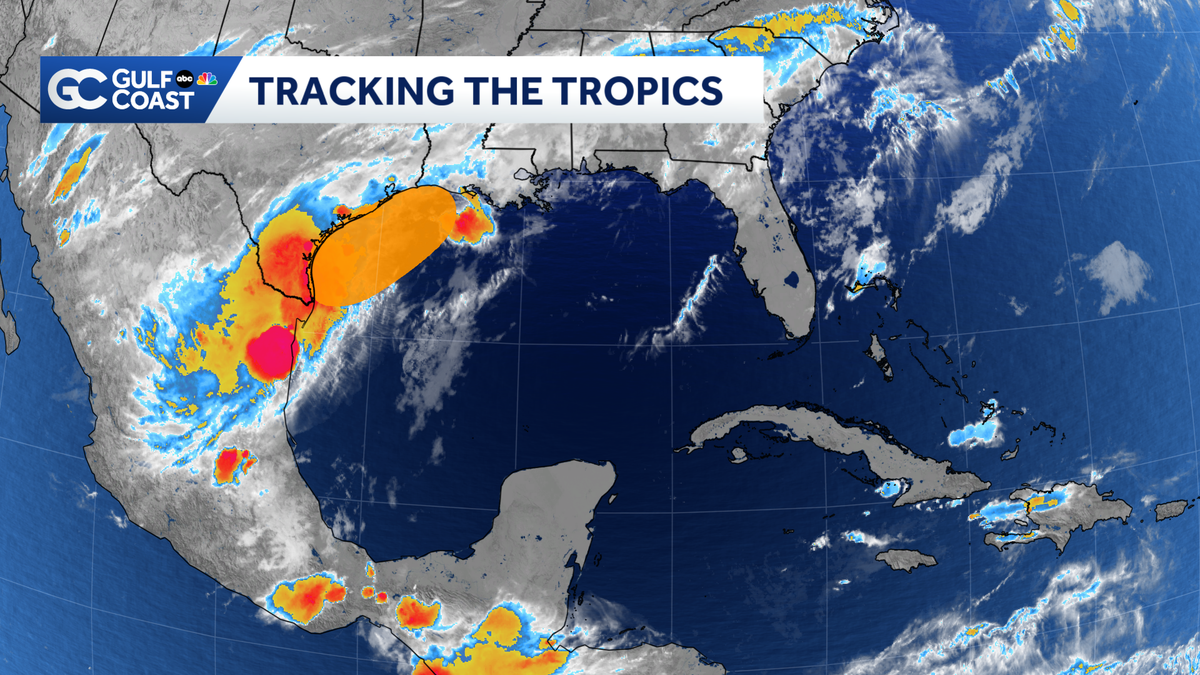
Institutional Monitoring of Invest 90L
The emergence of Invest 90L near the northern Mexico coastline serves as the first operational stress test for 2026 Atlantic hurricane season monitoring protocols. As a disorganized atmospheric disturbance, the system functions as a critical dataset for the National Hurricane Center, which uses the invest designation to standardize data aggregation across the Atlantic and Pacific basins.
Assigning an identifier between 90 and 99 triggers mandatory reporting, integrating buoy, satellite, and reconnaissance data. This systematic approach provides a common operating picture for emergency managers and private-sector logistics firms, enabling stakeholders to evaluate potential cyclogenesis with consistent metrics despite the early-season nature of the disturbance.
Operational Dynamics and Development Constraints
Invest 90L faces a constrained development window as it moves into the northwest Gulf of Mexico. While elevated sea surface temperatures provide thermal energy for intensification, the system is hindered by a limited temporal trajectory before landfall. This brief timeframe underscores the inherent volatility of early-season tropical activity, where shifts from disturbance to named status often occur with minimal lead time.
The threat of rapid intensification necessitates a high-readiness posture. Regardless of formal tropical storm classification, the system poses significant flood risks to Texas and Louisiana. Consequently, industrial stakeholders—particularly those managing energy assets—must prioritize precipitation-based risk modeling over wind-speed metrics to protect supply chains from flash flooding and related operational disruptions.
Economic and Infrastructure Implications
Regional commercial resilience is currently tested by the prospect of heavy, sustained precipitation. In the Gulf corridor, rainfall-induced flooding presents a greater threat to freight mobility and port operations than wind damage. For manufacturing and energy sectors, localized infrastructure failure risks creating cascading bottlenecks in regional production, further complicating logistics in an already sensitive economic environment.
Current disaster management protocols are undergoing real-time evaluation. The deployment of emergency resources to mitigate flood-related hazards highlights the administrative costs of moisture-heavy disturbances. These interventions validate the need for pre-positioned, scalable response frameworks capable of adapting to the unpredictable nature of tropical moisture surges.
Strategic Risk Management and Institutional Learning
Institutional disaster management remains largely reactive. Municipal governments and utility providers must evaluate the economic trade-offs of precautionary mobilization against the uncertainty of system development. The high probability of extreme rainfall justifies a risk-adjusted approach, even in instances where a system fails to reach tropical storm intensity.
Early-season disturbances provide actionable insights into internal communication and resource allocation models. By treating Invest 90L as a longitudinal case study, institutions can refine their disaster mitigation policies, thereby reducing the long-term economic exposure of the Gulf Coast to recurring tropical volatility.
Synthesizing Meteorological and Administrative Data
For stakeholders, hydrological impact is the primary operational concern, often superseding the technical categorization of a system. Integrating meteorological forecasting with site-specific hydrological risk mapping is essential for accurate damage assessment. Standardized invest designations facilitate cross-jurisdictional coordination, ensuring that federal and local resources are synchronized to address the cumulative impacts of flooding as the 2026 season progresses.