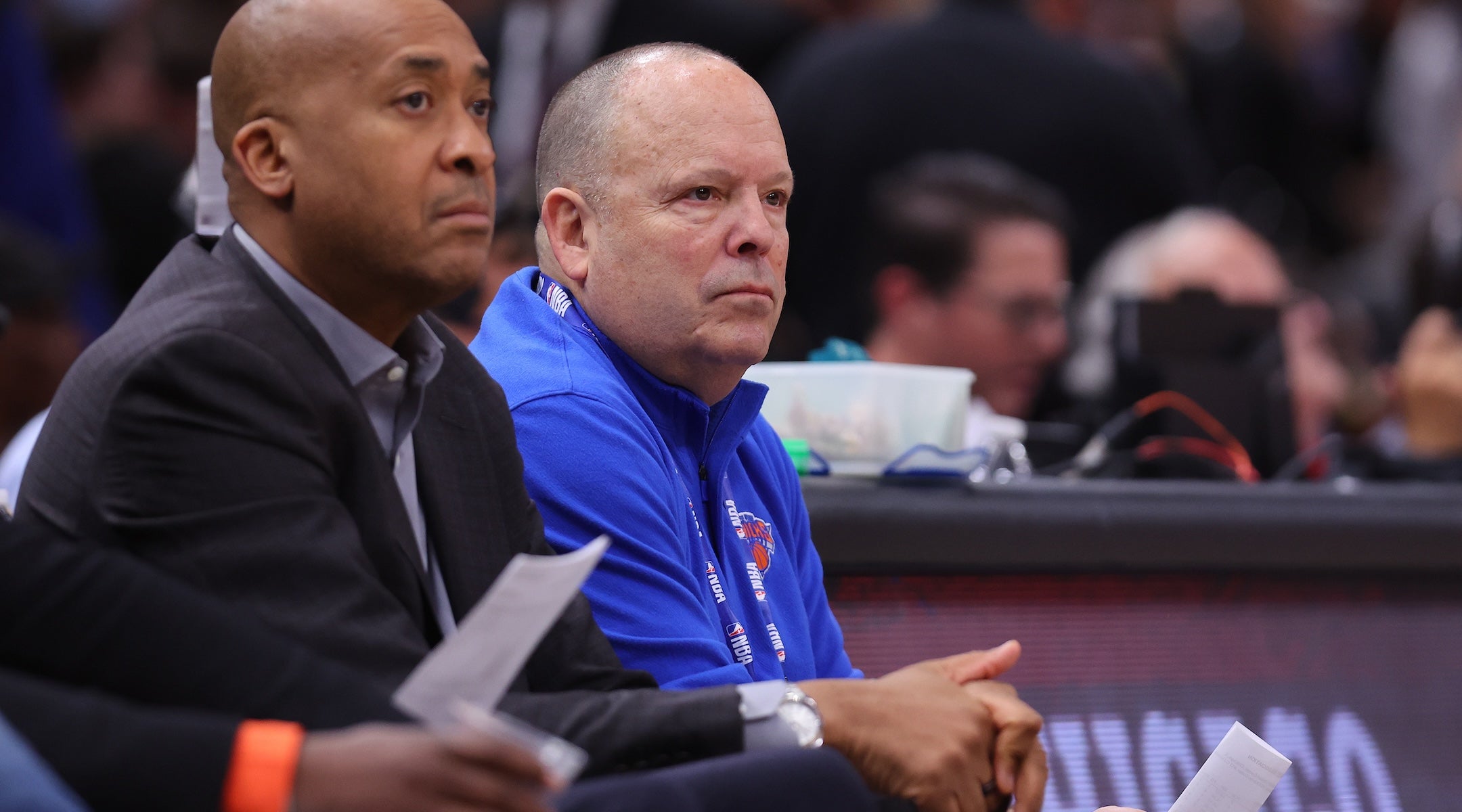
Rose’s Championship Gambit Validated
New York Knicks President Leon Rose has secured the franchise’s first NBA championship in 53 years, a triumph achieved through a series of bold personnel decisions. The team’s victory in the NBA Finals serves as definitive validation of Rose’s strategic vision and confidence, despite significant public and media skepticism.
Rose’s tenure has been marked by a willingness to absorb criticism for moves deviating from conventional team-building wisdom. His aggressive pursuit and significant cap space allocation to sign Jalen Brunson, whom many viewed as a capable player but not a franchise cornerstone, exemplified this risk-tolerant strategy. The subsequent trade of RJ Barrett and Immanuel Quickley for OG Anunoby, a player recognized for defensive prowess and shooting but lacking All-Star accolades and carrying an injury history, further divided fan sentiment.
The most controversial maneuver involved the acquisition of Mikal Bridges from the Brooklyn Nets, a deal that saw the Knicks surrender five first-round draft picks. This substantial capital expenditure was widely debated, with critics arguing such a premium should be reserved for generational superstars. The transaction fueled speculation about Rose’s motivations, including potential personal ties to Villanova players, adding scrutiny to his decision-making.
These high-stakes gambles underscore a deliberate strategy to accelerate the team’s championship window, prioritizing immediate impact over long-term asset accumulation. The financial commitment to Brunson, the draft capital expended for Bridges, and the trade of established young players for Anunoby collectively represent a significant capital outlay and a clear signal of Rose’s intent to contend at the highest level, contrasting with more conservative rebuilding models.
Rose, who took over as president of basketball operations over five years ago, has maintained a low public profile, eschewing traditional media engagement for written statements and team-controlled outlets. This communication strategy allows him to control the narrative surrounding his decisions and the team’s performance.
Rose’s background as a high-profile agent, representing stars like LeBron James and building CAA’s basketball division, provided unique insights into player acquisition and team construction. His transition to an executive role, mirroring paths like Bob Myers, suggests leveraging agent-level insights into player value and team dynamics for organizational success.
The championship validates a philosophy that prioritizes proven talent and immediate roster enhancement over speculative, long-term draft development. It indicates Rose identified a specific window of opportunity and was willing to expend significant resources to capitalize on it, fundamentally altering the Knicks’ trajectory and league standing.
The strategic implications extend beyond immediate success, signaling a potential shift in how franchises approach roster construction. The success of Rose’s high-risk, high-reward strategy may embolden other executives, potentially increasing player movement and draft pick valuations league-wide.
Furthermore, the championship provides a powerful narrative for the Knicks, ending decades of on-court struggles. This success translates into significant commercial benefits, including increased ticket sales, merchandise revenue, and sponsorship opportunities, while enhancing the team’s attractiveness to free agents.
Rose’s journey from coaching youth basketball to leading an NBA franchise to a championship offers a unique biographical dimension. His volunteer work with the JCC Maccabi Games highlights a commitment to community and mentorship that predates his agent career, potentially informing his executive approach.
The contrast between his elusive public persona and the high-stakes nature of his decisions is striking. This detachment from the traditional media cycle allows Rose to operate with insulation from constant scrutiny, suggesting a focus on internal processes and strategic execution over public perception.
The financial leverage employed by Rose is evident in the substantial capital committed to key players and the willingness to shed existing talent. Clearing $30 million in cap space for Jalen Brunson demonstrated commitment to acquiring a player deemed essential. The trade of Barrett and Quickley was a strategic decision to acquire a player whose skill set was deemed more immediately complementary.
The acquisition of Mikal Bridges, involving the sacrifice of five first-round picks, represents a significant long-term financial and asset commitment, signaling a belief that Bridges’ contributions will outweigh the value of those draft assets.
The operational impact of Rose’s strategy is visible in the transformed roster composition, emphasizing acquired talent over developing young players. This requires a different approach to player integration, coaching, and performance management, focusing on maximizing veteran output.
The NBA’s competitive landscape is constantly evolving. Rose’s approach, characterized by bold trades and significant financial commitments, challenges conventional rebuilding strategies, suggesting that in a league where parity can be fleeting, aggressive action can yield transformative results.
The pressure on Rose to be correct was immense, given the skepticism and high stakes. Each decision carried the potential for significant reputational damage if it failed. The championship outcome, however, has silenced critics and cemented his legacy as the architect of a championship-caliber team.
The strategic decision to pursue Brunson as a cornerstone player was predicated on his proven offensive leadership and chemistry with key teammates, signaling a departure from relying solely on younger guards’ development.
The trade for OG Anunoby provided the Knicks with a critical defensive anchor and a reliable perimeter shooter, addressing key roster needs and enhancing the team’s defensive integrity and offensive efficiency.
The acquisition of Mikal Bridges through the trade of five first-round picks represents the ultimate gamble, signaling a belief in Bridges’ potential to become a primary offensive option and elevate his game to lead a championship-caliber team.
The cumulative effect of these decisions has reshaped the Knicks’ competitive standing, transforming them from a team in transition to a championship contender through significant reallocation of organizational resources.
The institutional impact on the Knicks franchise is profound, marking a definitive end to a long period of rebuilding and uncertainty, establishing a new benchmark for future success.
Rose’s transformation of the Knicks roster is a testament to his strategic foresight and ability to execute complex transactions under intense pressure, delivering the ultimate prize and redefining his legacy.
The narrative of Rose’s coaching tenure at a South Jersey JCC, leading a youth basketball team to multiple medals, offers a unique perspective on his leadership journey, suggesting foundational principles of teamwork and dedication that may have influenced his executive approach.
The contrast between his current role and his past as a volunteer coach highlights a consistent thread of engagement with basketball, providing a rich context for understanding his strategic approach.
Rose’s decision to remain largely out of the public eye is a strategic choice that allows him to maintain focus on operational and strategic execution, minimizing distractions.
The financial implications of the championship are substantial, not only for the team’s revenue streams but also for the valuation of the franchise itself, providing a significant return on investment.
The competitive leverage gained by the Knicks is immense, positioning them as a dominant force and a benchmark against which other franchises will measure their success.
The downstream effects on the broader NBA ecosystem include the potential for increased aggression in player acquisition strategies by other franchises, inspired by the success of Rose’s bold moves.
The strategic decision to acquire Mikal Bridges, despite the cost of five first-round picks, suggests a calculated assessment of Bridges’ potential to become a primary offensive option and lead a championship-caliber team.
The operational execution of Rose’s vision required seamless integration of newly acquired talent with the existing core, involving intricate coaching strategies and a cohesive team culture.
The institutional momentum generated by a championship is a powerful force capable of reshaping an organization’s culture and long-term strategic direction, signifying a definitive turning point for the Knicks.
Rose’s transformation of the Knicks roster is a profound demonstration of strategic execution, where high-risk decisions were made with unwavering conviction, fundamentally altering the franchise’s trajectory.