
The Shift Toward Conditional Universal Service
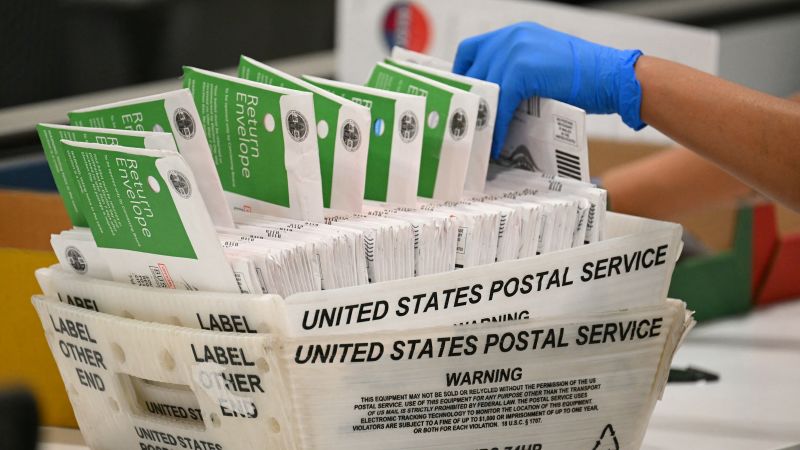
The United States Postal Service (USPS) is transitioning from its traditional role as a neutral infrastructure provider to a conditional service entity under recent administrative directives. Following an executive order issued on March 31, the agency has established a framework where the delivery of mail-in ballots is contingent upon state-level compliance with federal data submission requirements. By linking the physical distribution of election mail to the provision of voter registration lists, the administration is leveraging the postal network to reshape federal oversight of election administration.
This policy forces state election officials to navigate a conflict between safeguarding voter roll privacy and maintaining the functional reliability of mail-in voting. By centralizing authority over eligibility lists, the administration challenges the decentralized structure of American elections, potentially transforming the USPS into a federal bottleneck where service participation depends on data transparency compliance.
Institutional Friction and Union Resistance
The American Postal Workers Union (APWU) has formally challenged the directive, arguing that it compromises the institutional integrity of the USPS. By compelling the postal service to act as an enforcement arm for voter data collection, critics argue the agency departs from its historical mandate of providing universal, non-partisan service. This internal discord highlights significant risks to operational stability, as personnel are tasked with balancing statutory mandates against evolving regulatory requirements.
The APWU’s opposition centers on the principle of institutional neutrality, warning that if the USPS is perceived as a partisan actor, it risks losing public trust and jeopardizing long-term legislative support. From a legal standpoint, the union suggests that conditioning mail delivery on data compliance may violate equal protection and due process, as service disparities could emerge between states that comply and those that retain their sovereign data management practices.
Sovereignty and Federal Oversight
The requirement for states to disclose sensitive voter information represents an expansion of federal involvement in state election logistics. Currently, a coalition of 23 states and the District of Columbia is challenging this mandate in federal court, arguing that the executive branch lacks the constitutional authority to tie essential postal services to the surrender of state-controlled data. This litigation underscores a fundamental tension: the administrative burden of these requirements could lead to logistical delays or the systematic exclusion of eligible voters in states that refuse to comply.
Judicial Precedents and Strategic Integrity
A federal judge in Washington, D.C., recently declined an initial request to block the executive order, allowing the USPS to proceed with implementation. However, the legal battle continues as courts grapple with the extent of executive authority over quasi-independent agencies. The outcome will likely establish a precedent for how federal resources may be used to regulate state-managed election policies.
Ultimately, the centralization of voter lists under the guise of fraud prevention introduces a new point of systemic vulnerability. By positioning the USPS as a gatekeeper for mail-in ballots, the administration risks replacing the traditional security model—which relies on distributed, local oversight—with a centralized administrative layer. The long-term impact on electoral integrity and voter participation will depend on the final resolution of these judicial challenges and the subsequent response from state election offices nationwide.

Photo by ArtisticOperations on Pixabay.