Strategic Decoupling of Public Assembly and Transit Hubs
The relocation of the official NBA Finals Game 3 watch party to Bryant Park signifies a tactical pivot in New York City’s management of mass sporting celebrations. By shifting the primary fan node several blocks east of Madison Square Garden (MSG), municipal authorities are intentionally decoupling the high-intensity arena atmosphere from the critical 34th Street transit and commercial corridor. This maneuver addresses the ‘density of risk’ inherent in unmanaged gatherings near major transportation hubs.
Security Catalysts and Risk Recalibration
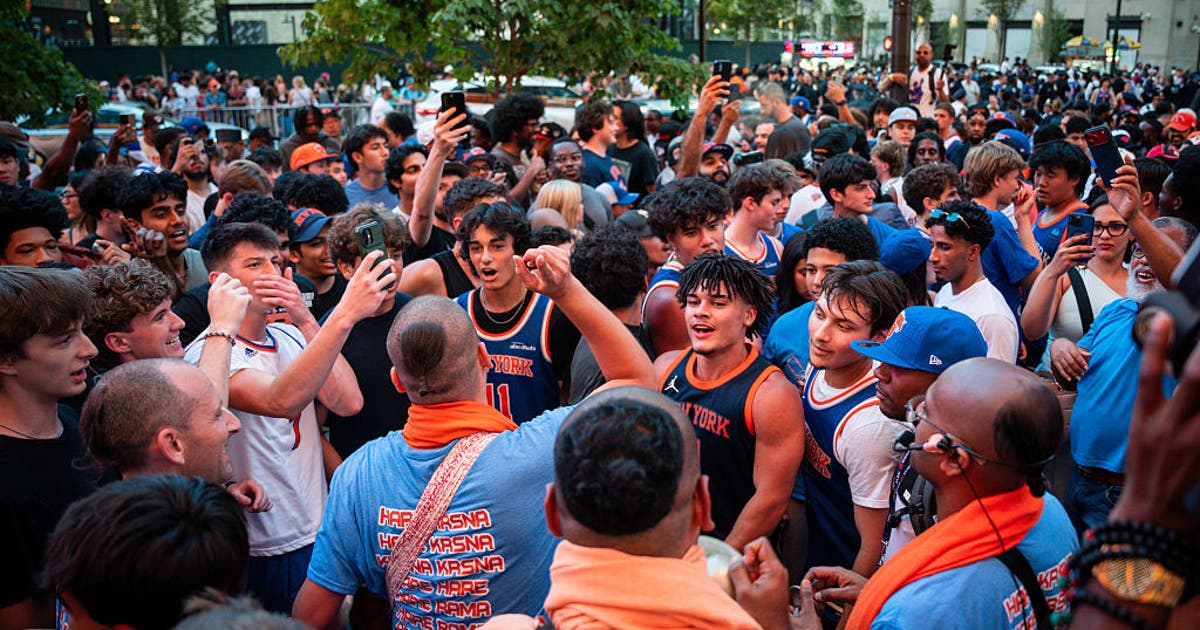
The institutional urgency for this shift follows the volatility of Game 2, which resulted in 17 arrests and an injury to a police officer. These incidents prompted a recalibration of risk assessments by the NYPD and city planners. The denial of permits for the traditional MSG plaza gathering reflects a hardening stance on ‘unmanaged public assembly.’ Authorities are now prioritizing defensible urban spaces that allow for perimeter control and surveillance over the open-access ‘urban canyons’ surrounding the Garden.
Transition to a Controlled Access Model
A defining feature of the Bryant Park site is the transition from organic gathering to a ‘managed event’ framework. A 5,000-capacity limit and mandatory digital ticketing system introduce a layer of gatekeeping that serves as a primary filter for crowd management. By capping attendance, the city is effectively trading the scale of the celebration for environmental predictability, mitigating the potential for spontaneous surges and security breaches.
Operational Advantages and Jurisdictional Clarity
Bryant Park’s layout offers superior infrastructure for entry regulation and fencing compared to the porous MSG plaza. Geographically, this shift redistributes the load on the subway system from the congested 34th Street hub toward 42nd Street. Furthermore, moving the event to a municipal park clarifies jurisdictional boundaries, shifting the burden of crowd management from private arena security to city-managed public safety apparatus.
Governance and the ‘Sanctioned Celebration’ Strategy
Mayor Zohran Mamdani’s administration is leveraging the Knicks’ success to foster civic morale while maintaining a ‘sanctioned celebration’ framework. This strategy provides a pressure valve for social energy within a monitorable environment. However, the move also introduces market scarcity; with only 5,000 tickets for a city of millions, the city must now account for the potential of un-ticketed crowds congregating in decentralized, less regulated neighborhoods.
Institutional Precedent and the Future of MSG Plaza
The denial of MSG plaza permits marks a significant shift in the city’s relationship with its most prominent sports venue. It suggests that the operational risks associated with the arena’s current configuration have reached a threshold where traditional assembly rights are being curtailed in favor of managed environments. This decision may set a permanent precedent for how the city handles high-value public events during the Knicks’ 2-0 series lead against the San Antonio Spurs and beyond.