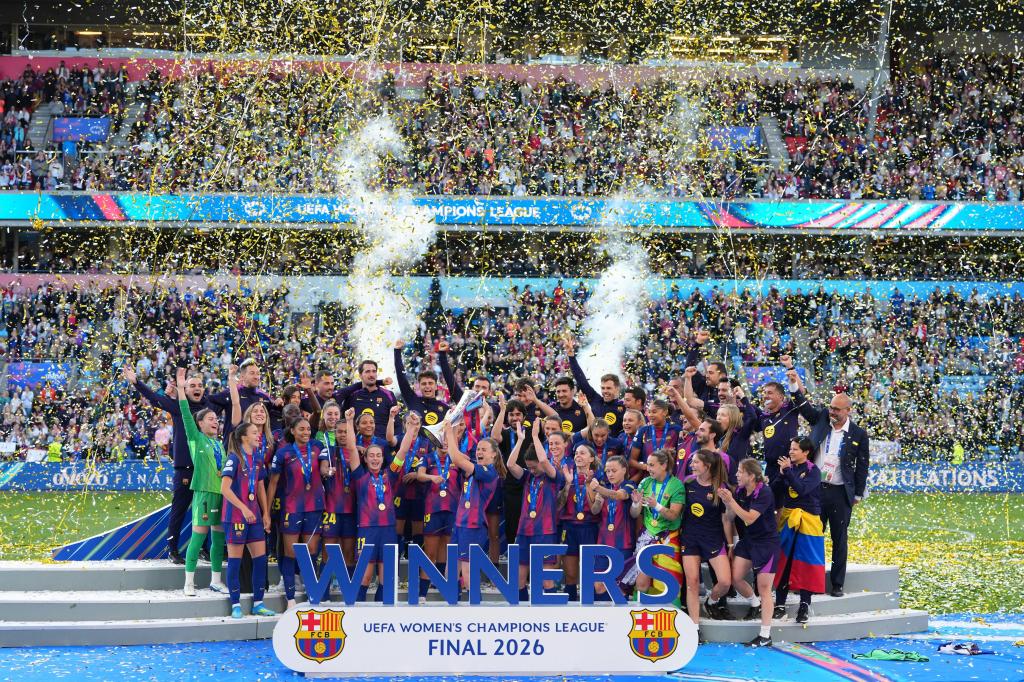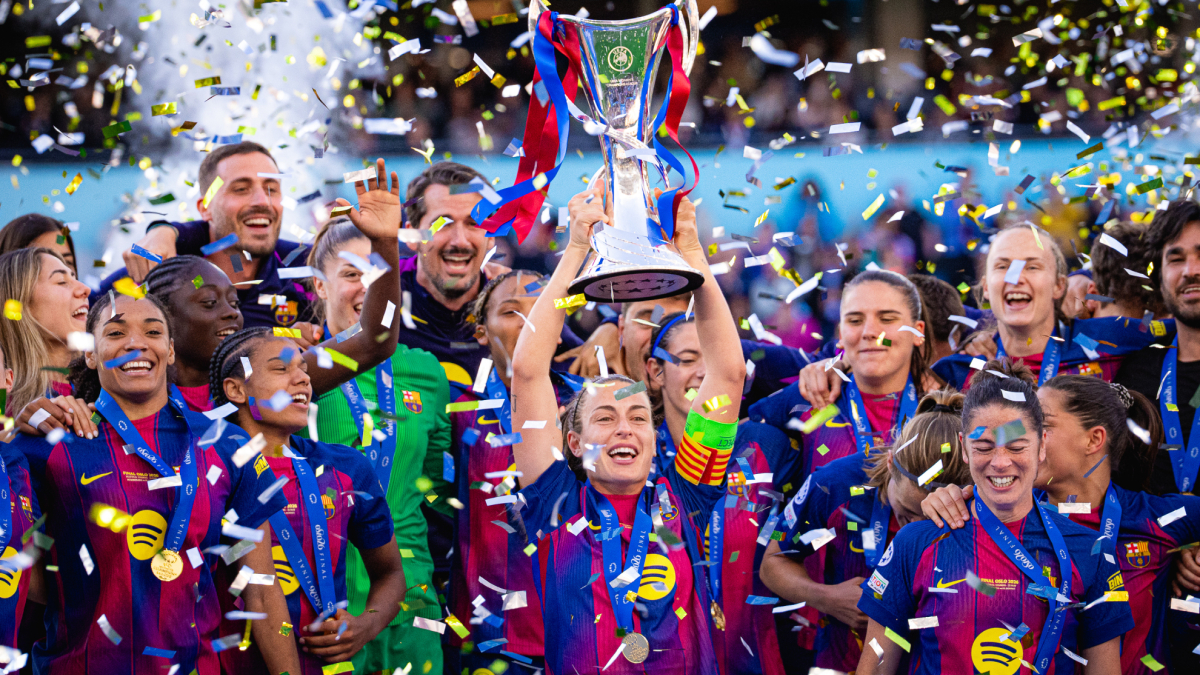
Barcelona Ascends to European Summit with Fourth Champions League Title
FC Barcelona has decisively reclaimed its position at the pinnacle of European women’s football, securing its fourth UEFA Women’s Champions League title with an emphatic 4-0 victory over Olympique Lyonnais. This commanding performance in Oslo not only solidifies Barcelona’s status as a contemporary dynasty but also signals a significant generational shift, displacing the historically dominant Lyon from the sport’s highest echelon.
The Catalan club’s triumph marks their fourth European championship in just six seasons, a testament to sustained investment and strategic development within their women’s program. This rapid ascent contrasts with Lyon’s previous decade of unparalleled success, underscoring Barcelona’s ability to construct and maintain a world-class team capable of consistently competing for and winning major honors.
Strategic Masterclass and Tactical Execution
Barcelona’s victory was defined by a clinical second-half performance, showcasing superior tactical execution and offensive prowess against a Lyon side that had set the benchmark for the sport. Overwhelming a team of Lyon’s pedigree, particularly in the decisive stages of the match, highlights Barcelona’s refined operational capabilities and player development pathways.
Veteran forward Ewa Pajor, in her sixth attempt at the European title, proved instrumental. She broke the deadlock in the 55th minute with a powerful low shot and extended the lead in the 69th minute. Her decisive contributions underscore the strategic importance of integrating experienced talent within a high-performing squad, enabling the team to overcome final pressure and secure critical goals.
Generational Shift in European Women’s Football Landscape
The final’s outcome signifies a significant shift in the competitive landscape of European women’s football, with Barcelona effectively replacing Lyon as the team to beat. Lyon, the record holders with eight titles, had dominated the previous decade, including an unprecedented five consecutive championships from 2016 to 2020. However, their inability to secure the title since the 2021/22 season indicates a period of transition.
Barcelona’s consistent presence in the last five finals, securing three titles in this period, demonstrates a sustained period of elite performance. This success challenges the established order and suggests a recalibration of financial and strategic priorities across the European football ecosystem, as clubs increasingly recognize the commercial and sporting value of investing in women’s teams.
Performance Leverage and Player Impact Highlight Dominance
Salma Paralluelo’s late contributions, with a stunning strike in the 90th minute and an elegant finish in added time, further underscored Barcelona’s attacking depth and ability to capitalize on opportunities. These late goals not only sealed the victory but also reflected a team that maintained its intensity and execution under pressure, showcasing the performance leverage derived from a well-drilled and motivated squad.
Pajor’s personal journey to European glory, overcoming previous near misses, adds a compelling narrative layer to Barcelona’s collective achievement. Her statement, “It’s incredible, we are the best team in Europe, I am proud of everyone, I have no words,” encapsulates the emotional and psychological capital invested by players and the club in achieving this significant milestone.
Institutional Momentum and Future Implications for the Sport
Barcelona’s consistent success in the Champions League is indicative of a robust institutional framework that prioritizes its women’s program. This includes sustained investment in infrastructure, coaching, and player development, fostering an environment conducive to continuous high performance. The club’s ability to navigate competitive pressures and deliver on the biggest stage suggests a mature and effective organizational structure.
The victory carries broader implications for the sport, potentially inspiring increased investment and participation at grassroots levels across Europe and beyond. As Barcelona solidifies its position as a global benchmark, other clubs will face pressure to emulate its strategic approach, driving further professionalization and competition within women’s football.
Lyon’s Enduring Legacy and Future Trajectory
Despite the final defeat, Olympique Lyonnais’ legacy as a pioneering force in women’s football remains undeniable. Their eight Champions League titles and previous era of dominance laid crucial groundwork for the sport’s professionalization and global recognition. The club’s continued participation at the highest level, even in defeat, demonstrates their enduring strength and commitment.
However, the recent performance suggests a need for strategic recalibration within Lyon to counter evolving competitive dynamics. Having already secured domestic titles this season, the focus will undoubtedly shift towards regaining European supremacy, likely involving strategic player acquisitions and tactical adjustments to address the challenges posed by teams like Barcelona.
Media Exposure and Commercial Growth in Women’s Football
The UEFA Women’s Champions League final, contested between two of the sport’s most prominent clubs, garners significant global media attention. This exposure is critical for the commercial development of women’s football, attracting sponsorship, broadcasting deals, and increasing fan engagement. Barcelona’s victory, amplified through various media channels, further elevates the profile of the club and its players.
The increasing viewership and interest in these high-stakes matches create a positive feedback loop, encouraging further investment from media partners and commercial entities. This growing commercial viability is essential for the long-term sustainability and growth of women’s football, enabling clubs to reinvest in their programs and attract top talent worldwide.
Player Development and Talent Pipeline Power Barcelona’s Success
Barcelona’s success is intrinsically linked to its robust player development system and its ability to attract and retain top global talent. The performance of players like Pajor and Paralluelo, who have either developed within the club’s academy or been strategically recruited, highlights the effectiveness of their talent pipeline. This approach ensures a continuous influx of skilled players capable of maintaining the team’s competitive edge.
The club’s consistent presence in finals and subsequent victories serve as a powerful recruitment tool, attracting aspiring players seeking to compete at the highest level. This creates a virtuous cycle where success breeds further success, reinforcing Barcelona’s position as a premier destination for elite female footballers and shaping the global talent landscape.
Strategic Capital Allocation Fuels Barcelona’s Dominance
Barcelona’s sustained dominance in women’s football is a direct result of strategic capital allocation and a long-term commitment from the club’s leadership. The investment in the women’s team mirrors the club’s broader philosophy of excellence across all sporting disciplines, recognizing the brand value and sporting prestige that a successful women’s program can generate.
This strategic investment contrasts with clubs that may view women’s football as a secondary concern. Barcelona’s approach demonstrates a clear understanding of the evolving market, where dedicated resources and professional management can yield significant returns, both in sporting achievement and commercial growth, setting a precedent for other major football institutions.
Competitive Benchmarking and Future Strategy for Elite Clubs
The final served as a crucial benchmark, highlighting Barcelona’s current superiority and Lyon’s need to adapt. For Barcelona, the victory validates their strategic direction and provides a strong foundation for future endeavors, including continued domestic and European success. The team’s performance suggests a high level of tactical flexibility and resilience.
For Lyon, the result necessitates a thorough review of their competitive strategy and player roster. The challenge ahead involves identifying areas for improvement and potentially making significant roster adjustments to regain their dominant position. This competitive pressure is a natural consequence of elite-level sport and drives innovation and evolution within the participating organizations.
Global Reach and Fan Engagement Driven by Champions League Success
Barcelona’s victory extends its global reach and deepens fan engagement across continents. The club’s success in the Champions League resonates with a diverse international fanbase, further solidifying its brand as a global football powerhouse. This widespread appeal translates into increased merchandise sales, broader media coverage, and enhanced commercial partnerships.
The emotional connection forged through consistent success and compelling performances is a key driver of fan loyalty. As Barcelona continues to perform at the highest level, its ability to attract and retain a global following will remain a significant asset, influencing its market position and long-term strategic objectives within the evolving landscape of international football.
Operational Excellence and Performance Metrics Define Victory
The 4-0 scoreline reflects a high degree of operational excellence on the part of Barcelona, from player preparation and tactical planning to in-game execution. The team’s ability to maintain intensity and score multiple goals in the second half suggests superior conditioning and a well-executed game plan that exploited Lyon’s defensive vulnerabilities.
Performance metrics would undoubtedly show Barcelona excelling in key offensive and defensive statistics during the match. This level of consistent performance is a direct outcome of meticulous training, advanced analytics, and a culture of continuous improvement embedded within the club’s sporting operations.
Key Personnel: Pajor, Paralluelo, and Coll Drive Success
The impact of key personnel, such as the two-goal scorer Ewa Pajor and the decisive late-game contributions from Salma Paralluelo, cannot be overstated. Their individual brilliance, combined with the collective effort of the squad and the strategic guidance of the coaching staff, formed the bedrock of Barcelona’s success. The club’s ability to integrate and leverage the talents of such players is a critical component of its winning formula.
Furthermore, the performance of goalkeeper Cata Coll, who made crucial saves, highlights the importance of a complete team effort. The depth of talent and the ability of various players to step up in critical moments underscore the strategic advantage Barcelona holds, ensuring resilience and adaptability throughout the demanding competition.
Historical Context: Barcelona’s Dynasty Building in Women’s Football
Barcelona’s emergence as a dominant force in women’s football represents a significant historical development. Their four Champions League titles in a relatively short period challenge the established order and set a new benchmark for dynasty building in the sport. This rapid ascent is a testament to a deliberate and sustained investment strategy.
The club’s ability to consistently reach finals and secure titles indicates a deep understanding of what it takes to sustain success at the elite level. This historical context is crucial for understanding the long-term implications of their victory, as it signals a potential shift in the dominant power structures within European women’s football for years to come.