
From Retrieval to Execution: The Death of the Query
Google’s redesign of its iconic search box marks the formal end of the reactive query-and-response era. This structural pivot transitions the platform from a directory of links into a proactive agentic ecosystem. By leveraging a user base that has scaled to 900 million monthly active users, Google has created a high-velocity data flywheel across 230 countries, transforming its core product from an index into a delegable intelligence layer.
Gemini 3.5 Flash: Optimizing the Economics of Inference
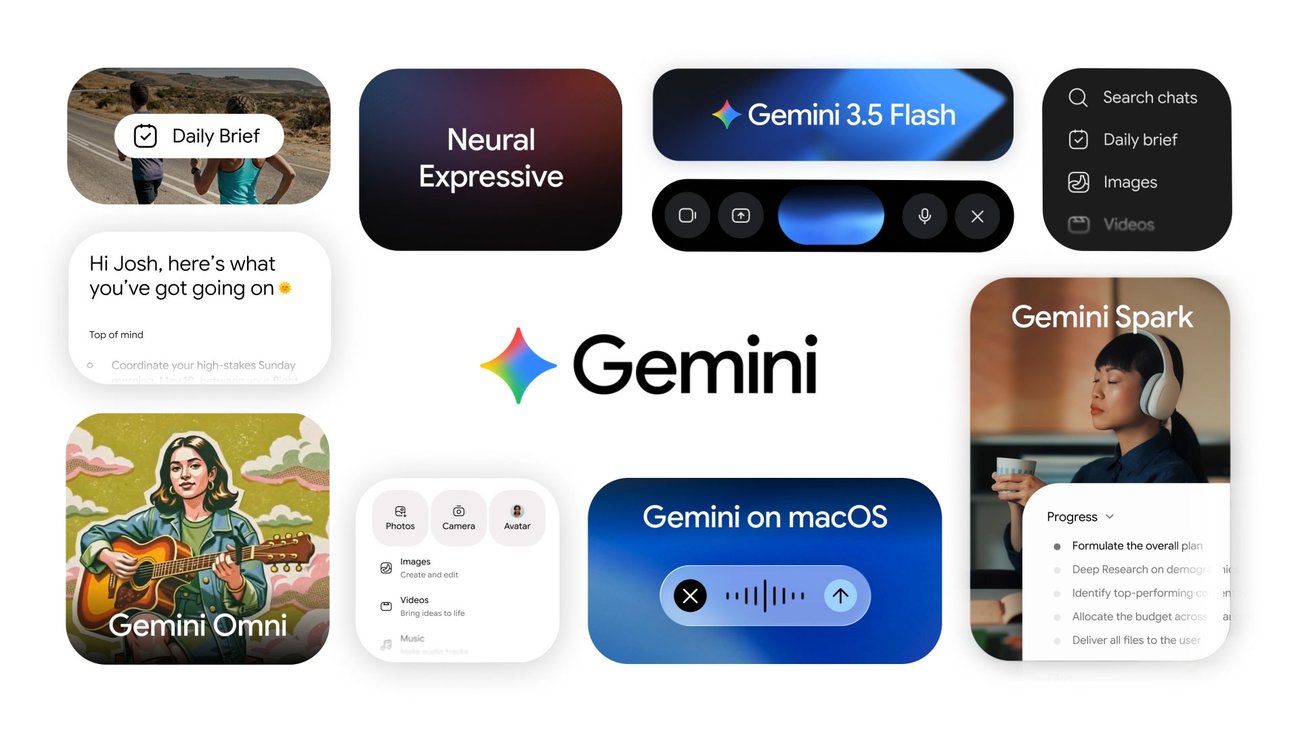
The launch of Gemini 3.5 Flash represents a calculated focus on inference efficiency and throughput. In the competitive landscape of LLMs, speed is a strategic moat. Flash is engineered to resolve the industry’s primary friction point: the trade-off between frontier-level reasoning and real-time latency. This model allows Google to scale high-frequency, low-latency workflows globally, maintaining operational margins while transitioning from low-compute keyword indexing to high-compute generative processing.
Multimodal Dominance via Gemini Omni
Gemini Omni integrates cinematic video production directly into the search ecosystem, effectively capturing the value chain of the generative media economy. By enabling seamless text-to-video and video-to-video transformations, Google is democratizing professional-grade content creation. This vertical integration targets the creator economy, potentially disintermediating standalone creative suites by making multimodal generation a default feature of the primary search interface.
Proactive Agency: Gemini Spark and Digital Proxies
The introduction of Gemini Spark and Daily Brief signifies the rise of the ‘digital proxy.’ Spark is not merely an assistant but a proactive manager capable of navigating cross-platform tasks under user direction. This shift moves Google higher up the stack, positioning it as the primary interface for all digital activity. If the agent manages the task, the user no longer needs to visit individual sites or apps, fundamentally altering the flow of web traffic.
Desktop Integration and the OS Layer Strategy
The expansion into a dedicated MacOS app integrated with Spark signals an aggressive play for the operating system layer. By operating natively on the local machine with voice capabilities, Google is bypassing the browser to embed itself directly into professional and creative workflows. This persistent presence on the desktop ensures that Gemini remains the default cognitive tool, reducing latency and enhancing privacy for sensitive enterprise tasks.
Economic Recalibration and Institutional Risk
The transition to agentic search necessitates a total reimagining of the advertising model. As agents filter information and execute tasks, the traditional click-through-rate (CTR) becomes a secondary metric. Google’s future monetization will likely shift toward value-based actions or sponsored agentic services. However, this autonomy introduces significant ‘black box’ risks regarding algorithmic transparency and data privacy. Maintaining user trust while agents operate with increasing autonomy will be the defining institutional challenge of this era.

Photo by geralt on Pixabay.