Giants, Diamondbacks Confront Systemic Pitching and Offensive Deficiencies
The San Francisco Giants (20-28) and Arizona Diamondbacks (23-23) are currently engaged in a series that starkly illuminates significant operational challenges for both franchises, particularly within their pitching rotations and offensive output. The Giants, characterized by a “mess” of pitching and a “disappointment” of a lineup, struggle to generate consistent offense. This season’s performance suggests a critical gap between organizational aspirations and on-field reality.
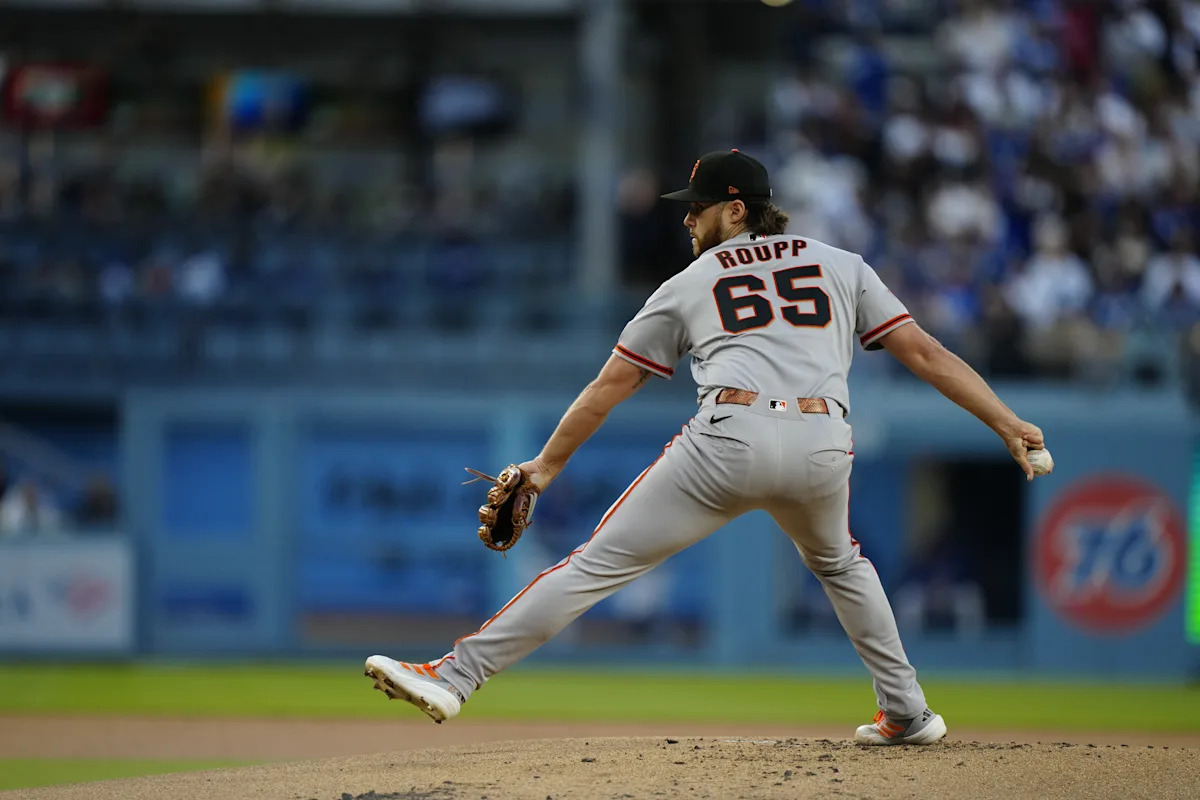
Right-handed pitcher Landen Roupp is slated to start for the Giants, entering the contest with a 3.49 ERA and 2.68 FIP, showcasing strikeout efficiency with 58 punchouts in 49 innings. However, his recent outing, yielding four runs in 5.1 innings during a 5-2 loss to the Dodgers, exemplifies the precarious balance the Giants’ staff faces between effective pitching and surrendering critical runs.
Arizona’s right-handed pitcher Ryne Nelson presents a contrasting profile with a 5.40 ERA and 4.80 FIP over 45 innings, indicating a higher tendency to allow earned runs. Despite these numbers, Nelson’s strikeout ability (43 in 45 innings) and a seven-inning, three-run performance in a 6-5 loss to the Rangers suggest potential for strong individual outings that can temporarily mask underlying pitching vulnerabilities.
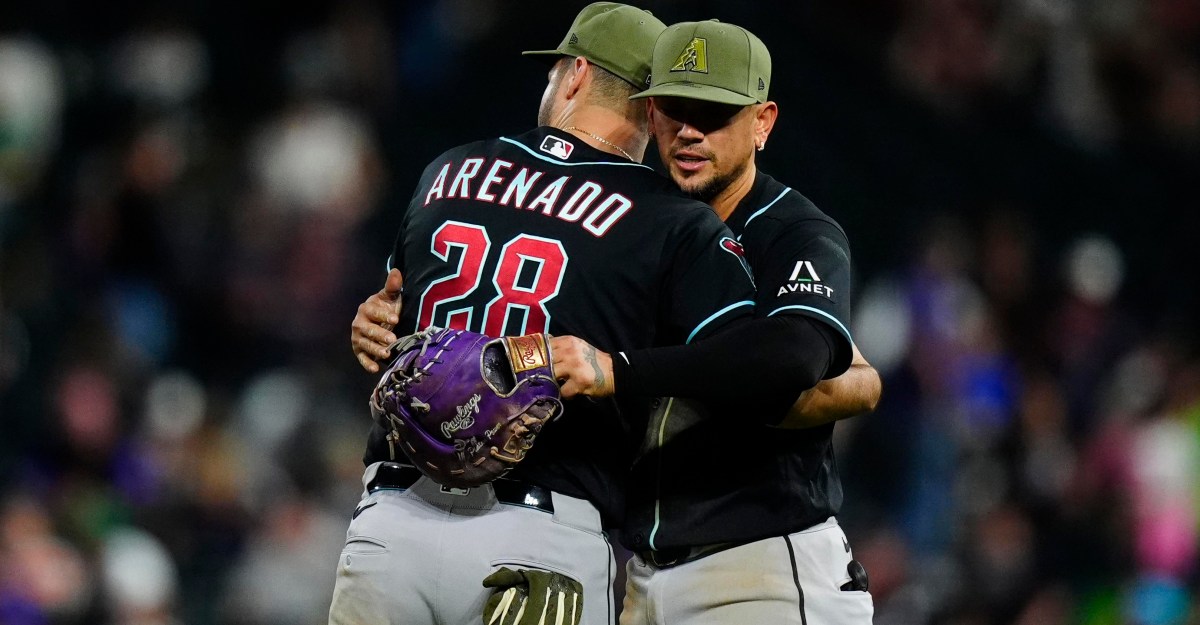
The series at Chase Field highlights a competitive landscape where neither team has established a clear advantage. Arizona’s offensive production, measured by a 95 wRC+, lags below the league average. This is particularly surprising given the presence of MVP candidate Corbin Carroll, a resurgent Nolan Arenado, Ketel Marte, and the unexpected contributions of Ildemaro Vargas.
The Giants’ offensive expectations, reportedly among their highest since 2021, have not materialized, with their lineup performing approximately 10% worse than league average. This underperformance points to potential strategic miscalculations in roster construction or a failure to translate theoretical lineup strength into tangible results.
In terms of pitching value, Arizona’s pitching staff holds a marginal lead with 2.2 fWAR compared to San Francisco’s 2.0 fWAR, indicating near parity in overall effectiveness. However, a deeper analysis reveals distinct strategic approaches and performance distributions across starting and relief roles.
San Francisco has found stability from three starters—Robbie Ray, Landen Roupp, and Trevor McDonald—suggesting depth in their rotation’s top tier. This contrasts with Arizona’s reliance on two primary starters, Eduardo Rodriguez and Michael Soroka, potentially placing greater strain on their bullpen and increasing rotation instability risks.
Conversely, Arizona’s bullpen demonstrates superior control, evidenced by a 1.75 BB/9 advantage over the Giants’ relief corps, and a slightly better strikeout rate. This operational efficiency in relief pitching provides the Diamondbacks a marginal edge in overall pitching value, estimated at approximately one win above replacement, a critical factor in tightly contested games.
The strategic implications are significant. For the Giants, reliance on key starters necessitates robust bullpen depth to mitigate starter inconsistencies or rotation gaps. The lineup’s underperformance further amplifies these challenges, as fewer offensive runs increase pressure on the pitching staff for near-perfect outings.
For the Diamondbacks, while their bullpen offers a tactical advantage in control and strikeouts, a narrower base of reliable starting pitchers presents a vulnerability. Any extended absence or decline from Rodriguez or Soroka would heavily burden Nelson and less proven starters, potentially unraveling their pitching strategy and exposing them to greater risk of significant run deficits.
The competitive positioning is further contextualized by their offensive profiles. Arizona’s team home run total, only three more than the Giants (40 to 37), suggests a lack of elite power-hitting threats, necessitating greater reliance on situational hitting, base running, and sustained offensive pressure. This offensive parity, coupled with pitching inconsistencies, positions the series as a battle of attrition where critical-moment execution and error minimization will likely dictate the victor.
Organizational philosophies regarding player development and acquisition are implicitly challenged by these performance metrics. The Giants’ struggle to maximize their lineup’s potential may indicate issues in scouting, player development, or talent deployment. Arizona’s offensive shortcomings, despite high-caliber players, point to potential systemic issues in their offensive approach or coaching.
The financial implications are also noteworthy. Underperforming rosters and a lack of clear competitive advantage can impact ticket sales, merchandise revenue, and fan engagement, potentially affecting future capital allocation. The pressure to demonstrate ROI for player salaries and operational expenditures intensifies when on-field results lag.
From a media and public perception standpoint, the narrative for both teams centers on underachievement and strategic questions. The Giants’ struggles are framed against a backdrop of historical success, creating a narrative of unmet potential. The Diamondbacks face scrutiny for failing to capitalize on individual star power to elevate team performance.
The broader MLB industry context, with its increasing emphasis on advanced analytics, player development, and strategic roster management, highlights the operational sophistication required for sustained success. The current performance of both teams suggests potential lags in execution and systemic integration of these elements, indicating a need for strategic recalibration.
The series outcome, while seemingly limited in immediate standings impact, serves as a crucial diagnostic for each team’s front office and coaching staff. Recurring themes of pitching instability and offensive underproduction are indicators of deeper structural or operational challenges requiring strategic intervention.
Competitive leverage in this series stems from each team’s ability to identify and address root causes of systemic inefficiencies. The Giants must elevate their offense and ensure pitching staff consistency, while the Diamondbacks must leverage bullpen strengths and unlock greater offensive potential.
Performance leverage for both franchises lies in their capacity to adapt and innovate. The Giants may explore unconventional lineup or pitching strategies, while the Diamondbacks could focus on optimizing player roles and maximizing key offensive contributors’ impact. These decisions will shape immediate outcomes and inform long-term strategic planning.
Capital movement within MLB, driven by team valuations and investment in analytics, means sustained underperformance can have significant financial repercussions. Franchises failing to translate investment into on-field success risk diminishing market value and talent acquisition capabilities, perpetuating mediocrity.
The structural integrity of both organizations is being tested. Consistent winning requires cohesive interplay between scouting, player development, coaching, and strategic management. Current struggles suggest integration and overall effectiveness fall short of competitive standards, necessitating a critical review of operational blueprints.
The downstream effects of these performance issues extend beyond immediate fan bases. For the league, struggles of established franchises can impact viewership, sponsorship deals, and perceived competitive balance, highlighting the broader implications of strategic decisions made by the Giants and Diamondbacks.
Operational constraints, particularly in pitching depth and offensive consistency, highlight baseball’s inherent volatility. The long season and physical demands necessitate robust contingency planning and adaptive management strategies, even for well-resourced franchises.
Incentive structures are designed to drive performance. For the Giants and Diamondbacks, the incentive to improve is clear, but the path is complex, potentially involving personnel changes, strategic shifts, or re-evaluation of core philosophies. Pressure to deliver results will influence future decision-making.
The current state for both teams reflects a broader MLB trend where competitive advantage stems from marginal gains in analytics, conditioning, and innovation. Their struggles suggest a potential lag in these critical areas, exposing vulnerabilities for rival exploitation.
The Giants-Diamondbacks series transcends a simple matchup; it’s a critical juncture exposing underlying organizational strengths and weaknesses. Each franchise’s ability to navigate these challenges will be key to their short-term success and long-term viability.