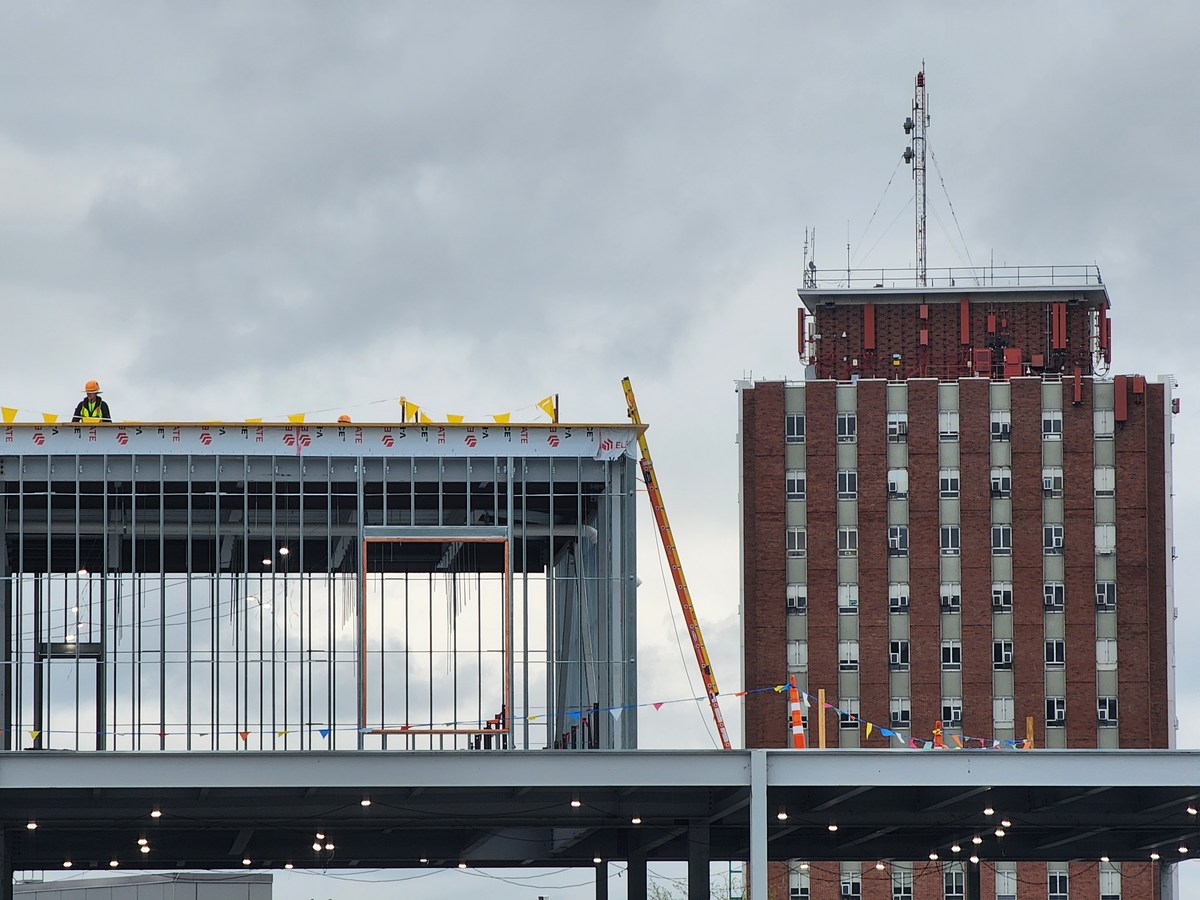
The structural emergence of University Hall at Binghamton University represents a strategic pivot in the State University of New York (SUNY) system’s approach to high-density academic infrastructure. With the steel framework now established on the Vestal campus, the $60 million project signals a transition from legacy lecture models to a modular, high-capacity instructional environment designed to accommodate 1,900 students. Sanctioned by New York State in 2022, this 90,000-square-foot facility is a calculated reconfiguration of academic delivery intended to meet rising enrollment demands within a competitive regional landscape.
Fiscal Prioritization and Construction Milestones
The $60 million investment serves as a primary indicator of the state’s fiscal prioritization of the Southern Tier’s educational corridor. By anchoring this funding in a multi-use classroom complex, the institution addresses critical space bottlenecks that historically limited course availability. Hueber-Breuer Construction, the Syracuse-based general contractor, is navigating a recalibrated timeline; originally slated for June 2027, the project’s readiness is now projected for the spring of 2028. This shift allows for a strategic buffer for interior fit-outs and technological integration, ensuring the facility’s 33 classrooms and specialized testing rooms meet precise environmental standards for high-stakes academic activity.
The architectural design reflects a deliberate move toward pedagogical granularity. While the building includes a 300-seat and a 180-seat lecture hall for foundational courses, the majority of the 33 classrooms range from 20 to 75 seats. This hybrid model optimizes the footprint, allowing for a transition from massive, impersonal lecture halls to intimate, interactive environments. The integration of digital-ready testing rooms and group study areas further addresses the institutional trend toward centralized, high-efficiency learning hubs that consolidate student services and instructional space.
Operational Sustainability: The Move Out Project
Complementing this physical expansion is the Binghamton Move Out Project, a logistical intervention addressing the environmental externalities of a large residential campus. In 2025, the initiative diverted over 34,000 pounds of material from municipal waste streams. Founded by Christina Fuller, the project utilizes six strategically placed collection points to capture non-perishable food, personal care items, and small appliances. This circular economy model mitigates the environmental burden of abandoned goods while repurposing resources for local community use, thereby reducing the university’s waste management costs and strengthening its sustainability profile.
Regional Economic Integration and Risk Management
The convergence of the $60 million University Hall project and the $10 million Downtown Revitalization Initiative (DRI) awarded to the City of Binghamton underscores a period of intense regional capital infusion. These investments are symbiotic; the university’s expansion drives demand for local services, while the construction sector benefits from high-value regional contracts. The transition to a 2028 completion date introduces a period of extended operational risk management, requiring the registrar to navigate existing space constraints for an additional academic year to ensure the final delivery meets long-term utility standards over speed.
Conclusion: Holistic Institutional Growth
The dual developments of University Hall and the Move Out Project illustrate the balancing act of modern public universities: aggressive physical growth paired with precise social and environmental accountability. As Binghamton University scales its capacity to educate more students, it must simultaneously scale the infrastructure for managing waste and community friction. Together, these initiatives position the university as an anchor for the Southern Tier’s economic future, providing a blueprint for how large-scale educational institutions can grow responsibly through the 21st century.