
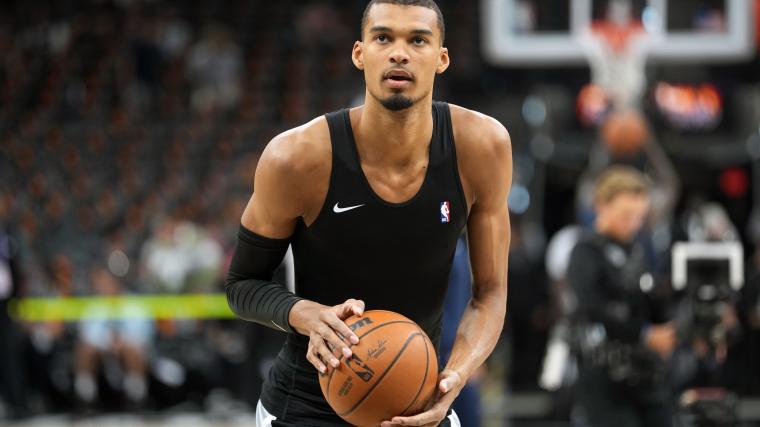
Tactical Dominance: The Spurs’ Game 5 Breakthrough
The San Antonio Spurs have assumed a 3-2 series lead over the Minnesota Timberwolves following a comprehensive 126-97 victory in Game 5. This result serves as a definitive pivot point, placing the Spurs on the precipice of a Western Conference Finals appearance and challenging the existing competitive hierarchy of the league.
The victory was catalyzed by Victor Wembanyama, who delivered a high-variance performance of 27 points, 17 rebounds, and three blocks. His ability to facilitate play while anchoring the interior forced Minnesota’s defensive scheme—historically built on size and continuity—to break down under the pressure of his multi-dimensional offensive gravity.
Operational Versatility and Defensive Strain
Wembanyama’s statistical output transcends traditional box-score evaluation; his playmaking fluidity effectively nullified the Timberwolves’ defensive perimeter adjustments. By functioning as a primary hub for offensive initiation, he compelled Minnesota to abandon rigid, singular-coverage schemes. This failure to rotate effectively against a vertical threat suggests the Timberwolves’ current roster architecture lacks the modularity required to stifle elite, modern offenses.
Institutional Shifts and Market Re-evaluation
The Spurs’ ability to consistently outscore opponents across all four quarters speaks to deep organizational stability. Analyst Colin Cowherd’s recent commentary regarding a potential dynasty formation underscores the pressure this success places on rival franchises. Teams relying on aging cores or stagnant defensive identities must now justify their capital allocation strategies against the reality of a rapidly accelerating Spurs timeline.
Strategic Implications for the Postseason
As the series heads to Game 6, the onus rests on Minnesota to find a viable counter-strategy to Wembanyama’s influence. The Spurs’ ability to control the game’s pace has exposed the volatility inherent in traditional defensive structures when faced with a generational talent. Success for San Antonio now validates a rebuild-to-contention model, potentially influencing how front offices prioritize high-upside draft assets over incremental roster consolidation across the wider NBA landscape.

Photo by admomediaoffice on Pixabay.