The upcoming three-game series at Truist Park serves as a litmus test for the National League’s elite. With the Atlanta Braves (28-13) holding a narrow lead over the Chicago Cubs (27-14), the series is defined by a clash of structural vulnerabilities: Atlanta’s rotation instability versus Chicago’s offensive inability to travel.
The Rust vs. Rest Variable: Managing Grant Holmes
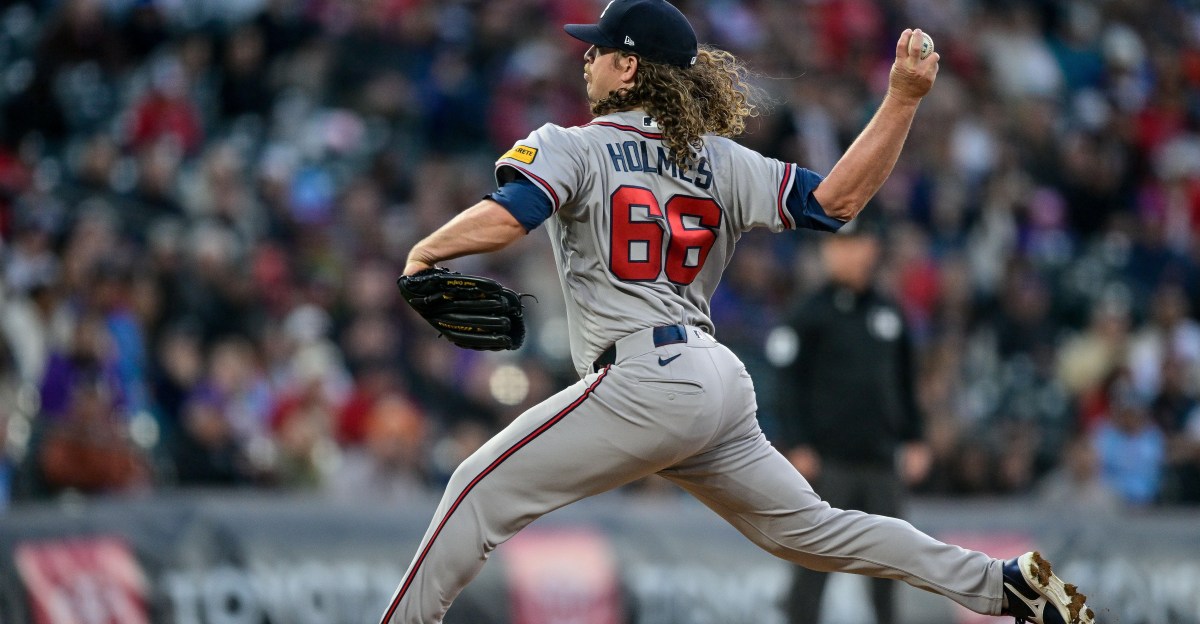
Grant Holmes returns to the mound following a ten-day hiatus, a move that epitomizes the ‘rest vs. rust’ conundrum. While the layoff aims to preserve long-term shoulder health, it threatens the mechanical precision required for strike-zone command. Since his May 1 outing against Colorado, Holmes has lacked live-game repetitions, placing significant pressure on the Braves’ training staff to have maintained his kinetic consistency. The strategic cost of this layoff is immediate uncertainty; any early-inning location struggle will force an over-extension of an Atlanta bullpen already taxed by a recent West Coast swing.
Advanced Metrics: Holmes’ Impending Regression
Statistically, Holmes is a candidate for negative regression. Despite a surface-level 4-1 record in recent starts, his 5.13 ERA is actually outpaced by a 5.36 FIP (Fielding Independent Pitching). This 0.23 delta, combined with five home runs and twelve walks surrendered over just 26.1 innings, suggests that his success has been propped up by favorable sequencing and defensive bailouts rather than dominant stuff. Against a Cubs lineup that prioritizes plate discipline, Holmes’ 4.10 BB/9 rate represents a critical failure point that could lead to high-leverage traffic in the early innings.
The Cubs’ Offensive Bifurcation
Chicago’s primary hurdle is the statistical chasm between Wrigley Field and the road. The Cubs boast a prolific .263 home batting average, yet this plummeted to .238 in away games. More alarming is the run-scoring efficiency: only 41% of their total runs are produced outside of Chicago. Coming off a series in Texas where they were twice shut out, the Cubs’ middle order is showing signs of a localized slump. For Chicago to capitalize on Holmes’ volatility, they must solve the ‘offensive portability’ issue that has kept their road record at a mediocre 9-9.
Rea’s Floor vs. Holmes’ Ceiling
Colin Rea (4-1, 4.03 ERA) provides the Cubs with a higher performance floor. While his 1.37 WHIP indicates a susceptibility to baserunners, his ability to manage contact far exceeds Holmes’ current trajectory. Rea’s mission is damage control; by inducing early-count contact, he can neutralize a Braves offense that thrives on high-velocity mistakes. The matchup hinges on whether Rea can navigate the top of the Braves’ order long enough for the Cubs’ offense to overcome their road-trip lethargy.
Institutional Implications for the NL Hierarchy
Beyond the standings, this series dictates trade deadline posture. A failure by Holmes to provide length will intensify internal pressure on the Braves’ front office to aggressively pursue rotation reinforcements. Conversely, if the Cubs fail to produce against a struggling starter on the road, it confirms a structural flaw that could undermine their NL Central aspirations. The data points collected at Truist Park will serve as the primary benchmark for evaluating the sustainable depth of both championship contenders.